

More news on this day
A sprawling late-winter storm is unleashing blizzard conditions from the Upper Midwest to the Northeast, thrusting Chicago into the same travel crisis already gripping New York, Boston, Minneapolis and other major hubs, and leaving thousands of passengers stranded amid whiteout roads, shuttered highways and cascading flight cancellations.
Get the latest news straight to your inbox!
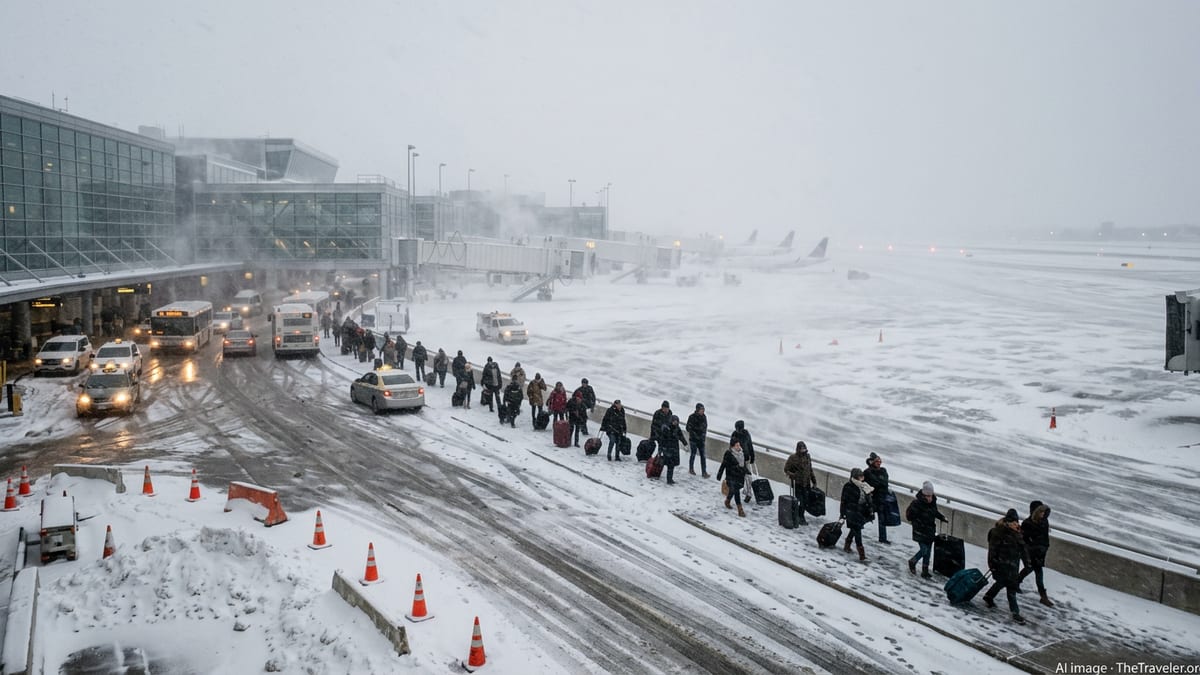
Storm System Links Midwest and Northeast in One Disruptive Blast
The latest storm, tied to a powerful March weather system affecting much of the central United States and southern Canada, is delivering heavy snow, fierce winds and dangerous wind chills across a broad swath of the country. Forecast discussions describe a major blizzard impacting the Upper Midwest, including Minnesota and surrounding states, while snow bands sweep east into the Great Lakes and toward the interior Northeast.
Chicago, long accustomed to severe winter weather, is again contending with rapidly deteriorating conditions as snow intensifies around O’Hare and Midway airports. Publicly available aviation and highway data show plummeting visibility, drifting snow on runways and interstates, and mounting reports of spinouts and jackknifed trucks on key corridors radiating from the city.
This latest blast arrives on the heels of a historic February blizzard that buried parts of New York and New England under more than two feet of snow and effectively shut down air travel at several of the nation’s busiest airports for days. That earlier storm, widely referred to as a once-in-a-decade event, already stretched airline networks, ground operations and traveler patience to their limits.
Airports From Chicago to Boston Struggle With Cancellations
Air travel remains the most visible casualty of the unfolding weather pattern. Flight-tracking tallies and airline advisories in recent weeks show that major hubs including New York’s three primary airports, Boston Logan, Chicago O’Hare, Minneapolis–Saint Paul and others have each experienced waves of cancellations and delays as storms rolled through.
In late February, when a powerful nor’easter brought blizzard conditions to the Northeast, New York City’s airports and Boston Logan saw cancellation rates of 80 percent or higher at times, effectively turning terminals into ad hoc waiting areas for stranded travelers. That disruption forced carriers to reposition aircraft and crews, leaving ripple effects as far away as Florida and the West Coast even after skies cleared.
Now, as the March system bears down on the Midwest, Chicago and Minneapolis have become the latest choke points. Airlines have issued fresh winter weather waivers for both cities, encouraging passengers to rebook without penalties and reduce crowding at already stretched customer service counters. With aircraft still out of place from the February blizzard and schedules tightly wound, the new wave of cancellations is compounding an already fragile recovery.
Industry observers note that the combination of blizzard-force winds, rapid snowfall rates and icy ramp conditions often prompts airlines to preemptively suspend operations, both to protect crews and to avoid stranding jets at airports that may be forced to close. That strategy can shorten the ultimate recovery time, but it also means large batches of flights vanish from departure boards with little warning.
Highways, Rail Lines and Urban Transit Face Whiteout Hazards
The storm’s impacts extend far beyond airport fences. Across the Upper Midwest, including routes linking Chicago with Minneapolis, Des Moines and Milwaukee, transportation agencies are warning that sections of interstate could become impassable as blowing snow creates ground blizzards and near-zero visibility. Motorists are reporting travel times several times longer than normal, with some stretches reduced to crawling convoys behind snowplows.
Farther east, the February blizzard that recently slammed New York, Boston and Providence brought rail and bus networks to a standstill, with intercity train operators canceling scores of departures along the busy Northeast Corridor. Local transit systems in the region curtailed or suspended service as snow piled onto tracks and roadways, illustrating how quickly urban mobility can grind to a halt when strong winds and heavy snow coincide with commuting hours.
Those earlier disruptions are informing current preparations in Chicago and other Midwestern cities, where transit agencies are deploying extra plows, de-icing equipment and standby crews in anticipation of drifting snow across rail switches, busways and bridge decks. Publicly posted service plans emphasize that schedules may change with little notice if conditions deteriorate or if authorities introduce restrictions on nonessential travel.
For travelers attempting multimodal journeys that combine flights, trains and long-distance buses, the patchwork of cancellations can prove particularly challenging. Even when flights manage to depart during breaks in the weather, connections to final destinations may not exist if regional trains or buses remain offline because of the storm.
Travelers Face Long Delays, Rebookings and Limited Options
Across the affected regions, passengers are confronting a familiar set of challenges: marathon rebooking lines, limited spare seats on later flights and uncertainty about when conditions will improve enough for full schedules to resume. Consumer travel advisories note that during major winter disruptions, it can take several days for carriers to return aircraft and crews to their intended positions, even after the last snowflake falls.
Travel industry coverage indicates that many airlines are again encouraging customers to manage changes through mobile apps and websites rather than at airport counters, both to reduce congestion and to streamline automated rebooking. However, with back-to-back storms affecting the same hubs in quick succession, available options for same-day or next-day travel are narrowing, especially on popular business routes linking Chicago, New York and Boston.
Some travelers who were stranded in the Northeast during the February blizzard are now encountering fresh hurdles trying to complete postponed trips as the new Midwestern storm snarls connections. Reports from regional airports suggest that those holding tickets through Chicago or Minneapolis are especially vulnerable to last-minute schedule shifts as airlines juggle limited spare capacity.
Hotels near airports and major highway interchanges in the storm zone are also under pressure, with elevated bookings from both air passengers and motorists opting to pause long drives. Travel analysts note that during severe winter events, accommodations can fill quickly in smaller markets, leaving some stranded travelers with few nearby lodging options.
Safety Guidance and Planning for the Days Ahead
With heavy snow and strong winds forecast to continue across portions of the Midwest and Great Lakes, and lingering impacts still evident in Northeast hubs, forecasters and transportation agencies are urging anyone with near-term travel plans to build in extra flexibility. Public weather outlooks describe conditions ranging from hazardous to life-threatening in exposed areas, particularly on open highways and rural roads where ground blizzards can develop suddenly.
Consumer advocates recommend that travelers monitor both airline alerts and local transportation updates, as a green light from one does not guarantee that the entire journey is feasible. A flight into Chicago or New York may operate, for example, while onward regional links remain canceled because of whiteout conditions or ongoing snow removal.
For those already stranded, travel planning resources emphasize simple steps such as confirming rebooked itineraries before leaving an airport or hotel, keeping digital copies of boarding passes and receipts, and remaining alert to changing gate assignments as airlines adjust their operations hour by hour. Drivers are being reminded to carry winter emergency kits, fuel up frequently and avoid venturing out when visibility drops or when advisories caution against nonessential travel.
As the storm complex evolves through the middle of March, forecasts indicate that conditions should gradually improve first in the Northeast and later across the Upper Midwest. Yet with snow still piling up around Chicago and lingering operational challenges in New York, Boston, Minneapolis and beyond, the nation’s transportation network is likely to feel the effects of this latest blizzard long after the skies begin to clear.