


More news on this day
Brazil’s already stretched aviation network faced fresh disruption this week as a wave of 204 delays and 45 cancellations across the country’s key hubs in São Paulo and Rio de Janeiro rippled through the operations of major domestic and international carriers.
Get the latest news straight to your inbox!
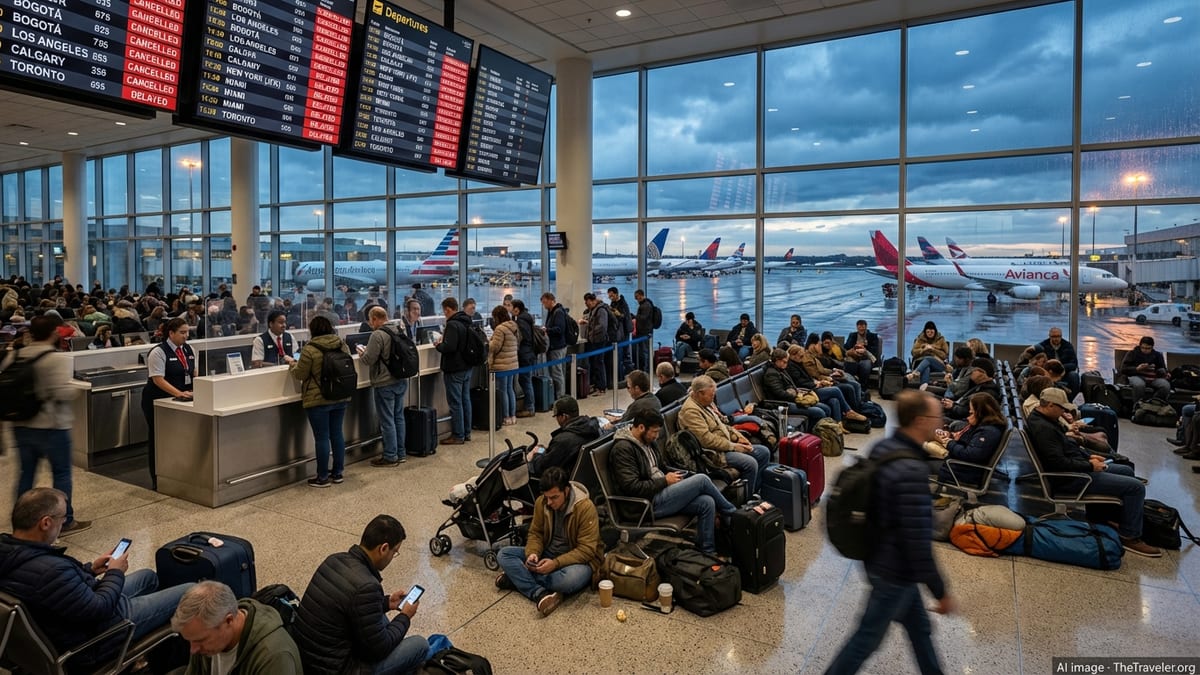
Gridlock at Brazil’s Busiest Air Corridors
Publicly available flight tracking data and operational dashboards indicate that the latest disruption has clustered around Brazil’s two most important aviation markets, Greater São Paulo and Rio de Janeiro. Together, these metropolitan regions anchor a dense multi airport system that includes Guarulhos and Congonhas in São Paulo, as well as Galeão and Santos Dumont in Rio, among the busiest facilities in Latin America by passenger volume.
The 204 delayed departures and arrivals, combined with 45 outright cancellations, largely affected the high frequency shuttle corridor linking São Paulo and Rio de Janeiro and a series of domestic trunk routes radiating to Brasília, Belo Horizonte, Porto Alegre and Recife. The pattern mirrors previous days of elevated disruption reported in early July, when hundreds of delays were recorded nationwide and a smaller number of flights were scrubbed entirely.
Operational statistics reviewed by The Traveler.org show that such concentrated disruption at major hubs can push the wider network close to its capacity limits. Even modest schedule perturbations at Guarulhos, Congonhas, Galeão or Santos Dumont tend to cascade into missed connections, aircraft rotations out of position and crew scheduling knock on effects across Brazil’s extensive domestic grid.
While the disruption has not approached the scale of historic aviation crises in Brazil, when nearly half of all flights on bad days were delayed or canceled, aviation planners note that a smaller number of affected flights today can still translate into significant inconvenience because the system is operating with tighter buffers and fuller aircraft.
Major Carriers Shoulder the Brunt
The country’s three dominant airlines, LATAM Brasil, GOL Linhas Aéreas and Azul, absorb most of the turbulence whenever there is a spike in delays or cancellations. Recent analytical coverage of the Brazilian market shows that these carriers collectively operate the majority of daily slots at Guarulhos and Congonhas in São Paulo and maintain large banks of departures at Galeão and Santos Dumont in Rio de Janeiro.
According to compiled flight tracking snapshots from this week’s disruption, the current wave of 204 delays and 45 cancellations again falls disproportionately on these operators. LATAM and GOL appear to have led in the number of canceled services, while Azul recorded a particularly high share of late arrivals and departures, consistent with earlier patterns observed on busy July travel days.
Network data suggest that much of the pressure has been felt on short haul shuttle sectors under two hours, such as São Paulo Rio rotations, which are crucial for both point to point demand and for feeding longer haul domestic and international itineraries. When these shuttle flights run late or are canceled, tight connection windows at Guarulhos and Galeão become more difficult to maintain, amplifying delays for onward passengers.
Analysts of Brazil’s aviation sector have previously highlighted that the country’s main carriers operate with thin operational margins, where small disruptions quickly translate into schedule instability. Rising fuel costs and continued infrastructure constraints at saturated airports have left limited room for airlines to build in additional slack without sacrificing revenue.
Infrastructure Strain at Congested Hubs
Recent technical reports and policy studies on Brazil’s airport system describe São Paulo’s multi airport network as structurally congested, with Guarulhos and Congonhas operating close to their permitted slot ceilings during peak periods. In Rio de Janeiro, Galeão has spare capacity but Santos Dumont functions under traffic and route restrictions intended to manage noise, safety and competitive balance with the international airport.
These structural limits mean that when adverse weather, airspace restrictions or systems issues materialize, controllers and airlines have few levers available beyond holding patterns, minor reroutings and, in more severe cases, ground delays or controlled cancellations. Earlier this year, localized system glitches affecting airport management in São Paulo produced queues, rebookings and cancellations that hinted at how quickly the network can seize up.
Industry disclosures by Brazilian carriers and infrastructure studies point to a combination of factors behind recurring disruption: runway works at key hubs, regulatory caps on certain airport operations, and the complexity of managing dense traffic over the São Paulo Rio axis. Even when not directly causing cancellations, these constraints lengthen turnaround times and increase the risk that a single late inbound aircraft will knock an entire day’s rotations off schedule.
In this latest episode, publicly available aeronautical information notices outline temporary airspace and procedure adjustments in the Rio de Janeiro terminal area, while ongoing infrastructure works in São Paulo continue to require careful slot management. Together, these elements have contributed to a fragile operating environment where a busy travel day can easily tip into a day of widespread delay.
Passengers Face Long Lines and Tight Connections
For travelers, the immediate impact of 204 delays and 45 cancellations has been felt in longer queues at check in and security, rebookings at carrier service desks and missed connections at Guarulhos and Galeão. Reports from local media in recent months have documented similarly affected days when passengers spent hours waiting for updated departure times or alternative flights following schedule disruptions in São Paulo.
The high density of point to point business and leisure traffic between São Paulo and Rio de Janeiro magnifies the effect on individual itineraries. Many passengers in this corridor use shuttle flights to connect to long haul services to North America and Europe, particularly via Guarulhos, meaning that a delayed domestic sector can translate into missed overseas departures and overnight stays.
Travel forums and consumer advisories for Brazil increasingly recommend that passengers build in additional buffer time when connecting through São Paulo or Rio, especially in peak months. On days when the domestic network registers over two hundred delays, even well planned itineraries can become vulnerable to late gate changes, aircraft swaps and last minute cancellations as airlines attempt to stabilize their operations.
Compensation regimes and rebooking rules vary by airline and route, but recent consumer focused analyses note that passengers affected by longer delays or cancellations may have rights to meal vouchers, hotel accommodation or financial compensation, particularly when disruptions are linked to operational or staffing issues rather than extraordinary weather or airspace closures.
Calls for Greater Resilience in Brazil’s Air Network
The latest disruption has renewed attention on the resilience of Brazil’s commercial aviation network at a time of recovering passenger demand and intensifying competition between carriers. Academic work and industry commentary over the past year have argued that capacity constraints at São Paulo’s airports and regulatory limitations at Rio’s downtown hub form a structural bottleneck that needs long term solutions.
Proposals under discussion in policy and planning circles include further optimization of slot allocation, targeted investments in terminal and runway infrastructure, and a more balanced distribution of traffic between congested central airports and secondary facilities with spare capacity. Some analyses also highlight the potential role of upgraded regional airports in easing pressure on the São Paulo Rio trunk.
While such initiatives would take years to materialize, the pattern of recurring days with more than 200 delayed flights and dozens of cancellations suggests that the system’s current configuration leaves little margin for error. For airlines, the priority remains restoring punctuality and limiting knock on effects during peak periods; for travelers, the ongoing reality is a network where flexibility and contingency planning are increasingly essential parts of flying through Brazil’s two largest air hubs.