


More news on this day
Ryanair is warning millions of summer travelers to brace for “significant” delays and long queues at nine European airports where the rollout of the European Union’s new Entry/Exit System is reported to be causing persistent passport bottlenecks.
Get the latest news straight to your inbox!
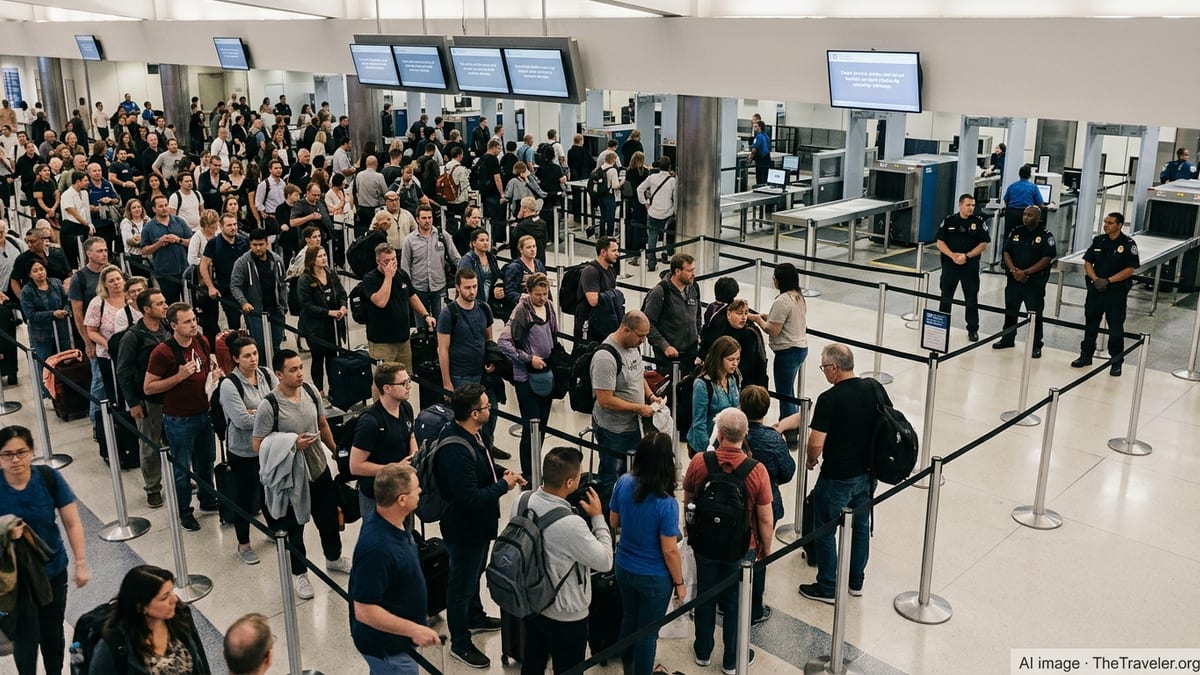
Nine airports highlighted as EES trouble spots
According to recent public statements from the low cost carrier and wider media coverage, Ryanair has identified nine airports where delays linked to the Entry/Exit System, or EES, are emerging as a recurring problem for passengers. Reports indicate that the list includes major leisure hubs such as Tenerife South, Palma de Mallorca, Alicante, Malaga, Milan Bergamo, Krakow and Paris Beauvais, with two further airports also described as EES “hotspots.”
These airports are key gateways for UK and other non EU travelers heading to popular Mediterranean and city break destinations. Industry coverage suggests that both arrivals and departures are being affected, with some passengers facing lengthy waits at passport control even after clearing airline check in and security.
Ryanair’s warning comes just as school holidays begin across much of Europe and the United Kingdom, pushing traffic to peak summer levels. Publicly available information points to a concern that existing teething issues with EES could be amplified by the seasonal surge in travelers, resulting in missed flights, congested departure halls and pressure on airport staffing.
Airport specific reports over recent weeks have described snaking lines at border posts, with non EU passengers required to undergo new biometric checks, including fingerprinting and facial scans, at kiosks that are still being phased in and tested in some locations.
EES rollout blamed for new bottlenecks
The EU’s Entry/Exit System is designed to replace manual passport stamping for non EU nationals entering and leaving the Schengen area. The scheme records biometric data and travel history electronically to strengthen border security and track overstays. However, media reports and airline briefings indicate that the initial implementation at some airports has been slower than anticipated, leading to longer processing times at border control.
Passenger accounts collated by European news outlets describe queues stretching through terminal corridors at busy weekend peaks, with some travelers reportedly held in line for more than an hour before reaching a border officer. These delays appear to be most acute at airports that receive large volumes of leisure traffic from the UK and Ireland, where a high proportion of passengers now fall under the more stringent third country national rules following Brexit.
Industry associations representing airports and airlines have also publicly raised concerns over the pace and manner of the rollout. In recent weeks, groups such as ACI Europe, Airlines for Europe and the International Air Transport Association have issued warnings that EES related congestion has reached a “critical” stage at certain locations, urging European institutions and national governments to allow greater flexibility in the early phases of implementation.
Ryanair’s latest advisory aligns with those broader concerns, depicting EES as the primary driver of the queues now being seen at the nine named airports. The carrier has argued in earlier public commentary that the system is not yet operating at the speed required for peak season volumes, especially at departure points popular with families and package holiday travelers.
Calls for temporary relief and operational fixes
In light of the emerging bottlenecks, Ryanair is calling for emergency adjustments to how EES is applied during the busiest travel weeks of the summer. Coverage of the airline’s position indicates that it is urging national authorities to make full use of flexibilities written into EU law, allowing border agencies to streamline the use of kiosks and biometric steps or to temporarily ease certain requirements where safe to do so.
The carrier has specifically highlighted the risk of a repeat of recent incidents in which passengers have missed flights after being held in border queues. In one high profile example reported last month, a Ryanair service left a French regional airport without around 150 booked passengers who were still waiting at passport control when boarding closed. That episode has been cited by commentators as a warning of how quickly EES related delays can cascade into wider disruption during busy departure waves.
Airport operators, for their part, are accelerating moves to add more EES kiosks, reconfigure queuing space and deploy additional staff at peak times. Some terminals are adjusting signage and passenger flows, separating EES eligible travelers from EU citizens and trusted traveler lanes in an effort to prevent gridlock. Border police agencies in several countries have also signaled, through public briefings, that staffing levels are being reviewed ahead of the main holiday getaway.
Despite these efforts, industry observers note that infrastructure changes inside terminals take time to deliver, particularly in older buildings with limited space. As a result, airlines are expected to keep warnings in place for the remainder of the summer, even if conditions improve gradually at individual airports.
What summer travelers can expect at affected airports
For passengers heading through the nine airports highlighted by Ryanair, the most immediate impact is likely to be extended time spent in passport control queues on both arrival and departure. Travel reports indicate that while some off peak flights are moving through relatively smoothly, early morning and late evening rush periods are seeing the heaviest congestion as multiple departures bank up around the same time.
Ryanair and other airlines are using their websites and booking channels to advise customers to arrive earlier than usual for flights from EES hotspot airports. In some cases, recommended check in times have been extended by up to an additional hour to create more buffer for border checks before boarding closes. Travel agents and tour operators are relaying similar guidance to holidaymakers as they finalize summer plans.
Passenger advocacy groups are also reminding travelers that EES formalities apply separately from security screening, meaning that clearing one control point quickly does not guarantee a swift passage through the other. Families and larger groups are being encouraged in public guidance to keep travel documents ready, follow airport signage closely and listen for announcements that may call forward passengers on imminent departures.
While the delays are generating frustration, especially among families with young children, there are early indications that some airports are beginning to adapt to the new reality. Recent media reports from Spanish and Italian gateways suggest that queue management has improved on certain days as staff become more familiar with the technology and as additional kiosks come online, although conditions remain highly variable from one peak period to the next.
Wider implications for Europe’s peak travel season
The issues flagged by Ryanair at nine airports also carry broader implications for Europe’s aviation system during the height of the 2026 summer season. Analysts quoted in European business coverage note that airports and airlines entered the summer with tight capacity and limited room for operational shocks after several years of strong demand growth and constrained aircraft deliveries.
EES related disruption adds another layer of complexity on top of existing risks such as air traffic control strikes, localized staffing shortages and weather events. Any prolonged queues at border control can quickly spill over into missed connections, delayed departures and aircraft arriving late into their next rotation, magnifying delays across networks.
For tourism dependent regions, persistent congestion at gateway airports could also weigh on visitor satisfaction. Destination marketing bodies are closely tracking reports of long queues and missed flights, aware that negative travel experiences can influence future holiday choices. Some regional authorities are therefore working with airports and carriers to communicate practical advice to incoming visitors and to highlight quieter travel windows where possible.
Despite the warnings, most observers still expect the vast majority of flights to operate broadly as scheduled, with the main challenge centered on the passenger journey through the terminal rather than on airborne capacity. Travelers using the nine airports singled out by Ryanair are being urged by consumer groups and industry commentators to monitor airline updates closely, allow extra time at the airport and be prepared for variable wait times at passport control until the new system beds in more fully.