

More news on this day
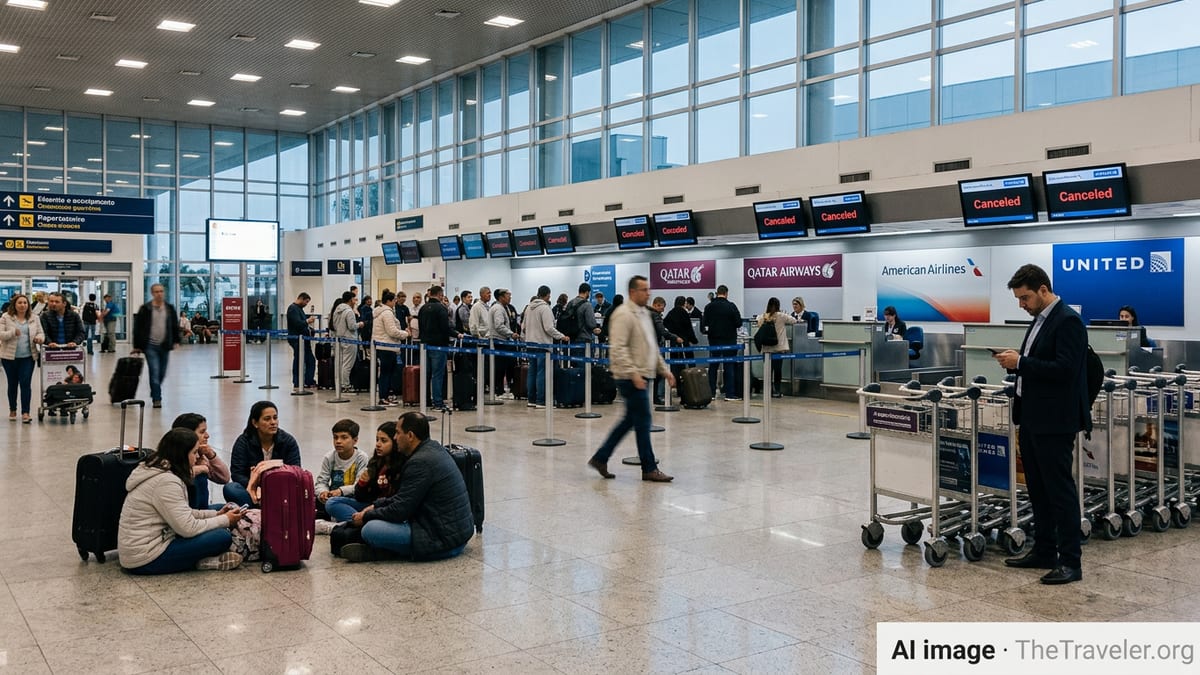
International travel to and from Brazil faced fresh turbulence on March 4 as Qatar Airways, American Airlines and United Airlines scrubbed four long-haul services touching São Paulo’s main international gateway, creating uncertainty for thousands of passengers already rattled by global airspace disruptions.
Global Tensions Ripple Into Brazil’s Skies
The cancellations at São Paulo/Guarulhos International Airport, Brazil’s busiest hub, come as airlines around the world adjust schedules in response to ongoing airspace closures across parts of the Middle East. While Brazilian airspace remains open and domestic operations largely stable, the knock-on effect of route suspensions and diversions has now reached one of South America’s most important intercontinental gateways.
According to airline and industry updates reviewed on March 4, Qatar Airways has temporarily halted scheduled operations through Doha, a key connecting point for Brazil–Asia and Brazil–Africa traffic. American and United, meanwhile, have trimmed select long-haul rotations, including flights that would normally feed São Paulo with passengers and onward connections. The combined result is four canceled services involving Guarulhos over a 24 hour window.
Aviation analysts note that the disruption is modest in numerical terms for now, but significant in strategic impact. Guarulhos is the primary link between Brazil and both the Gulf region and North America for business travelers, tourists and cargo shippers. Even a small cluster of cancellations can create bottlenecks in already tight mid‑season schedules.
Brazilian authorities have not announced any domestic operational restrictions related to the conflict-driven closures abroad. However, airport officials at Guarulhos are monitoring developments closely, coordinating with airlines and ground handlers to manage displaced passengers and rebookings as new advisories emerge.
How Qatar Airways, American and United Are Adjusting
Qatar Airways, which operates regular Boeing 777 and Airbus A350 services between Doha and São Paulo, confirmed that its wider global flight program remains paused while Qatari airspace is closed. That has translated into selective cancellations on the Brazil route, including at least one Doha–São Paulo leg and its corresponding return, removing a crucial one-stop option between Brazil and destinations in Asia, the Middle East and Eastern Africa.
American Airlines and United Airlines have not suspended Brazil operations wholesale but have pruned frequencies and swapped aircraft on long-haul services as they reposition fleets away from closed or constrained airspace. In practical terms, that meant at least two São Paulo services were pulled from the schedule on March 4, affecting passengers booked to connect in North American hubs to Europe, the Middle East and Asia.
Industry data show that both American and United have issued broad travel waivers covering flights touching several Middle Eastern and Gulf destinations, allowing customers to rebook without change fees. For Brazil-based travelers, those waivers are now being applied to complex itineraries that combine São Paulo departures or arrivals with onward connections through affected hubs such as Doha, Dubai and Abu Dhabi.
Airline network planners caution that further adjustments remain likely as operational conditions shift. Schedules for later in the week are being updated in short cycles, meaning flights currently showing as active may still be retimed, rerouted or cut if airspace restrictions tighten or are extended.
Impact on Travelers and Tourism in São Paulo
For travelers on the ground at Guarulhos, the cancellations have translated into long queues at airline counters, scrambled itineraries and renewed anxiety about international trips booked months in advance. Passengers connecting to Asia through Doha or the Gulf are among the hardest hit, often facing multi‑day delays while alternative routings via Europe, North America or Africa are arranged.
Tourism operators in São Paulo say the disruptions add another layer of uncertainty at a time when inbound travel from Europe and the Middle East had begun to show steady recovery. With Qatar Airways cutbacks and sporadic adjustments by American and United, high‑spend visitors from markets such as India, the Gulf states and parts of East Asia may opt to postpone or reroute trips to other Latin American destinations that remain easier to reach.
Business travel is also feeling the strain. São Paulo’s role as Brazil’s financial and corporate capital relies heavily on reliable long-haul connectivity. Executive itineraries that once depended on overnight nonstops or single-connection journeys are being stretched by additional stops and longer flying times as carriers avoid closed corridors and congested alternative routes.
Local hospitality groups report a mixed picture. Some city hotels near Guarulhos are seeing a short-term bump from stranded passengers needing unexpected overnight stays, while downtown properties focused on corporate and premium leisure guests brace for potential softening if cancellations grow and confidence in long-haul travel to Brazil wavers.
What Affected Passengers Should Do Now
Travel experts in Brazil urge passengers booked on Qatar Airways, American or United to São Paulo or beyond to treat the current situation as fluid and plan accordingly. They recommend checking flight status frequently through airline apps or customer service channels and avoiding unnecessary trips to the airport until a confirmed rebooking or new departure time is issued.
Customers whose flights have been canceled outright should first seek re-accommodation on the same carrier, including partner or codeshare services where possible. With capacity constrained on popular transatlantic and intercontinental routes, earlier rebooking windows can make the difference between securing a seat within a day or facing multi‑day delays.
Travel advisers also suggest reviewing ticket conditions and any applicable travel waivers. Many long-haul passengers may be eligible to change dates, reroute via alternative hubs or request refunds, depending on the fare type and the extent of schedule changes. Those who purchased comprehensive travel insurance should contact their insurers promptly with documentation of cancellations and extra costs such as hotel stays or additional ground transport.
For future trips, Brazilian travel agencies are encouraging clients to build in more generous connection times, avoid tight same‑day links through at‑risk hubs and maintain flexible itineraries that can be reshaped quickly if geopolitical tensions or airspace advisories flare again.
Outlook for Brazil’s Long-Haul Connectivity
Aviation analysts stress that the four cancellations involving Qatar Airways, American and United at São Paulo represent an early signal rather than a full picture of how Brazil’s long-haul connectivity may evolve in the coming days. If Middle Eastern airspace closures persist, airlines could be forced to redesign networks more aggressively, potentially reducing frequencies or consolidating services across the Southern Cone.
For Guarulhos, a prolonged period of disruption would test its role as a resilient gateway for South America. The airport has weathered previous global shocks through a mix of domestic feed and diversified partnerships with European, North American and Gulf carriers. Any sustained reduction in services from Qatar Airways or shifts by American and United would likely prompt Brazilian and regional airlines to explore additional long-haul opportunities, though new routes take time and aircraft to materialize.
Brazil’s tourism and trade bodies are watching developments closely, calling for clear, coordinated communication between carriers, regulators and airport operators so that the country can remain visible and accessible to global travelers. While the current wave of cancellations is rooted in events far from Brazilian territory, its effects underscore how quickly global aviation shocks can reach São Paulo’s terminals and, by extension, the wider Brazilian economy.
For now, travelers planning to pass through São Paulo/Guarulhos are being advised to remain flexible, stay informed and factor potential last‑minute changes into their journeys. As airlines like Qatar Airways, American and United recalibrate their schedules day by day, Brazil’s main international hub is bracing for a period of heightened uncertainty, even as it strives to keep the country connected to the world.