


More news on this day
British holidaymakers heading to Europe this summer are being urged to brace for significant disruption, as new data highlights 20 major EU and UK airports where delays and long queues are most likely to hit peak-season travel plans.
Get the latest news straight to your inbox!
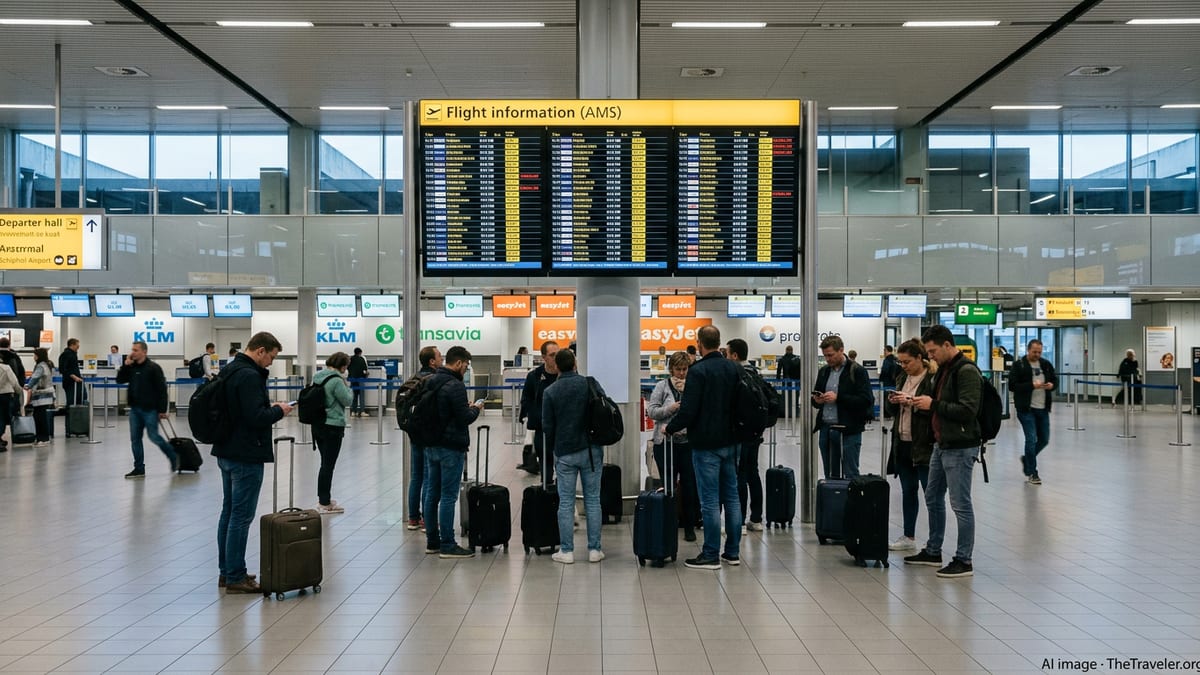
Fresh rankings put Manchester at the top of Europe’s delay list
Recent analysis of more than 9.5 million flights across 46 major European hubs in 2025 points to Manchester Airport as the worst performer for long delays, with more than 6 per cent of flights reportedly running over an hour late and average disruptions approaching two hours. The ranking focuses on serious, 60 minute plus delays, rather than the industry’s usual 15 minute benchmark, offering a starker picture of passenger impact.
The same dataset identifies other repeat offenders, including Palma de Mallorca, Krakow, Porto and Frankfurt, which together anchor the top tier of airports where extended delays have become a persistent feature of operations. While some of these airports are seasonal leisure gateways, the figures suggest that heavy summer traffic, constrained infrastructure and busy hub operations are combining to create severe bottlenecks at key times of day.
Complementary research drawing on Eurocontrol and airport punctuality reports for 2024 and 2025 underlines that these issues are not confined to a single country. Lisbon, Zurich and Nice have all featured prominently in delay tables based on air traffic management data, while major hubs such as Paris Charles de Gaulle and Heathrow continue to grapple with congestion during Friday and weekend peaks.
Four English airports among Europe’s worst for one hour plus delays
For UK travellers, one of the starkest findings is that four English airports appear in the latest list of Europe’s worst performers for 60 minute plus delays. Alongside Manchester, reports indicate that other large English terminals, including London Gatwick, London Heathrow and London Luton, record relatively high proportions of long waits, placing Britain among the continent’s most delay-prone markets.
These figures align with previous research by passenger rights specialists, which ranked Heathrow and Gatwick among Europe’s least reliable hubs when measured by cancellations and substantial schedule disruption. While some UK airports improved marginally in 2024 following the post-pandemic shock, the broader European trend of rising traffic and limited spare capacity has continued to feed knock-on delays.
Analysts point to a mix of structural and seasonal pressures. High volumes of leisure traffic to Mediterranean destinations, air traffic control restrictions over busy sectors, and reactionary knock-on delays from earlier flights all contribute to the risk profile at British hubs. For passengers, the practical effect is that late afternoon and evening departures in peak season are particularly vulnerable to rolling hold-ups.
Border checks and new EU systems add pressure for British travellers
Beyond flight punctuality itself, British visitors to the EU face a second source of disruption this summer in the form of longer border and security queues. Reports from airlines and travel industry bodies indicate that new EU entry and exit systems, combined with post-Brexit passport stamping and biometric checks, are lengthening processing times at several popular holiday gateways.
Some carriers have advised UK passengers to arrive at least three hours before departure for flights from EU airports, warning that check-in and border queues may be significantly longer than in previous years. Industry groups have cited examples of queues stretching to several hours at peak times, with concerns that the situation could deteriorate further during the late July and August rush if staffing and infrastructure do not keep pace.
Warnings from aviation associations and travel platforms have focused particularly on busy leisure hubs in Spain, Portugal, Greece and Italy, where heavy volumes of non-EU passengers are being funnelled through systems that are still bedding in. For British holidaymakers, this means that even where flights are broadly on time, delays at immigration and security can still lead to missed departures and stressful transfers.
Data shows summer peaks remain the weak point in Europe’s network
While annual averages for airport delays in Europe have remained relatively stable, Eurocontrol’s network performance reporting highlights a sharp deterioration during the core summer months. In July and August 2024, en route air traffic management delays reached some of their highest levels on record, with daily traffic exceeding 34,000 flights and multiple control centres in southern and eastern Europe operating close to capacity.
The latest punctuality assessments for 2025 suggest that these patterns are continuing, albeit with some variation between airports. On busy Fridays and weekends, daily delay minutes across the European network again surge, especially where weather, industrial action or local capacity constraints coincide with heavy leisure traffic. For the 20 most delay-prone airports, this translates into a greater likelihood of late departures across much of the afternoon and evening schedule.
Experts note that reactionary delays, where a late-arriving aircraft disrupts subsequent rotations, remain one of the dominant causes of poor punctuality. Once an airport or airline falls behind its planned timetable during the morning, the statistical likelihood of further disruption later in the day rises sharply, particularly at hubs with dense wave structures and limited room to recover.
How Brits can reduce risk when flying through high delay airports
Travel analysts stress that while the latest rankings may be discouraging, delays are not evenly distributed across all flights or all times of day. Morning departures from even the worst ranked airports tend to run closer to schedule than evening services, and some airlines demonstrate significantly better on time performance than others on identical routes.
For British travellers heading to or from airports identified among Europe’s 20 worst for delays, practical steps can help reduce exposure. Booking the first or second departure of the day on critical legs, allowing generous connection times, and avoiding tight self-made transfers between low cost carriers are all seen as sensible risk management in the current environment.
Given the added strain from EU border checks, passengers with checked luggage or travelling in school holiday periods are being advised through public guidance to arrive at airports earlier than they may have done in previous years. Allowing extra time for security and passport control, carrying essential items in hand luggage, and monitoring airline apps for gate and timing changes can make a significant difference if disruption does occur.
With peak season just beginning, the message from the latest data is clear. For Brits passing through Europe’s most delay-prone airports this summer, building in a margin for error on timings and connections may be the simplest way to stop a long-awaited holiday turning into an airport endurance test.