

More news on this day
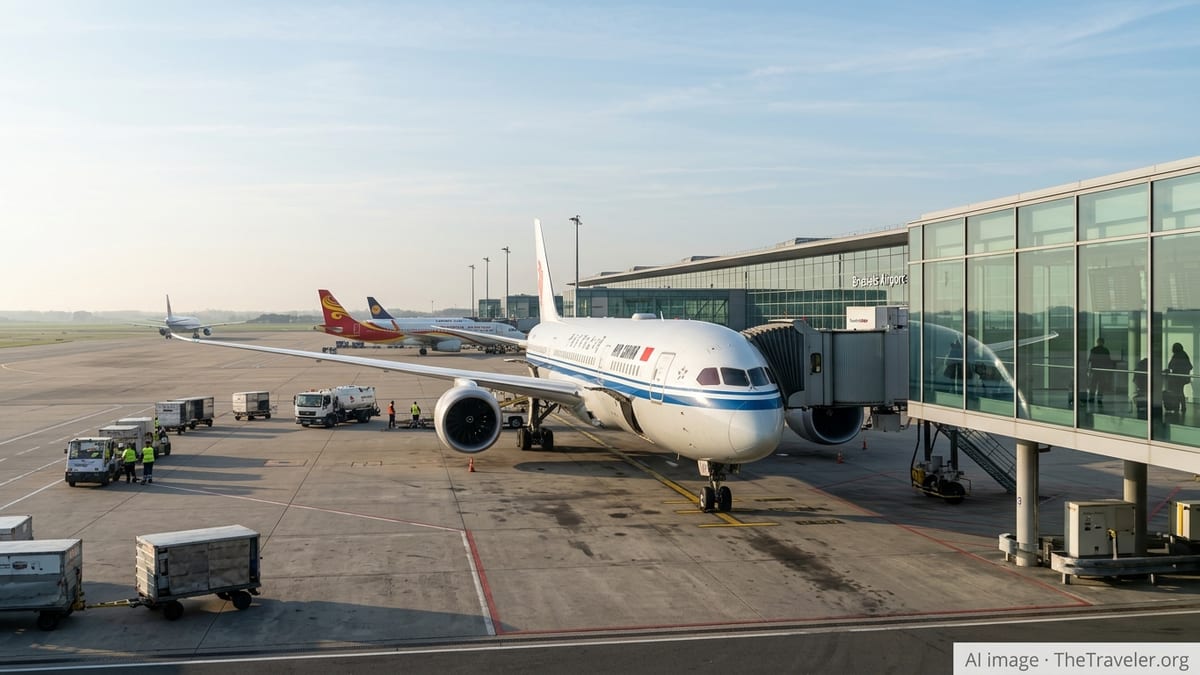
Travel across Europe faced fresh disruption as operations at Brussels Airport were hit by 112 delayed flights and four cancellations, unsettling travel plans for Belgium-based passengers bound for Milan, London, Dublin, Bangkok, New York City and several other destinations.
Get the latest news straight to your inbox!
Wide Impact Across Major Carriers and Routes
Publicly available flight-tracking data for Saturday, 20 June 2026, indicates that carriers including Air Baltic, TUI Fly, Ryanair and Brussels Airlines experienced significant schedule disruptions at Brussels Airport, with knock-on effects across their short and long haul networks. The bulk of the delays were concentrated on intra-European services, but intercontinental routes were also affected.
Flights linking Brussels to key European hubs such as Milan, London and Dublin recorded late departures and extended ground times, leading to rolling delays through the afternoon and evening. Several departures to London area airports and Northern Italy showed delayed pushback times of more than one hour, creating missed connections for onward travel.
Disruption extended to long haul services, including departures toward Bangkok and New York City. Passengers on these flights faced extended waiting times at departure gates as aircraft and crews were repositioned, while arrival schedules at destination airports were adjusted to accommodate later landing slots.
The four reported cancellations were spread across both low cost and full service airlines. While they represent a small fraction of the day’s total schedule, they added to the uncertainty for travelers already navigating a heavily disrupted timetable.
Operational Strain After Recent Air Traffic and Staffing Turbulence
The latest difficulties for passengers at Brussels Airport come in the wake of a turbulent period for Belgian air traffic. Earlier in June, a strike by air traffic controllers led to a near-total halt of flights to and from Belgian airports for several hours, according to information shared by aviation-focused communities and operational summaries. That earlier suspension of services created a backlog of rebookings and placed added pressure on airline schedules.
Recent European air traffic data highlights that airports across the continent, including Brussels, have been working with limited spare capacity. Network reports and punctuality statistics for early 2026 show that while Brussels maintains on-time performance broadly in line with other major hubs, even short disruptions can quickly cascade into widespread delay as aircraft and crews rotate through tightly packed timetables.
Industry observers note that post-pandemic travel recovery, combined with periodic industrial action in several countries, has left airlines with little room to absorb new shocks. When weather, staffing constraints or airspace restrictions intersect on a busy travel day, delays and selective cancellations are often used to stabilize schedules, amplifying the impact on passengers at transfer-heavy hubs such as Brussels.
Saturday’s pattern of disruption is consistent with this broader European context, where relatively small operational setbacks can cause a chain reaction across multiple airlines and destinations once the day’s wave structure is underway.
Passenger Experience: Missed Connections and Long Queues
For travelers passing through Brussels, the operational issues translated into lengthy waits, missed connections and the need to scramble for alternative options. Reports from recent days already described extended queues at border control and security checkpoints during peak periods, and the new wave of delays added further congestion across terminals.
Passengers booked on multi-leg itineraries via Brussels to cities such as London, Dublin or New York City faced heightened risk of misconnecting, particularly where original layovers were under two hours. In several cases, travel planning forums referenced the need to secure overnight accommodation and rebooking for next-day departures when onward flights could not be met.
Families traveling at the start of the European summer season were among those most affected, with school holiday demand pushing load factors higher on popular leisure routes to Southern Europe and long haul holiday destinations. As available seats on later flights quickly filled, same-day rebooking options became limited for some passengers departing from Belgium.
The disruption also affected arriving travelers whose flights were held in departure cities. Some arrivals reached Brussels late in the evening, with reduced onward ground transport options and busier-than-usual baggage and arrivals halls, compounding an already stressful travel day.
Rights, Remedies and What Passengers Can Do
Under European passenger protection rules, travelers departing from Brussels are entitled to certain forms of assistance and, in some cases, financial compensation when flights are heavily delayed or cancelled. Regulatory guidance and consumer-rights organizations explain that eligibility depends on factors such as the length of the delay on arrival, the distance of the journey and whether the disruption was within the airline’s control.
For the current wave of delays and four cancellations, affected passengers are generally advised to retain boarding passes, booking confirmations and any written notifications from airlines regarding the reason for disruption. Travel-rights advocates state that maintaining a clear record of timings and expenses, such as meals or accommodation, can support later reimbursement or compensation claims where applicable.
Travel planning experts also recommend checking both airline apps and independent flight-tracking platforms rather than relying on airport departure boards alone, especially on days of widespread disruption. In several recent European cases, mobile notifications about rebooked itineraries or gate changes arrived earlier through airline digital channels than through terminal screens.
For travelers with imminent departures from Brussels Airport, guidance from consumer groups suggests arriving earlier than usual, packing essential medication and valuables in carry-on baggage, and preparing for the possibility of extended waiting times at check-in, security and boarding. Those with tight connections via hubs such as Milan, London or Dublin are being urged to examine whether longer layovers or earlier feeder flights are feasible during this period of operational strain.
Broader European Travel Outlook
The difficulties at Brussels Airport are unfolding as several European hubs brace for an intense summer travel season. Advance notices of possible industrial action among transport workers in a number of countries, along with ongoing staffing challenges at some air navigation and ground-handling services, suggest that punctuality will remain under pressure.
Recent network performance reports for early 2026 show that while overall on-time departure rates across Europe remain acceptable by historical standards, the proportion of flights experiencing longer delays has risen compared with pre-pandemic years. Brussels is not an outlier in this regard, but its role as a key connection point for both European and intercontinental traffic means that disruptions there can ripple through a wide range of city pairs.
Airlines serving Brussels, including Air Baltic, TUI Fly, Ryanair and Brussels Airlines, are expected to continue adjusting schedules and aircraft rotations in response to passenger demand and operational realities. Industry analysts note that even modest timetable changes can help restore resilience, though any adjustments may temporarily inconvenience travelers whose original flight times are altered.
For passengers in Belgium planning trips to destinations such as Milan, London, Dublin, Bangkok and New York City in the coming weeks, the overall advice from travel specialists is to monitor bookings closely, allow extra time for connections, and remain prepared for last minute changes. While the situation at Brussels Airport on 20 June 2026 reflects a snapshot rather than a complete shutdown, it underscores how quickly travel plans can be upended when multiple flights across several carriers are simultaneously delayed.