


More news on this day
Travelers passing through Buffalo Niagara International Airport on Thursday faced mounting disruption, as three flight cancellations and at least 14 delays rippled across routes linking the region with New York, Toronto, Chicago, Boston and other U.S. destinations.
Get the latest news straight to your inbox!
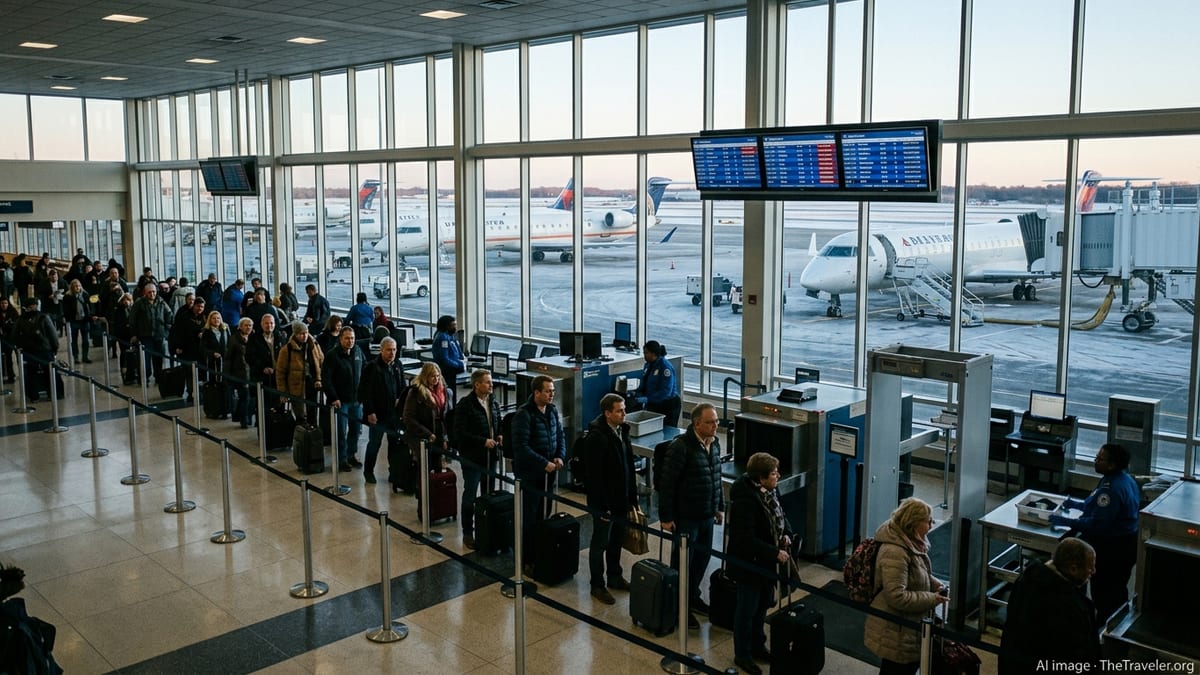
Morning Operations Slow Under Weather and Congestion Pressure
Publicly available flight-tracking boards for Buffalo Niagara International Airport on Thursday show a patchwork of delayed departures and arrivals across multiple carriers, including Southwest, JetBlue and Delta, with several services running significantly behind schedule. The disruption has been concentrated on high-frequency corridors that connect western New York with larger hubs in the Northeast and Midwest such as New York City, Chicago and Boston, along with cross-border links to Toronto.
Weather data published for the airport early Thursday indicated light rain and low cloud cover in the Buffalo area, conditions that can contribute to slower arrival and departure flows when combined with regional air traffic constraints. While the local conditions did not rise to the level of a full ground stop, the combination of minor weather issues and already busy summer schedules has left several aircraft and crews out of position, amplifying delays across the day’s timetable.
Operational dashboards tracking historical performance at Buffalo suggest the airport generally experiences modest congestion compared with larger coastal hubs, but a spike in delays over a short window can quickly strain gate availability and ground-handling resources. This environment has made even a small number of cancellations and a cluster of late-running flights particularly disruptive for travelers connecting onward to other U.S. and Canadian cities.
Early indications from airline status pages point to rolling departure pushes rather than wholesale schedule cuts, a pattern that often leaves passengers waiting at the gate while carriers attempt to recover lost time and minimize knock-on cancellations later in the day.
Impact on Routes to New York, Toronto, Chicago and Boston
The affected flights at Buffalo Niagara International Airport are concentrated on key regional corridors that serve as lifelines for both business and leisure travel in and out of western New York. Services to New York area airports, including connections feeding into major domestic and transatlantic networks, are among those experiencing disruption as carriers work around upstream delays and airspace congestion along the busy Northeast corridor.
Connections to Chicago, a critical mid-continent hub, have also seen schedule adjustments and staggered boarding times as airlines reposition aircraft arriving late from other cities. Travelers aiming to make same-day connections onward to the West Coast or to secondary Midwest destinations have reported tighter margins between flights and increased risk of missed onward journeys.
Regional coverage notes that cross-border links between Buffalo and Toronto, an important corridor for both tourism and business ties between western New York and southern Ontario, are feeling the ripple effect as well. Even modest disruption on these short-haul routes can have an outsized impact, since many passengers use them to connect to longer-haul international flights from Canada’s largest airport.
Flights between Buffalo and Boston, a route often used by both university travelers and corporate passengers, have likewise been affected by departure holds and altered gate times. In several cases, flights remain scheduled but are posting extended delays, increasing uncertainty for passengers with onward commitments in New England.
Southwest, JetBlue, Delta and Peers Navigate a Tight Summer Schedule
The current disruption at Buffalo comes during a period when U.S. airlines are already operating under pressure from tight summer schedules and high load factors. Federal transportation statistics released this month indicate that Southwest, JetBlue, Delta and other major carriers have kept overall cancellation rates relatively low in recent reporting periods, but even single-digit percentages translate into hundreds of disrupted flights nationwide when traffic volumes are high.
Industry analyses of carrier performance suggest that many airlines, including those serving Buffalo, are running networks with limited spare capacity. Crews and aircraft are scheduled tightly to meet demand, leaving little room to absorb weather-related slowdowns or unexpected maintenance. When a single rotation is delayed early in the day, subsequent flights on that aircraft can quickly fall behind schedule.
Operational planning documents for Buffalo Niagara International Airport highlight the important roles of low-cost and network carriers alike, with Southwest and JetBlue providing significant domestic leisure capacity and Delta and other legacy airlines feeding larger hubs. In this environment, a disruption affecting just a handful of departures can resonate through the schedule as carriers shuffle aircraft, gates and crews to keep later flights operating.
Travel forums and recent consumer reports indicate that passengers across the United States have become increasingly sensitive to even moderate delays, particularly where airlines repeatedly push departure times rather than cancelling outright. The pattern seen at Buffalo on Thursday, marked by a small number of cancellations combined with multiple extended delays, reflects this broader national tension between keeping flights on the board and providing predictable travel times.
What Travelers Are Experiencing at Buffalo Niagara Airport
Within the Buffalo terminal, the operational picture has translated into longer dwell times at gates and in seating areas near security. Travelers on delayed flights to major hubs have reported frequent schedule updates on departure boards, with departure times moving in increments as crews and aircraft position into place. Many passengers facing missed connections or time-sensitive plans have had to weigh same-day rebooking options against the risk of additional downstream disruption.
The airport’s layout and relatively compact footprint help keep walking distances manageable, but crowding can build quickly when several departures are held simultaneously. Publicly available airport statistics show that Buffalo typically handles far fewer daily flights than major coastal hubs, yet peak morning and late-afternoon banks can still produce congested gate areas when multiple services are running late.
Passengers on regional and cross-border routes, particularly those headed to Toronto or connecting through major U.S. hubs, face added complexity. International itineraries may involve minimum connection times that are difficult to meet once an initial departure leaves late, forcing some travelers to accept overnight stays or significant reroutes. Travel compensation services that monitor disruption patterns have been highlighting the importance of documenting boarding times, gate changes and published delays in case passengers later pursue reimbursement under U.S. or European consumer rules for affected itineraries.
Despite the challenges, publicly accessible live boards suggest that a significant portion of Buffalo’s schedule is still operating, albeit with varying degrees of delay. For many travelers, the primary impact is uncertainty and extended time in the terminal rather than outright trip cancellations.
Managing Plans as Summer Disruptions Persist
The localized disruption at Buffalo Niagara International Airport reflects broader patterns across the U.S. network as the busy summer travel season gathers pace. Recent coverage of operations at other regional hubs has pointed to similar clusters of delays and selective cancellations driven by a combination of storms, air traffic control constraints and tight staffing in ground operations.
Travel analysts advise that passengers flying to or from airports like Buffalo build additional time into itineraries, particularly when connecting onward through large hubs or across borders. Choosing longer connection windows, avoiding the final flight of the day on critical legs and monitoring flight status closely in the 24 hours before departure can mitigate some of the risk that arises when small disruptions cascade through a tightly scheduled network.
Consumer advocacy groups also encourage travelers to familiarize themselves with airline policies regarding rebooking, meal vouchers and overnight accommodations in the event of significant delays or cancellations. While the obligations of carriers can vary depending on whether disruptions are attributed to weather, air traffic control or airline-controlled factors, passengers who understand the basic framework may be better positioned to navigate irregular operations days like the one unfolding at Buffalo.
With the summer schedule only beginning to peak, the situation at Buffalo Niagara International Airport on Thursday serves as an early reminder of how quickly a handful of cancellations and a cluster of delays can unsettle travel plans for passengers across New York, Ontario and beyond.