


More news on this day
Kelowna International Airport in British Columbia is experiencing severe operational disruption as dense wildfire smoke reduces visibility, leading to extensive flight delays, cancellations and travel uncertainty at one of Canada’s busiest regional gateways.
Get the latest news straight to your inbox!
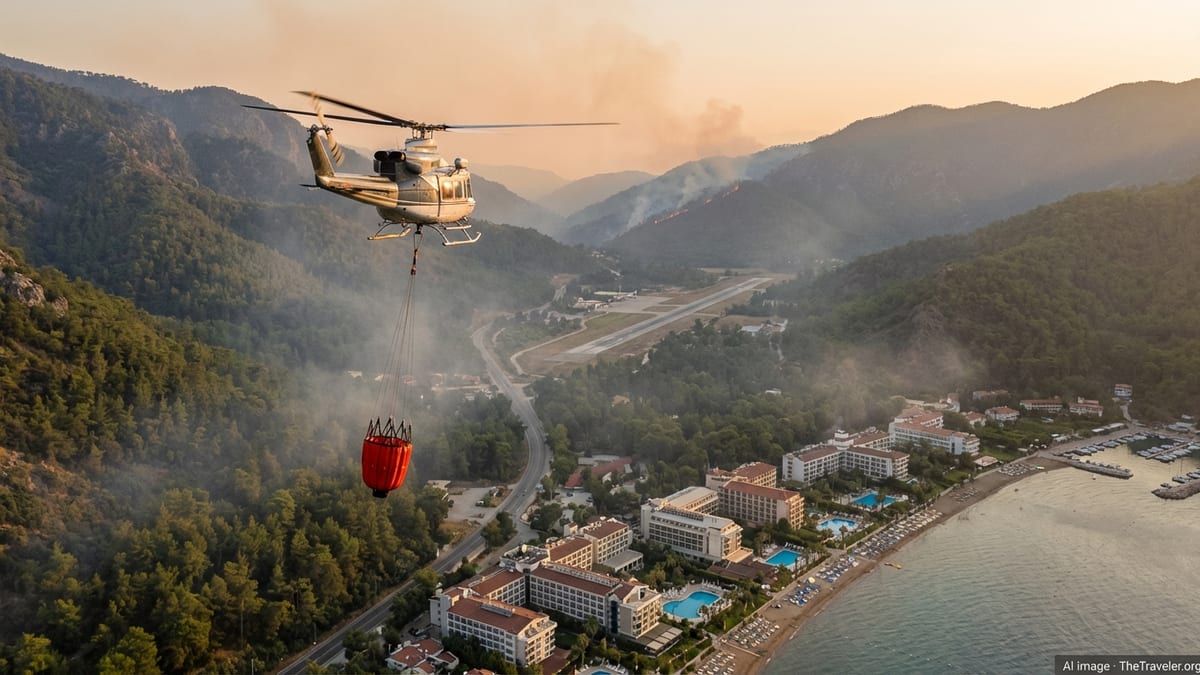
Smoke-Choked Skies Disrupt a Key Regional Hub
Publicly available flight information shows that Kelowna International Airport, which normally serves as a critical air link for the Okanagan Valley, has seen a sharp rise in delayed and cancelled services as wildfire smoke settles over the region. Reduced visibility and rapidly shifting smoke conditions are affecting both arriving and departing flights, with some aircraft holding, diverting or being scrubbed from schedules as conditions change.
Data from airline status pages and airport departure boards indicates that the disruption is hitting a mix of domestic and regional routes, including connections to major hubs such as Vancouver and Calgary. Travelers are reporting hours-long delays, last-minute gate changes and cancellations that are being confirmed only shortly before scheduled departure times as airlines wait for visibility and air quality assessments.
The operational strain comes at the height of the summer holiday period in Canada, traditionally one of the busiest travel windows of the year for Kelowna. The airport, which has been working in recent years to expand capacity and attract new routes, is now contending with a hazard that falls outside typical infrastructure planning: dense, persistent wildfire smoke drifting in from active fire zones around the Interior.
Published coverage of previous wildfire seasons in the Okanagan shows that the airport has had to curtail operations before when smoke and nearby fire activity compromised safety margins. This year’s event is drawing renewed attention to how quickly smoke conditions can deteriorate and force large-scale changes to air traffic.
Visibility and Air Quality at the Heart of the Crisis
Reports from aviation tracking services and regional weather observations indicate that low visibility is the primary trigger for flight disruptions at Kelowna International Airport. Even when wildfires are burning some distance away, drifting plumes can lower ceilings, obscure runway environments and affect instrument approaches, especially during early morning and evening periods when temperatures and wind patterns shift.
In addition to visibility, air quality data from provincial monitoring networks shows elevated levels of fine particulate matter, commonly referred to as PM2.5, across the central Okanagan during the current wildfire episode. While commercial aircraft can technically operate in smoky air, aviation safety protocols factor in the combined effect of visibility, wind, temperature inversions and the location of active fires when determining whether it is safe to launch or land flights.
Historical documentation of major wildfires in the region, including the high-profile McDougall Creek fire in 2023, underscores how smoke can force airports to curtail or temporarily suspend operations even when flames are not directly threatening the airfield itself. Current conditions echo that pattern, with smoke once again emerging as the main operational constraint while firefighting activity continues elsewhere in the valley and on surrounding hillsides.
Air quality specialists also note that prolonged exposure to high smoke concentrations can pose health risks for airport workers on the ramp and for passengers spending extended periods in non-pressurized boarding bridges or ground transport. This adds another layer of complexity for airport and airline planners when deciding how many flights to move through a smoke-impacted facility on any given day.
Passengers Confront Cancellations, Detours and Uncertainty
Travelers caught in the disruption at Kelowna International Airport are facing a familiar but unwelcome pattern of rolling delays and same-day cancellations. Public comments on social platforms and travel forums describe early-morning flights that pushed back several hours, afternoon departures grounded after boarding, and connections missed due to knock-on effects at other Canadian hubs.
Some passengers report that aircraft have been forced to divert to alternate airports when visibility deteriorated faster than expected near Kelowna, adding unscheduled ground time and complicating crew scheduling. Others describe airlines consolidating lightly booked flights or rerouting travelers via different cities to keep them moving while conditions around Kelowna remain unstable.
Published advice from travel industry sources recommends that passengers flying to or from smoke-affected airports build extra time into their itineraries, keep contact information updated with airlines and consider flexible booking options where available. In Kelowna, many travelers are being urged via airline apps and text alerts to check flight status repeatedly on the day of departure rather than relying on schedules printed at booking time.
The current episode is especially challenging for visitors using Kelowna as a gateway to lakes, wineries and outdoor recreation across the Okanagan. Some are confronting not only flight uncertainty but also degraded air quality at their destinations, prompting last-minute changes to vacation plans and adding pressure on local tourism operators already managing through a volatile fire season.
Economic and Operational Strains for the Okanagan Region
The disruption at Kelowna International Airport is reverberating across the regional economy. The airport is a key link for business travelers, seasonal workers and cargo shipments serving the central Interior. When flights are delayed or cancelled in large numbers, hotel occupancy patterns, rental car availability and just-in-time delivery schedules can all be affected.
Municipal documents and financial reports related to the airport in recent years highlight how past wildfire seasons have already influenced planning and budgeting, including references to business interruption impacts from smoke and fire activity. The current crisis is likely to reinforce concerns about the long-term resilience of critical transportation infrastructure in the face of climate-related hazards.
Airlines operating into Kelowna must also contend with the financial cost of disrupted operations, including repositioning aircraft, accommodating stranded passengers and managing crew duty-time limits. When visibility swings rapidly between acceptable and unacceptable levels, carriers may find themselves making repeated go or no-go decisions for the same route within a short window, complicating scheduling and customer service.
Local businesses that rely heavily on tourist traffic during August report, through media coverage and chamber of commerce updates, a heightened sense of uncertainty as they monitor both the wildfire situation and the status of air links. If smoke persists over an extended period, the combination of health advisories, poor visibility and flight cancellations could weigh on late-summer revenues across the Okanagan.
Growing Focus on Climate Resilience and Future Preparedness
The latest smoke-driven crisis at Kelowna International Airport is feeding into a broader national conversation in Canada about how transportation systems can adapt to more frequent and intense wildfire seasons. Policy papers and research on climate resilience note that airports in fire-prone regions may need to invest in enhanced monitoring, contingency infrastructure and revised operating procedures to cope with prolonged periods of smoke and reduced visibility.
In recent planning documents, Kelowna International Airport has already identified wildfire and smoke as key operational risks, referencing both direct threats from nearby blazes and secondary effects such as airspace restrictions and passenger demand volatility. The current episode is likely to serve as a real-world stress test for those plans and may accelerate consideration of further mitigation measures.
Observers of aviation trends anticipate that carriers and airports across western Canada will increasingly factor wildfire patterns into seasonal scheduling, aircraft deployment and crew basing decisions. In the case of Kelowna, that could mean more built-in flexibility for re-routing flights, additional capacity at alternative airports and expanded communication channels with travelers during peak fire months.
For now, publicly available information indicates that operations at Kelowna International Airport will continue to be heavily influenced by changing smoke conditions in the days ahead. Travelers are being urged through airline and airport advisories to monitor updates closely, as the balance between safety, reliability and regional connectivity is tested once again in a wildfire-prone summer.