


More news on this day
Malaysia is entering 2026 with record visitor numbers, ambitious arrival targets and a nationwide Visit Malaysia 2026 campaign that together are positioning the country as Asia’s next major tourism powerhouse.
Get the latest news straight to your inbox!
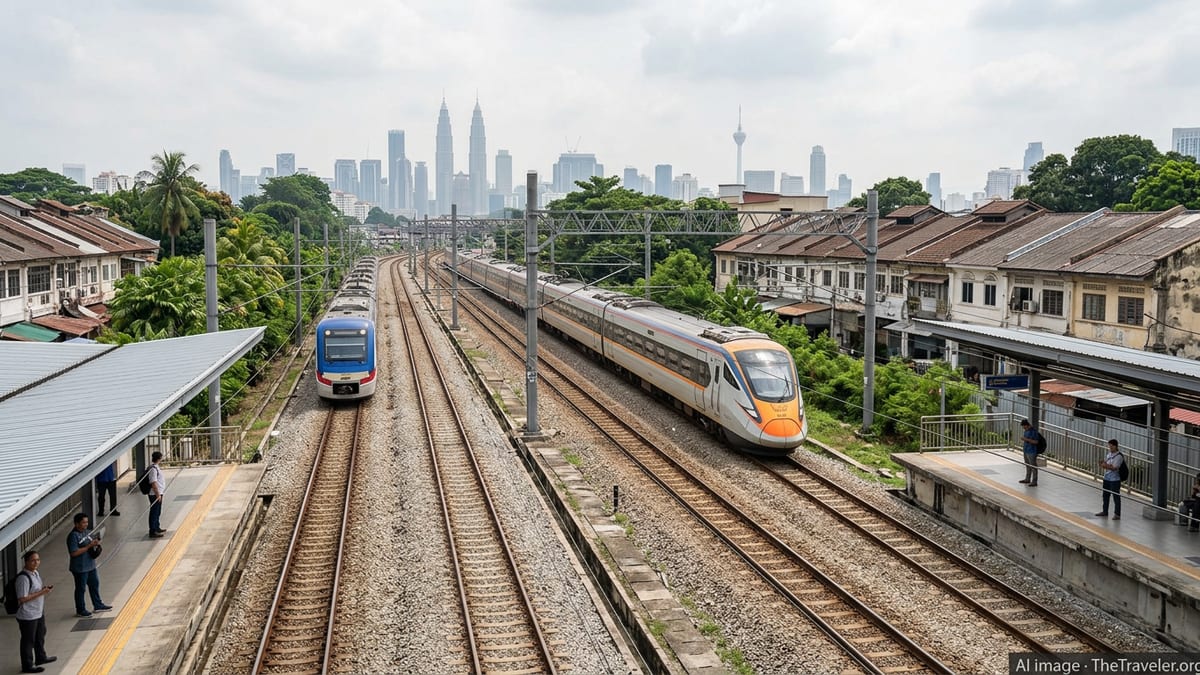
Record Arrivals Set the Stage for a Breakout Year
After several years of post-pandemic recovery, Malaysia’s tourism sector is moving from rebound to expansion. Publicly available figures for 2024 point to more than 25 million international arrivals, up strongly on 2023 and edging close to pre-pandemic levels. Industry observers note that travel demand remained robust through 2025, supported by improving air connectivity and a wider mix of source markets beyond traditional neighbours.
Regional datasets from ASEAN and UN Tourism show Malaysia consistently among the top two destinations in Southeast Asia by international arrivals, often trading places with Thailand. Analysts highlight Malaysia’s geographic position, relatively strong aviation hub in Kuala Lumpur and diversified source markets as structural advantages that have allowed it to regain scale quickly.
Tourism receipts have grown alongside volume. Local business media reporting on 2024 performance described tourism income reaching new nominal highs, as visitors spent more on accommodation, food, shopping and experiences. The combination of higher per-capita spend and rising arrivals is giving Malaysia fresh fiscal and private-sector momentum just as Visit Malaysia 2026 gets underway.
Within ASEAN, recent economic research also places Malaysia among the region’s more influential mid-sized powers, with tourism identified as a key soft-power and services export pillar. That positioning is expected to strengthen if the country achieves its 2026 visitor targets and consolidates its role as a high-value gateway to wider Southeast Asia.
Visit Malaysia 2026 Targets 47 Million Visitors
Visit Malaysia 2026 is the country’s flagship tourism drive for the decade. The campaign, which has been rolling out through soft launches and roadshows since 2024, was formally elevated through a series of national events in late 2025 and early 2026. Official campaign materials frame 2026 as a year-long showcase of “Malaysia Truly Asia,” combining culture, nature, food and urban experiences.
Tourism Malaysia documents and announcements describe a headline target of 47 million international visitors for 2026, almost double the estimated 2024 arrivals. The goal reflects confidence that pent-up travel demand, expanded air links and a full calendar of festivals, sports events and business conferences can pull in both first-time and repeat travelers at scale.
The strategy behind Visit Malaysia 2026 emphasises dispersing visitors across the country rather than concentrating them solely in Kuala Lumpur. State-level campaigns in destinations such as Melaka, Penang, Sabah, Sarawak and Johor are being coordinated with the national programme. This approach aims to spread economic benefits while easing pressure on the busiest urban centres.
Government-facing documents also highlight sustainability criteria as a core plank of Visit Malaysia 2026. The campaign narrative stresses alignment with global climate and conservation goals, with a focus on promoting protected marine parks, highland retreats and national parks in ways that balance visitor access with long-term environmental stewardship.
Air Connectivity, Infrastructure and New City Pairings
The 2026 tourism boom is closely linked to a rapid build-out of air connectivity. Airline schedules filed for the northern winter 2025 and early 2026 seasons show additional frequencies into Kuala Lumpur International Airport from North Asia, the Middle East and South Asia, alongside more point-to-point links into Penang, Kota Kinabalu and Kuching.
Regional low-cost carriers are ramping up flights between Malaysia and key ASEAN neighbours, especially Indonesia, Singapore, Thailand and Vietnam. Recent promotional campaigns in Jakarta and other Indonesian cities, for instance, have been tied directly to Visit Malaysia 2026, with capacity increases on popular leisure and shopping routes. Similar tie-ups are emerging in secondary markets in India and the Gulf.
On the ground, transport and hospitality investments made in the recovery years are now feeding into the boom. Upgrades to terminals, urban rail links and highways around Kuala Lumpur and major tourist regions are shortening journey times between airports, cities and resort areas. New hotel openings in the Klang Valley, Langkawi, Desaru Coast and Sabah are expanding room capacity at a time when occupancy rates are rising.
Analysts tracking regional competition point out that while Thailand continues to attract higher overall volumes, Malaysia’s connectivity strategy is refocusing on yield and diversification. By strengthening hubs in Penang and East Malaysia alongside Kuala Lumpur, the country is positioning itself as both a destination and a convenient regional stopover, broadening its appeal to long-haul travelers.
High-Value, Experience-led Tourism Takes Center Stage
Publicly available policy documents describe a deliberate pivot toward “high-value, experience-driven” tourism, with an emphasis on longer stays and higher spending rather than pure volume growth. This aligns with broader ASEAN trends in which destinations are competing on depth of experience, safety and sustainability, not only on price.
Malaysia is leaning into its multicultural profile as a differentiator. Heritage quarters in Penang and Melaka, Islamic arts and architecture in Kuala Lumpur, and indigenous cultures in Borneo are all being woven into packaged and independent itineraries that encourage visitors to travel beyond a single city. Culinary tourism is another pillar, with food festivals and night-market experiences promoted as year-round attractions.
Eco and adventure travel are expected to be major growth segments in 2026. Islands such as Tioman and Redang, the rainforests of Taman Negara, and the diving sites off Sabah are featured prominently in Visit Malaysia 2026 promotions. Industry commentary notes that operators are under increasing pressure to adhere to conservation requirements, including visitor caps in fragile marine and forest ecosystems.
Business events remain a crucial component of the high-value strategy. Kuala Lumpur and secondary cities such as Kuching and George Town are competing more aggressively for regional meetings and incentive travel. As Malaysia holds prominent roles in regional forums and trade events throughout 2026, the meetings and conferences calendar is expected to feed additional leisure tourism as attendees extend their stays.
Competition in ASEAN and the Rise of a New Regional Hub
Malaysia’s 2026 tourism surge is unfolding in an intensely competitive regional environment. Thailand, Indonesia, Vietnam and Singapore are all reporting strong growth, with several already surpassing their pre-pandemic arrival benchmarks. Data compiled by ASEAN statistics agencies indicates that Thailand remains the region’s top destination by volume, while Singapore leads in per-capita spending.
Within this landscape, Malaysia is increasingly framed in regional analyses as a rising hub that combines scale, connectivity and relative affordability. Its performance in 2023 and 2024 placed it near the top of ASEAN arrival rankings, and the 47 million visitor ambition for 2026, if achieved, would firmly entrench it as a co-leader in the bloc’s tourism hierarchy.
Industry observers note that Malaysia’s strengths lie in its breadth rather than a single flagship destination. While Thailand has Bangkok and numerous resort clusters, and Singapore positions itself as a compact premium city-state, Malaysia offers a portfolio spanning modern cities, historic ports, highlands, islands and Borneo’s biodiversity. This breadth is seen as attractive to repeat visitors who have already sampled neighbouring countries.
At the same time, competition is likely to intensify. Neighbouring destinations are investing heavily in marketing and infrastructure, and travellers have more choice than ever within a short-haul radius. For Malaysia, maintaining its 2026 momentum will depend on sustaining service standards, managing crowding in popular spots and continuing to improve on-the-ground connectivity that makes multi-city itineraries smooth and appealing.