


More news on this day
Burning Man travelers routing through Reno are being urged to allow extra time, avoid competing for scarce hotel rooms, and reconsider last-minute supply runs as the Hawk Fire continues to displace residents in northern Nevada.
Get the latest news straight to your inbox!
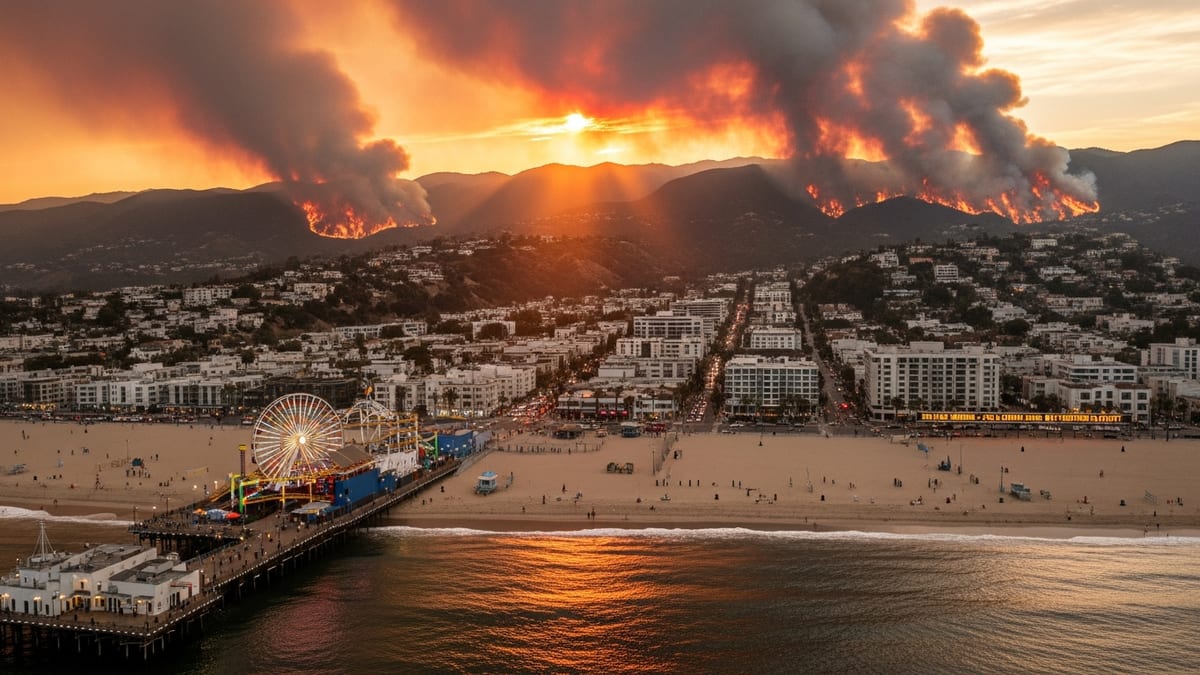
Wildfire near Reno disrupts communities ahead of Burning Man
The Hawk Fire, which started on August 22 northwest of Reno, has burned more than 15,000 acres in steep terrain near the Peavine Peak area, damaging neighborhoods along the urban edge and triggering large-scale evacuations. Publicly available incident updates describe intense fire behavior driven by dry fuels, gusty winds, and low humidity, with firefighters working on multiple fronts to protect homes and critical infrastructure.
Damage assessments reported in regional coverage indicate that at least 30 homes have been destroyed and additional structures damaged in affected neighborhoods north and northwest of the city. Thousands of residents have faced evacuation orders or warnings, with shelters and temporary accommodations in the Reno-Sparks area activated to house displaced families.
Local emergency bulletins show that evacuation zones and road access have shifted frequently as containment improves on some edges of the fire while hot spots remain elsewhere. Authorities have emphasized that conditions can change with little notice, leading to intermittent closures, traffic controls, and heavy movement of firefighting equipment in and around northwest Reno.
The evolving situation has placed additional strain on local services during what is already one of the busiest travel periods of the year for Reno, coinciding with both Burning Man and the Labor Day holiday.
Burning Man organizers ask travelers to reduce pressure on Reno
Burning Man regularly draws tens of thousands of participants through Reno-Tahoe International Airport and regional highways on their way to Black Rock City, about 120 miles to the northeast. Online guidance from the Burning Man Project and community channels this week highlights a new message for 2026: treat Reno differently this year to ease pressure on communities dealing with the Hawk Fire.
Public advisories circulating within the Burning Man community encourage travelers who have not yet reached northern Nevada to fuel up, stock food and water, and purchase basic supplies before entering the Reno-Sparks metropolitan area. The goal is to reduce demand on local grocery stores, gas stations, and other essential services that are also serving evacuees and first responders.
Participants are also being asked to avoid using Reno as a last-minute provisioning and leisure stop, a long-standing tradition for many who fly in or drive through before heading to the Black Rock Desert. Community messages emphasize that this year, discretionary hotel stays and nonessential shopping runs in Reno could make it harder for displaced residents to find rooms and basic necessities near their homes and workplaces.
In addition, Burning Man updates shared via online forums urge anyone already in the region to stay away from evacuation zones and fire-response corridors, and to monitor official county emergency pages for changes to road access or local restrictions that could affect travel timing.
Airport and highway congestion expected to intensify
Reno-Tahoe International Airport has warned that this year’s Burning Man period, combined with Labor Day travel, will bring especially heavy passenger volumes. Airport briefings released on August 25 project around 20,000 passengers per day at peak times, with capacity slightly higher than in 2025 and added nonstop flights from hubs such as Newark and Los Angeles to meet Burning Man demand.
Airport information stresses that travelers should arrive at least two hours before departure and allow extra time for parking, rental car returns, and check-in, particularly on August 30, September 4, and September 7, which are anticipated to be the busiest days. Construction along the airport’s loop road is expected to contribute to bottlenecks at terminal drop-off and pick-up areas, even before factoring in wildfire-related complications.
On the ground, highways linking Reno to the Black Rock Desert, notably Interstate 80 and U.S. 395, are already major arteries for event-bound traffic. Incident summaries for the Hawk Fire describe crews working to keep the blaze south of key routes near the California state line and northwestern suburbs, but shifting closures, smoke, and emergency-vehicle convoys could slow movement around interchanges on the west and north sides of the city.
Travelers approaching Reno by car are being encouraged, through both airport materials and community advisories, to build in substantial buffers for refueling, shopping, and unexpected delays before continuing east toward the playa, and to be prepared for longer queues at both airport facilities and major junctions.
Local lodging and services prioritized for evacuees
With thousands of residents still under evacuation orders or alerts, hotels, casinos, short-term rentals, and community shelters in the Reno-Sparks area are playing a critical role in housing people displaced by the Hawk Fire. Regional news coverage and local resource compilations list multiple properties offering discounted or fee-waived rooms for evacuees from affected parts of Washoe and neighboring counties.
Reports from local aid organizations and municipal channels indicate that food banks, expanded pantry hours, and donation drives are being organized to support evacuees and those who lost food during fire-related power outages. Community posts also highlight assistance for pet boarding, transportation, and replacement of essential items for households unable to return home.
In this context, Burning Man travelers are being directly asked by event-related guidance and community leaders to avoid booking short-notice hotel rooms in Reno and Sparks unless absolutely necessary. The message underscores that every room held for recreational travel is one less option for families displaced by the fire, many of whom hope to remain near workplaces, schools, and support networks while waiting for clearance to return.
Travelers who do need overnight accommodation are encouraged by public-facing resources to check for special instructions related to the Hawk Fire, including any priority policies for evacuees and guidelines on conserving resources such as water and power during their stay.
Practical advice for Burning Man travelers in a wildfire year
Based on current public information, Burning Man attendees planning to route through Reno in the coming days are being advised to begin monitoring official emergency and transportation channels before they depart. County emergency management pages, state wildfire information portals, and the airport’s own travel alerts are expected to provide the most reliable updates on active fire conditions, evacuation areas, and any new road or air disruptions.
For those flying into Reno-Tahoe International Airport, available guidance recommends confirming flight status, rental car reservations, and parking options well in advance, and being prepared for extended waits at baggage claim and ground transportation during peak Burning Man travel dates. Travelers may want to pre-arrange supply pickups outside the most impacted parts of the city or in communities not directly affected by the Hawk Fire.
Drivers arriving from California or other parts of Nevada are encouraged, in widely shared community advisories, to complete major fueling and grocery stops before reaching Reno-Sparks, carry extra water, and keep vehicles stocked for potential detours or slowdowns. Navigation apps may not always reflect the latest emergency road controls, so cross-checking routes with local emergency information is recommended.
Travelers who are able to adjust itineraries to reduce their footprint in the Reno area, while still passing safely toward Black Rock City, can help keep limited hotel rooms, grocery supplies, and emergency services focused on residents directly affected by the Hawk Fire. With the wildfire still active, the situation remains fluid, but publicly available updates emphasize that thoughtful planning by Burning Man attendees can ease pressure on a community already coping with a major disaster.
Daily Update for the Hawk Fire – Emergency Washoe
Reno-Tahoe International Airport – Burning Man and Labor Day travel update
Reno-Tahoe International Airport – Burning Man travel information