


More news on this day
A missile strike on Riyadh’s King Khalid International Airport on October 10, 2026, that killed 12 people and injured 309 has thrown Saudi Arabia’s fast‑growing tourism ambitions into uncertainty and left travelers urgently reassessing plans to visit the kingdom.
Get the latest news straight to your inbox!
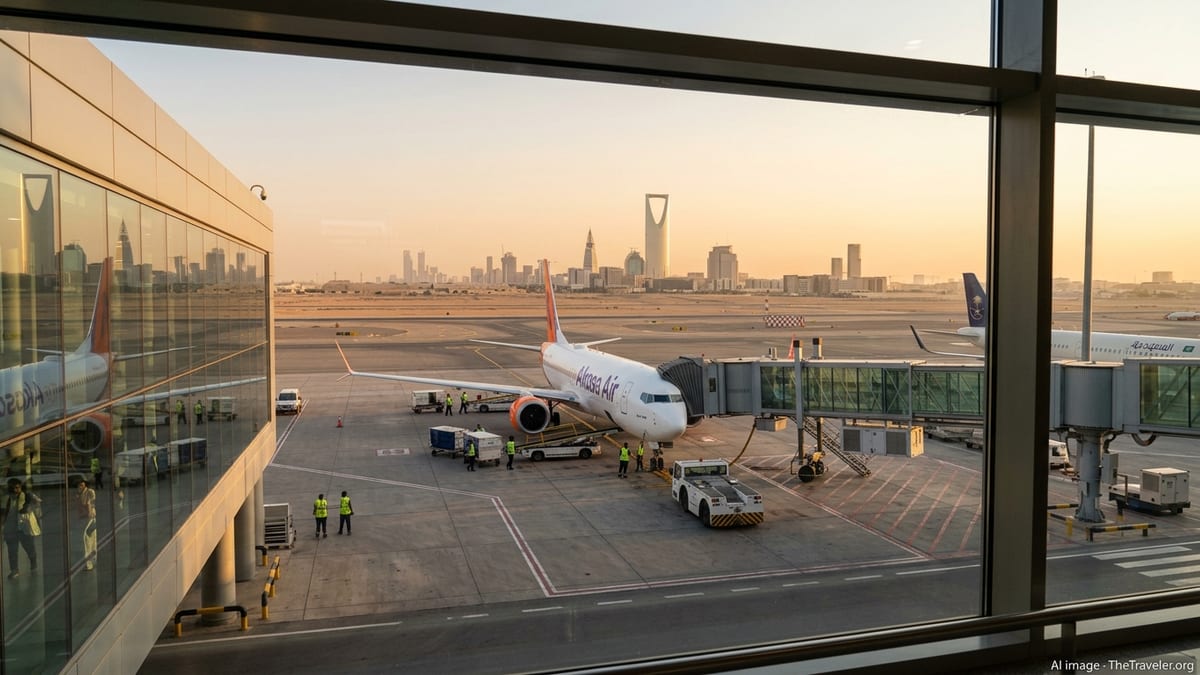
What Happened At Riyadh’s King Khalid International Airport?
Publicly available information from Saudi aviation authorities and regional media indicates that King Khalid International Airport, the main gateway to the Saudi capital, was hit on the afternoon of Saturday, October 10, 2026. The attack targeted areas around the passenger terminal complex, in what officials in the kingdom have described as part of an escalating campaign against Saudi aviation infrastructure.
The Saudi General Authority of Civil Aviation later confirmed that 12 people were killed and 309 injured, including Saudi citizens and foreign residents. Local coverage in Arabic and English reports that among the dead are at least four Saudis and several expatriates of different nationalities, with some of the wounded in critical condition. The casualty figures make this the deadliest single strike on Saudi civilian infrastructure in more than a decade.
Regional and international outlets attribute the attack to Yemen’s Houthi movement amid broader tensions linked to the conflict in Yemen and the wider confrontation involving Iran and Gulf states. Previous days had already seen projectile and drone incidents against Saudi airports, but the October 10 strike on Riyadh marked a sharp escalation because of the high casualty toll and the symbolic importance of the capital’s main hub.
Footage and photographs verified by news organizations show damaged terminal areas, shattered glass and debris inside parts of the passenger facilities. While the airport’s core infrastructure, including runways and control systems, appears to have remained structurally intact, the impact on public confidence and perceptions of safety has been immediate.
Current Status Of Flights And Airport Operations
Immediately after the strike, Riyadh’s King Khalid International Airport suspended operations and diverted inbound flights, according to statements published by the General Authority of Civil Aviation and coverage by regional news outlets. Arriving aircraft were rerouted to other Saudi airports, including Jeddah and Dammam, while departures from Riyadh were held or cancelled.
By the morning of Sunday, October 11, some carriers had begun planning limited resumptions of service, but the situation remains fluid. Airline advisories and booking systems show a mix of cancellations, schedule changes and aircraft swaps on routes into Riyadh, with many operators allowing free rebooking to other Saudi gateways over the next several days. Travelers with imminent departures are being encouraged by airlines and travel agents to monitor their reservations closely and be prepared for last‑minute disruption.
Terminal access in Riyadh has also tightened significantly. Reports from local media describe enhanced security checks, restricted vehicle access to curbside areas and additional screening inside terminals as authorities work to secure the site and assess structural damage. Portions of the terminal complex remain cordoned off as investigators examine the impact zone and repair works get under way.
It is important to stress that conditions may change rapidly. Some airlines could choose to avoid Riyadh for longer periods if security concerns persist, even if the airport formally reopens. Others may restore regular service more quickly, particularly on heavily trafficked business routes within the Gulf and to major international hubs. Travelers should rely on real‑time information from their airline before heading to the airport.
How Have Travel Advisories For Saudi Arabia Changed?
Governments that send large numbers of visitors to Saudi Arabia have updated their travel advisories in response to the airport attacks and the broader regional security picture. As of October 11, 2026, the United States has raised its advisory for Saudi Arabia to Level 3, “Reconsider Travel,” citing the risk of missile and drone attacks, terrorism and ongoing military conflict. The change came in an update published the day before the Riyadh strike and has taken on new urgency in light of the latest events.
Publicly accessible advisories from several European governments, as well as countries such as Canada and Australia, also highlight the risk of projectiles and drones targeting critical infrastructure in Saudi Arabia. Many of these notices single out airports, oil facilities and border regions with Yemen as areas of particular concern, and they urge travelers to avoid locations that may be seen as symbolic or strategic targets.
These advisories typically do not forbid travel, but they do influence insurance coverage and corporate travel policies. Some insurers may exclude cover for incidents linked to war or terrorism in specific areas, while multinational companies can temporarily halt non‑essential business trips to destinations under heightened alerts. Leisure travelers planning pilgrimages or tourism itineraries in Riyadh and other Saudi cities may likewise face pressure from families or tour operators to postpone.
Because advisories are being updated frequently, prospective visitors are being encouraged in public guidance to check the latest notices for Saudi Arabia not only at the time of booking, but also shortly before departure. In many cases, governments distinguish between different regions within the country, with the border areas near Yemen often subject to stricter warnings than major cities like Riyadh and Jeddah, even after the airport strike.
Assessing The Safety Of Travel To Saudi Arabia Now
The central question for many travelers is whether it is safe to visit Saudi Arabia in the immediate aftermath of the Riyadh airport attack. There is no simple, universal answer. Risk tolerance varies widely, and conditions can evolve quickly. However, several factors can help travelers frame their decision.
First, the October 10 attack demonstrates that major civilian infrastructure in the capital is within range of projectiles and that such strikes can cause mass casualties. While similar incidents have previously affected airports in southern Saudi Arabia and neighboring countries, the scale and visibility of this strike set it apart. Travelers who are particularly risk‑averse or traveling with children may reasonably decide to defer non‑essential trips until there is a sustained period without new attacks.
Second, Saudi authorities have invested heavily in layered air‑defense systems and airport security since earlier rounds of attacks on airports and oil facilities in the late 2010s and early 2020s. Public reporting on interception rates suggests that many incoming threats are detected and neutralized before reaching targets, which may help limit the frequency of successful strikes. However, the events at King Khalid International Airport show that no system can offer absolute protection.
Third, once inside the country, daily life in major Saudi cities has often continued with a degree of normality even during periods of heightened regional tension. Shopping malls, hotels and business districts in Riyadh and Jeddah have remained busy, and the kingdom has continued hosting international conferences, sports events and religious tourism on a large scale. For many residents and long‑term expatriates, the perceived risk is weighed against these signs of continuity.
Travelers should consider the purpose of their trip, their personal risk threshold and any constraints imposed by employers, universities or tour organizers. Those who decide to proceed may look at alternative routings, such as flying into Jeddah or Dammam instead of Riyadh, and then using domestic connections if and when they become reliably available.
Practical Advice For Travelers With Upcoming Plans
For visitors who already hold tickets to Riyadh or broader Saudi itineraries, the immediate priority is to clarify the status of flights and accommodation. Many airlines have introduced short‑term flexibility measures on routes to Riyadh, including fee‑free changes to later dates or to other Saudi gateways. Some carriers are allowing travelers to rebook onto services to Jeddah’s King Abdulaziz International Airport or Dammam’s King Fahd International Airport at no extra fare for travel within a defined window.
Hotel policies are more mixed. Large international chains in Riyadh often permit late changes or cancellations for stays booked on flexible rates, but promotional or prepaid reservations may be more restrictive. Travelers who booked through online travel agencies should check both the hotel’s rules and the platform’s own policies for events classified as security incidents or force majeure.
Once in the kingdom, travelers are being advised in publicly available guidance to stay alert to local developments. This can include following reputable regional news outlets, paying attention to announcements at airports and transport hubs, and familiarizing themselves with shelter areas in hotels or conference venues. Visitors should also ensure their mobile phones are set up to receive local emergency alerts where such systems are in place.
Basic precautions that apply in many higher‑risk environments also make sense here: avoiding non‑essential time around critical infrastructure, limiting visits to observation points overlooking military or energy facilities, and steering clear of any public gatherings that could be perceived as political. While most foreign visitors are unlikely to be targeted directly, proximity to a symbolic site at the wrong moment can increase exposure to risk.
Ultimately, travel to Saudi Arabia has not been halted, and flights to and from the country continue, albeit with disruption at Riyadh. For some travelers, particularly those with essential business or family reasons, the balance may still favor going ahead while taking sensible precautions. For others, the combination of elevated travel advisories, the recent strike on a major civilian airport and ongoing regional tensions will be compelling reasons to postpone until the security situation stabilizes.