


More news on this day
Air travelers across California are facing another morning of disruption on May 17 as tracking data shows 548 flight delays and 11 cancellations affecting services in and out of Los Angeles, San Francisco, and San Diego, with regional operator SkyWest and major carriers Delta Air Lines and United Airlines among those managing extended gateholds and rolling schedule changes.
Get the latest news straight to your inbox!
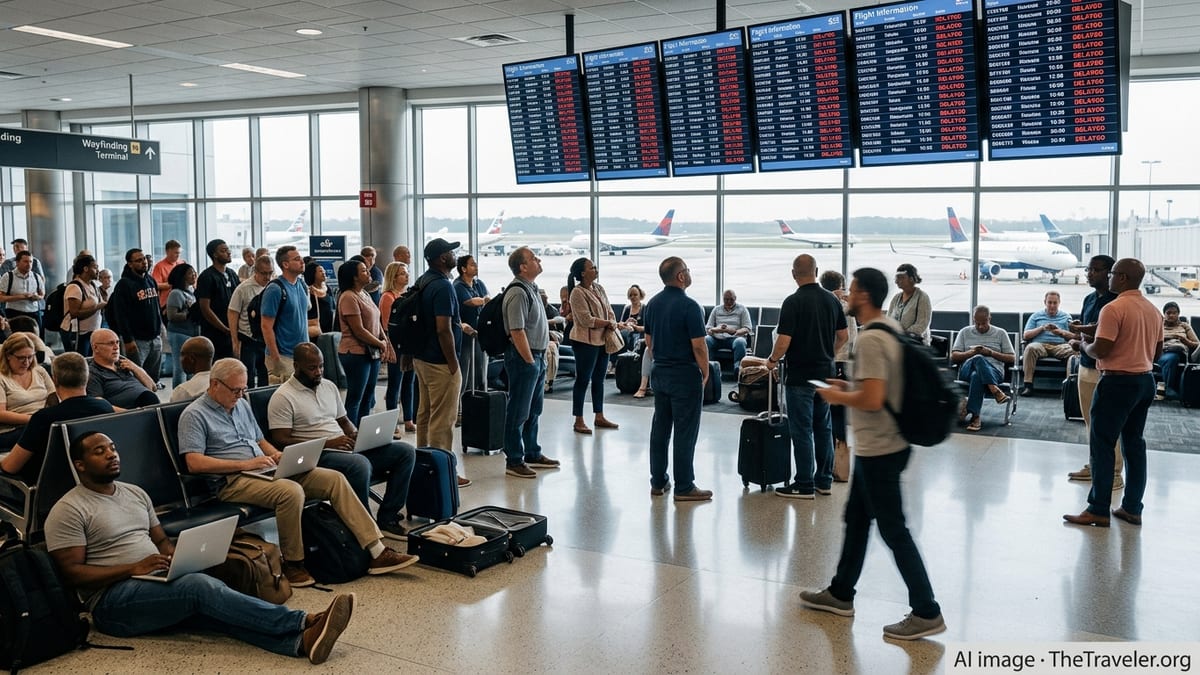
Delays Mount Across California’s Coastal Triangle
Publicly available aviation dashboards and flight-tracking services indicate that Sunday’s disruption is concentrated at the state’s busiest coastal hubs: Los Angeles International Airport, San Francisco International Airport, and San Diego International Airport. The bulk of the 548 delays are tied to short-haul routes up and down the West Coast, where even modest schedule slippage can quickly cascade through tightly timed networks.
Live boards for San Diego show a steady pattern of late arrivals and departures on routes linking the city with Los Angeles and San Francisco, underscoring how sensitive the single-runway airport is to any upstream delay. Similar patterns appear on departure summaries for Los Angeles, where early-morning holds and slight pushbacks can ripple into peak daytime banks.
Regional connections and shuttle-style hops are particularly affected, as aircraft cycle several times a day through the same airports. A single long gatehold in San Francisco, for example, can leave an aircraft and crew arriving late into Los Angeles, compressing the turnaround before an onward leg to San Diego or another West Coast city.
The emerging picture is one of widespread but moderate-length interruptions rather than a complete shutdown. Most affected flights are eventually departing, though often outside their scheduled windows, as airlines attempt to preserve as much of the day’s program as possible.
SkyWest’s Regional Network Feels the Strain
SkyWest appears prominently in today’s disruption picture because of its role as a key regional operator for several major brands. According to company disclosures and industry data, the airline flies under contract for Delta Air Lines, United Airlines, American Airlines and Alaska Airlines, often operating short-haul routes between California’s main hubs and regional cities.
In practice, that means a delayed SkyWest-operated departure between Los Angeles and San Francisco or San Diego can simultaneously register as a delay for Delta Connection or United Express in public tracking systems. As a result, a relatively small number of regional aircraft can account for a disproportionate share of late departures across the network when conditions tighten.
Industry briefings in recent weeks have highlighted how sensitive regional flying has become to any operational friction, from crew positioning to runway programs at major hubs. When a high-volume airport such as San Francisco is placed under a ground-delay program, regional partners like SkyWest have little choice but to hold aircraft at the gate until revised departure slots are available.
Today’s figures suggest that this dynamic is playing out again across California, with SkyWest-managed flights shouldering much of the variability in departure times while mainline carriers focus on keeping longer-haul services on schedule.
San Francisco Bottlenecks Drive Gateholds South
San Francisco International Airport continues to be a focal point for disruption across the state. Aviation briefings circulated earlier in May flagged persistent ground-delay programs at San Francisco, with structured holds adding more than an hour to typical operations during busy periods. Reduced arrival rates and restrictions on runway configurations have further compressed the airport’s capacity.
These constraints at San Francisco are now echoing through California’s broader air system. Flights departing Los Angeles and San Diego for San Francisco are often held at the gate until updated departure times align with available arrival slots in the Bay Area. While this strategy limits airborne holding and saves fuel, it translates into long waits on the ground for passengers.
Traveler accounts and live tracking today show several Los Angeles to San Francisco and Los Angeles to San Diego sectors leaving later than scheduled, despite aircraft appearing ready at the gate. This pattern is consistent with managed gateholds triggered by congestion or air-traffic flow measures at destination airports.
For passengers, the result is a familiar kind of delay: boarding on time or nearly on time, followed by extended periods at the gate or slow taxi sequences as flights wait for clearance to depart in line with system-wide flow controls.
Major Carriers Juggle Tight Turnarounds
Published coverage of today’s operations indicates that flights marketed by Delta Air Lines, United Airlines and other large carriers account for a significant share of the delays across the three airports. Many of these services rely on regional partners like SkyWest for shorter intra-California legs, blending mainline and regional operations into a single timetable from a passenger’s perspective.
Short-haul west coast routes routinely operate with tight turnarounds to maximize aircraft utilization, especially on popular city pairs like Los Angeles to San Francisco and Los Angeles to San Diego. When an inbound arrives late because of air-traffic flow measures or upstream weather, the margin for recovery can be slim, and a late departure on the next leg is often unavoidable.
Gate and runway congestion compound the issue. In Los Angeles, delayed inbound flights may find limited gate availability, forcing additional holding on taxiways before passengers can disembark and ground crews can begin servicing the aircraft. In San Diego, the single-runway configuration and nighttime curfew mean that any disruption earlier in the day leaves little room to make up time later.
Carriers appear to be prioritizing overall network stability by maintaining longer-haul departures and making incremental adjustments to shorter flights. This strategy helps avoid missed international connections and overnight disruptions, but it can lead to clusters of delays on high-frequency domestic shuttles where rebooking options are more plentiful.
What Travelers Can Expect Through the Day
With several hundred flights already delayed and a smaller number canceled, passengers booked into or through Los Angeles, San Francisco, or San Diego should prepare for continued schedule variability as May 17 unfolds. Historical patterns suggest that once ground-delay programs and gateholds are in place at a major hub like San Francisco, knock-on effects can persist well into the evening.
Publicly accessible airport dashboards and airline status tools show that many flights are still operating, but often outside their original time slots. Travelers connecting between California cities may find that their flights are pushed back by 30 minutes or more, even when weather at departure and arrival points appears calm.
Industry reports emphasize the importance of monitoring flight status frequently on days like this, as departure times can shift multiple times before boarding. Same-day schedule changes are common as airlines swap aircraft, adjust crew pairings, and revise routings in response to real-time capacity constraints.
While today’s disruptions fall short of a full-scale meltdown, the cumulative effect of 548 delays and 11 cancellations is significant for one region on a single day. For California’s air travelers, it is another reminder of how closely linked the state’s major airports have become, and how operational bottlenecks at a single hub can slow air traffic right along the coast.