


More news on this day
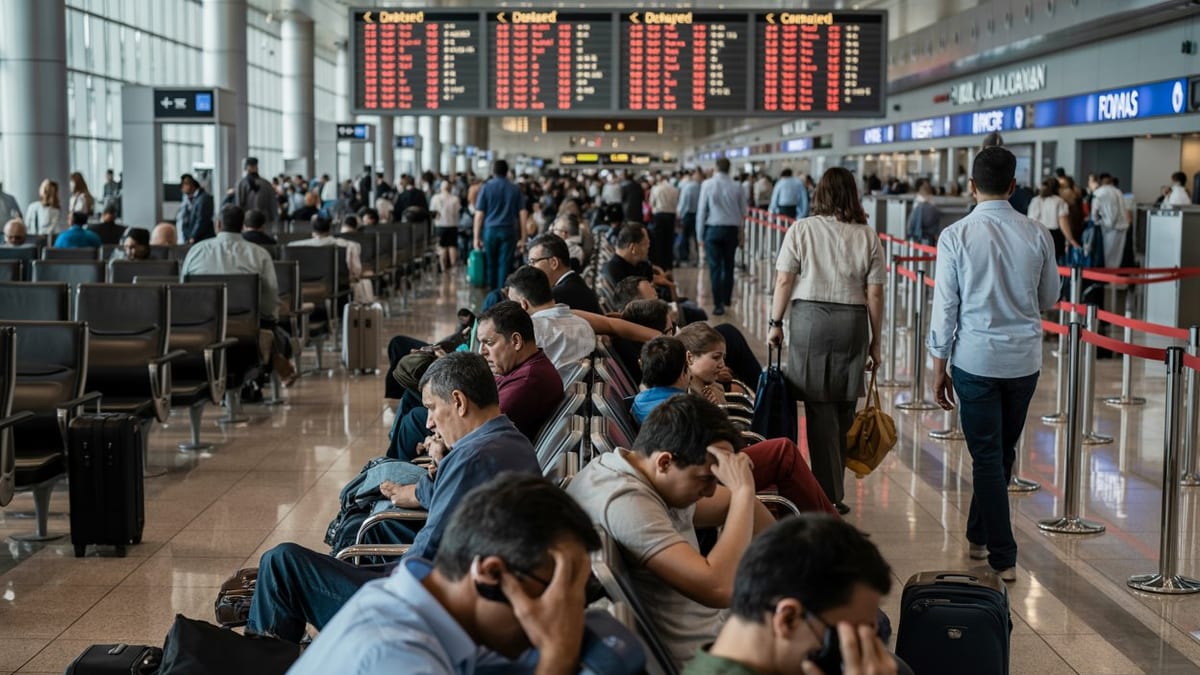
Air travelers across California are facing another day of disruption as publicly available tracking data shows 548 flight delays and 11 cancellations affecting services in and out of San Francisco, Los Angeles and San Diego, hitting SkyWest, Delta Air Lines, American Airlines, United Airlines and several other carriers.
Get the latest news straight to your inbox!
Major California Hubs See Operational Strain
The latest disruption is centered on California’s three busiest coastal gateways, where delay and cancellation figures have climbed through the day. Flight-tracking dashboards and airport status tools indicate that services at San Francisco International, Los Angeles International and San Diego International are bearing the brunt of operational pressure, with knock-on effects across domestic networks.
The 548 delayed flights represent a significant portion of scheduled movements for a single operating day, creating rolling queues at security, departure gates and baggage claim areas. The 11 cancellations are fewer in number but tend to have an outsized impact on travelers booked on regional and late-evening departures, where same-day alternatives are limited.
Published aviation data suggests that the disruption is spread across both mainline and regional operations rather than being confined to a single airline or route group. That pattern is consistent with recent periods of strain at major U.S. hubs, where scheduling congestion, weather, and crew or maintenance constraints can interact to produce widespread delays across multiple brands.
SkyWest and Partner Airlines Heavily Exposed
SkyWest, a large regional carrier that operates flights on behalf of Delta Air Lines, American Airlines and United Airlines under their respective connection brands, appears prominently in the latest California figures. The airline’s business model links smaller cities to major hubs such as Los Angeles and San Francisco, meaning ripple effects can spread quickly when schedules tighten.
Historical performance reports from federal transportation statistics have shown that regional operators such as SkyWest routinely handle dense schedules with relatively small aircraft, leaving less flexibility when individual services are pushed off time. When several flights in a bank fall behind schedule, the resulting congestion can cascade into missed connections for passengers heading onward across the United States.
Because SkyWest operates under the flight numbers and branding of its major partners, delays on regional segments are often experienced by travelers as disruptions affecting Delta Connection, American Eagle or United Express services. For passengers, the branding distinction matters less than the practical challenge of rebooking, particularly on busy California corridors where seats on later departures can quickly sell out once irregular operations begin.
Delta, American and United Face Network Knock-On Effects
Alongside SkyWest’s regional operations, the three large U.S. network carriers most closely tied to California hubs are also facing elevated disruption. Publicly accessible airport and aviation dashboards show that flights marketed by Delta Air Lines, American Airlines and United Airlines account for a substantial share of today’s delayed departures and arrivals across San Francisco, Los Angeles and San Diego.
Network carriers rely on hub banks to connect passengers between multiple origins and destinations within tight time windows. When a cluster of flights into a hub such as Los Angeles or San Francisco runs late, onward departures are often held to protect passenger connections, amplifying delays across the schedule. Published coverage of recent disruption episodes has described similar patterns at other major U.S. hubs, where a single wave of late aircraft can affect operations for several hours.
Carriers have been working in recent seasons to thin schedules slightly at congested airports and build longer connection times into some itineraries, in response to ongoing staffing and air traffic control challenges. The latest figures from California suggest that, despite those adjustments, the system remains vulnerable when several stress factors coincide at once, particularly during peak travel periods.
Passengers Confront Missed Connections and Overnight Stays
For travelers on the ground in California, the statistics translate into long queues, missed connections and, in some cases, unexpected overnight stays. Reports from recent disruption days at the same airports indicate that passengers frequently encounter crowded rebooking desks and extended call center wait times as airlines work through backlogs of affected itineraries.
Late-evening cancellations are particularly challenging for those departing from or arriving into San Francisco, Los Angeles or San Diego on regional or less-frequent routes. When the final flight of the day is scrubbed, passengers often have to wait until the following morning for the next available departure, competing for limited hotel and ground transport options near the airport.
Consumer advocates regularly advise travelers to monitor flight status through airline channels and independent tracking tools, and to act quickly when disruptions begin to appear across multiple carriers at a given airport. Same-day alternatives on California trunk routes can disappear rapidly once delays reach the scale now being reported, especially on Fridays, Sundays and holiday periods when load factors are already high.
Regulatory Context and Traveler Rights
The latest wave of disruption in California comes against a backdrop of continuing debate over passenger protections in the United States. Federal data on delays and cancellations, compiled over many years, shows that a mix of factors contributes to irregular operations, including air carrier issues, weather and broader national aviation system constraints such as air traffic control or airport congestion.
Unlike some international jurisdictions, the U.S. does not set uniform cash compensation rules for delayed flights, but there is growing public awareness of airline-specific commitments published through customer service policies and voluntary industry dashboards. Travel law resources note that passengers are generally entitled to refunds when flights are canceled and they choose not to travel, and that airlines may provide meal vouchers or hotel accommodation in certain circumstances when disruptions are within the carrier’s control.
As California’s major hubs work through the latest backlog of delayed and canceled services, observers expect close scrutiny of how airlines communicate with affected customers and how quickly schedules are stabilized. With the summer travel season approaching, the performance of large network carriers and their regional partners at critical gateways such as San Francisco, Los Angeles and San Diego is likely to remain a key focus for both travelers and regulators.