

More news on this day
Canada has tightened its global risk map in response to the fast-moving Iran conflict, adding Qatar to a growing list of destinations under its strictest “avoid all travel” advisory alongside the United Arab Emirates, Lebanon, Iraq, Russia, Israel and the Palestinian territories.
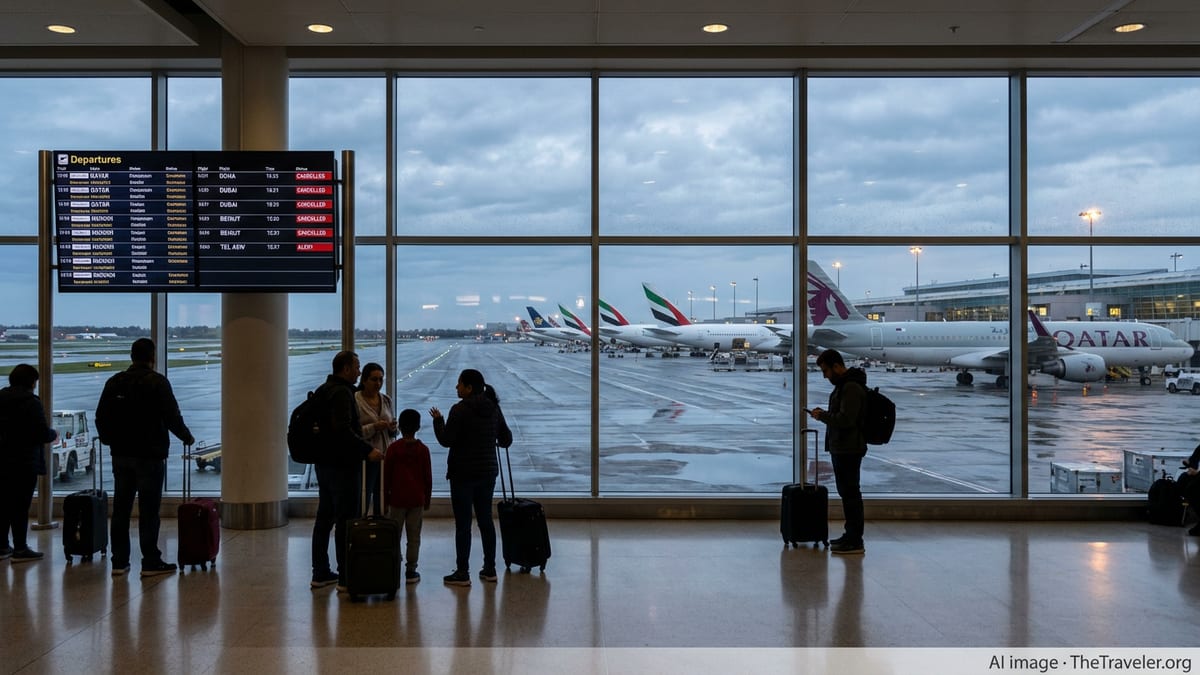
Ottawa Elevates Qatar to Top-Risk Category
Global Affairs Canada updated its Middle East crisis guidance in recent days, formally advising Canadians to avoid all travel to Qatar as security conditions across the Gulf deteriorate. The shift comes after coordinated United States and Israeli strikes on Iran on February 28, 2026, and subsequent retaliatory attacks that have heightened fears of a wider regional war.
Qatar now appears on the same highest-risk tier as the United Arab Emirates, Lebanon, Iraq, Israel, the Palestinian territories and several other states where Ottawa judges that the likelihood of violence, rapid escalation or serious disruption is simply too great for discretionary travel. Canadians already in these countries are being urged to leave as soon as they can secure a viable flight option, while those with upcoming trips are advised to postpone or cancel.
Officials emphasize that the “avoid all travel” designation is reserved for the most severe situations, where the threat environment, the strain on local infrastructure and the limits on consular support collectively create unacceptable risk. The latest update underscores how quickly Qatar, long marketed as a stable Gulf hub, has been swept up in the fallout from the Iran crisis.
The expanded warning also aligns Canada with a broader wave of international concern. The United States has raised its own advisory level for Qatar and authorized the departure of non-essential personnel, while European regulators and airlines have begun reassessing flight paths and overflight permissions across the region.
Missile Threats, Airspace Closures and Flight Cancellations
The decision to move Qatar into the “avoid all travel” category is closely tied to the changing security landscape on the ground and in the air. Since late February, Iranian missile and drone attacks linked to the conflict have targeted facilities across the Gulf, including military installations in Qatar, according to regional reporting and security assessments.
In response, Qatari authorities have intermittently closed airspace and suspended commercial operations, contributing to a patchwork of cancellations and delays that has rippled across major carriers. Some airlines have temporarily halted flights to Doha, while others are rerouting to avoid contested air corridors, increasing flight times and costs for any remaining services.
For Canadian travelers, the knock-on effects are immediate. Those attempting to leave Qatar or neighboring states face reduced seat availability, rapidly changing schedules and the risk that routes will be pulled at short notice if the conflict expands or if new strikes occur. Travel insurers and risk consultancies are warning clients to build contingency time into any evacuation plans and to stay in closer contact than usual with their carrier.
Beyond direct security threats, Ottawa’s advisory notes the potential for secondary disruptions: overwhelmed airports, sudden curfews, telecommunications outages and patchy access to medical care. In crisis conditions, these factors can hamper consular efforts and complicate any attempt by Canadians to move quickly to safer locations.
Impact on Travelers, Airlines and the Insurance Sector
The move to classify Qatar and its regional neighbors as “avoid all travel” destinations is triggering a cascade of practical consequences for travelers and the industry that serves them. Many Canadian carriers and foreign airlines are invoking special rebooking policies for passengers ticketed to affected countries, allowing itinerary changes, travel credits or refunds within specified windows.
Travel insurance providers are also recalibrating their coverage. Policies that include provisions for government-issued advisories may treat trips to Qatar, the UAE, Lebanon, Iraq, Israel and the Palestinian territories as excluded destinations once the warning is in force. In practice, that can mean that new bookings are not insurable for war-related disruptions, while travelers who purchased policies before the advisory date may be eligible to claim for cancellations or early returns.
For business travelers and expatriates, the advisory presents a difficult balancing act. Some multinational employers are ordering non-essential staff out of the highest-risk countries and suspending rotations into the region. Others are maintaining a scaled-back presence but tightening internal security protocols, restricting movement and updating evacuation plans in case of a sudden deterioration.
Leisure travel, meanwhile, has effectively come to a standstill. Tour operators selling packages to Gulf hubs and Eastern Mediterranean destinations report a wave of cancellations and deferrals into late 2026, as Canadians wait to see whether a diplomatic off-ramp emerges from the crisis.
Russia Advisory Remains Heightened Amid Broader Security Concerns
While the latest changes focus on Qatar and the Middle East, Canada’s heightened warning for Russia remains part of the same global risk picture. Ottawa has for months advised Canadians to avoid all travel to Russia due to the country’s ongoing war in Ukraine, unpredictable security environment and the risk of arbitrary enforcement of local laws.
Officials now highlight the way overlapping crises can interact, from Europe’s eastern flank to the Gulf. Tensions between Russia and Western governments, energy market volatility and competing military commitments all shape the backdrop against which Canada evaluates travel risk. For would-be travelers, that means understanding that a spike in hostilities in one region can influence route availability, insurance coverage and airline decision-making thousands of kilometers away.
In recent briefings, Canadian authorities have urged citizens to think in terms of networks rather than isolated hotspots. If a key transit country such as Qatar or the UAE becomes a conflict-adjacent zone, itineraries that rely on those hubs as gateways to Asia, Africa or Oceania could be affected, even if the final destination itself remains relatively calm.
Given the sustained “avoid all travel” stance on Russia and the sweeping new restrictions across parts of the Middle East, travelers are being encouraged to diversify routing options, verify connections carefully and consider alternative hubs in Europe or other regions where risk levels remain lower.
What Canadian Travelers Should Do Now
For Canadians already in Qatar, the UAE, Lebanon, Iraq, Israel or the Palestinian territories, Canadian officials are advising a calm but proactive approach. Travelers are urged to register their presence with Canadian consular services, monitor local media and official alerts, and make flexible arrangements to depart when a feasible flight becomes available.
Those who have not yet departed Canada are being told to reconsider any non-essential trips that rely on transiting or staying in the newly listed “avoid all travel” countries. Travel experts recommend speaking with airlines and insurers before making changes, documenting all communications and keeping receipts in case refunds or claims are needed later.
The evolving situation is also a reminder of how critical it is to check government advisories not only at the time of booking but again shortly before departure. As the rapid reclassification of Qatar shows, risk assessments can shift in a matter of days when geopolitical tensions flare, leaving unprepared travelers exposed to financial losses and logistical headaches.
With the regional outlook still uncertain, the Canadian government has signaled that further updates are possible. For now, officials stress that the current “avoid all travel” designations for Qatar, the UAE, Lebanon, Iraq, Russia, Israel and the Palestinian territories represent their clearest guidance: unless travel is essential and unavoidable, Canadians should stay away.