


More news on this day
Canada has expanded its sweeping 2026 travel advisory for the Middle East, adding Israel to an already extensive list that includes Bahrain, the United Arab Emirates, Qatar, Lebanon, Kuwait, Iraq and other destinations amid heightened regional tensions, and highlighting a mix of warning levels, visa disruptions and emergency support options for travelers transiting hubs such as Amman, Dubai and Muscat.
Get the latest news straight to your inbox!
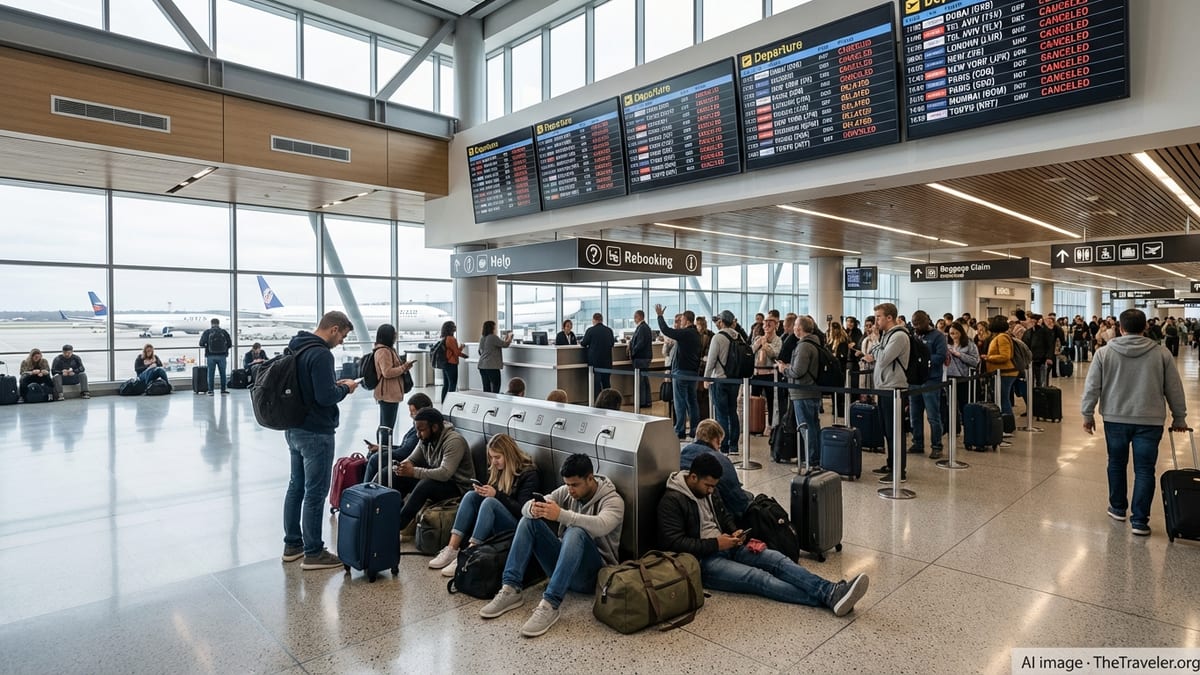
Canada’s Middle East Advisory Tightens As Conflict Risks Grow
Publicly available Canadian government travel advice for June 2026 shows a sharp tightening of risk assessments across the Middle East, with multiple destinations now listed under the country’s most severe “avoid all travel” category. Coverage from specialist travel and legal outlets indicates that the United Arab Emirates, Qatar, Kuwait, Bahrain, Iran, Lebanon, Iraq and Yemen are all currently captured within this highest warning tier, reflecting concerns over regional hostilities and airspace volatility.
Israel, which had already been subject to elevated alerts since the escalation of conflict with Iran earlier in the year, has now been folded into this broader regional framework of Canadian advisories. Reports on the evolving guidance describe a convergence between Canada’s warnings and those issued by other Western governments, many of which have raised their own levels for Israel, the West Bank, Gaza and neighboring states in response to missile exchanges, drone activity and cross‑border attacks.
The expanded advisory emphasizes that security conditions can deteriorate quickly and that commercial flight availability may change at short notice. Canadian travelers are urged, through publicly accessible government channels, to reassess non‑essential trips, ensure that their travel insurance includes evacuation coverage, and be prepared for extended disruptions if they choose to remain in or travel through the affected region.
The updated stance comes as the broader Middle East contends with rolling airspace restrictions and shifting front‑line dynamics linked to the Iran–Israel confrontation, with impacts spreading from the Levant to the Gulf. Analysts following government notices note that Canada’s tighter advisory is designed as both a deterrent to leisure travel and a framework for consular prioritization if further instability leads to large‑scale requests for assistance.
Visa Services, Consular Closures And Transit Uncertainty
Alongside the revised travel warning, travelers are facing mounting difficulties in securing visas and consular appointments across the region. An immigration law bulletin circulated in March 2026 reported widespread embassy closures and visa interview cancellations in several Middle Eastern capitals, including Bahrain, Israel, Iraq and Lebanon, with many missions operating only skeleton or emergency‑only services.
That same analysis highlighted that, in contrast, a limited number of posts in Jordan and Oman had maintained partial operations, although even these missions reported delays and backlogs linked to security reviews and public‑holiday closures. For Canadian visitors, the patchwork of reduced services means that obtaining or renewing visas in the region has become significantly less predictable, especially for those attempting to adjust plans once already abroad.
Travel industry updates suggest that visa processing interruptions now extend beyond Canada to affect applicants for a range of foreign destinations, as local authorities prioritize crisis management over routine consular work. Some carriers and travel intermediaries have started warning passengers that they may be unable to board onward flights without pre‑arranged visas, given that last‑minute approvals at airports or consulates can no longer be assumed.
The broad implication is that Canada’s advisory does not operate in isolation. Even where Canadian policy does not explicitly bar travel, regional visa restrictions, embassy closures and third‑country rules may effectively block normal tourist movement, particularly for multi‑stop itineraries linking Israel with Gulf hubs such as Dubai or Doha.
Key Hubs: Amman, Dubai And Muscat Under Operational Strain
Jordan, the United Arab Emirates and Oman have emerged as critical nodes in efforts to keep some travel and evacuation pathways open, despite frequent changes in flight schedules and routing. Shipping and aviation advisories compiled in March and April 2026 describe how Amman, Dubai and Muscat have repeatedly adjusted operations in response to airspace closures over parts of Iraq, Kuwait, Qatar and other neighboring states.
Industry circulars note that Jordan’s airspace has, at various points, remained open for limited operations, even as flights to nearby Gulf destinations were suspended. In the Gulf itself, Dubai’s airports have experienced intermittent reductions in civilian traffic, with carriers resuming only a “small number” of services after temporary shutdowns prompted by missile alerts and regional risk assessments.
Muscat, meanwhile, has been cited in traveler reports as a fallback hub when direct routes to and from the UAE or Qatar are interrupted. Messages circulating among passengers and shared on public forums describe journeys that now involve overland transfers to the Oman border, followed by flights out of Muscat International Airport when airspace and capacity permit. These improvised corridors underscore the importance of flexible routing in a rapidly changing security environment.
For Canadians, the prominence of these hubs carries practical implications. The expanded advisory acknowledges that some travelers may still find themselves transiting Amman, Dubai or Muscat due to pre‑booked tickets or limited alternatives. In such cases, the guidance encourages monitoring airline communications closely, budgeting extra time for last‑minute schedule changes, and being ready to reroute through secondary airports if primary gateways become temporarily unavailable.
Emergency Helplines, Safety Registration And Insurance Expectations
As the list of high‑risk destinations grows, Canada has placed renewed emphasis on emergency contact channels, citizen registration services and insurance expectations rather than promising direct evacuation for all travelers. Public guidance points Canadians toward global consular contact centers and local diplomatic missions, where operational, as the first line of support for those facing canceled flights, border closures or medical emergencies.
These services mirror, in broad terms, the approach taken by other governments, such as the United States, which continues to promote its centralized telephone hotlines and online enrollment tools for citizens traveling in volatile regions. The underlying message across Western advisories is that while embassies can provide information, liaise with local authorities and, in some cases, coordinate limited evacuation options, individuals are expected to maintain contingency funds, robust travel insurance and independent exit plans.
Insurance providers have become a central part of this risk‑management architecture. International travel information pages and advisory summaries now routinely recommend policies that explicitly cover conflict‑related disruptions, emergency medical evacuation and trip cancellation. Without such coverage, Canadians may find that airlines, tour operators and even governments have limited capacity to subsidize alternative arrangements if conditions deteriorate further.
The emphasis on self‑reliance is particularly relevant for tourists who continue to visit or transit destinations such as Israel, Bahrain, the UAE, Qatar, Lebanon, Kuwait and Iraq despite the elevated warnings. Canada’s latest advisory makes clear that venturing into or through these countries in mid‑2026 involves accepting a heightened level of personal risk, and that consular assistance, while available within operational constraints, cannot fully offset the consequences of sudden geopolitical shocks.