


More news on this day
Dozens of flight disruptions at Detroit Metropolitan Wayne County Airport on June 21 have left passengers facing missed connections and overnight waits as Delta Air Lines, Jazz and Frontier deal with a cluster of cancellations and rolling delays on key domestic and transatlantic routes.
Get the latest news straight to your inbox!
Operational Turbulence At A Major Midwestern Hub
Publicly available flight-status boards for June 21 indicate seven cancellations and at least 30-plus delayed departures and arrivals involving Detroit Metro, affecting a mix of long-haul international and high-demand domestic services. The disruptions are concentrated among Delta Air Lines, regional partner Jazz and ultra-low-cost carrier Frontier, all of which rely on the airport for key connecting traffic.
Detroit serves as one of Delta’s primary hubs, funnelling passengers from across the United States onto flights bound for Europe and major U.S. cities. When operations at a hub slow, the impact ripples far beyond the local market, producing missed connections and knock-on delays across the network. Travel data for 2026 already show that the Detroit to Dallas and Detroit to Chicago corridors are some of the busiest from the airport, with multiple daily departures on Delta and Frontier, which amplifies the effect of any disruption on these routes.
On June 21, delays at Detroit stretched from short pushback holds to multi-hour waits. In several cases, passengers reported being rebooked onto next-day services as evening departures fell further behind schedule or were withdrawn from operation, compounding crowding in terminal areas and at airline customer service desks.
While the number of cancellations remained limited relative to the total schedule, the cluster was significant enough to create local bottlenecks. As seats on remaining flights filled up, some travelers attempting to depart Detroit for major hubs such as Los Angeles or Dallas encountered limited same-day rebooking options and were forced to accept overnight stays or multi-stop routings.
Key Long-Haul Links To Europe Hit By Disruption
Detroit’s role as a transatlantic gateway meant that even a modest number of cancellations reverberated overseas. Summer 2026 schedules show intensive service from Detroit to Amsterdam, Paris and Munich under the transatlantic joint venture that includes Delta, Air France and KLM, with Detroit positioned as a primary U.S. origin for connections into continental Europe and beyond.
Flight-status feeds on June 21 showed Detroit departures to Amsterdam and Paris subject to extended delays, with some departures pushed back well beyond their originally scheduled evening slots. In the most disrupted cases, passengers arriving from domestic feeder flights faced missed connections and were left to seek overnight hotel accommodation or alternative routings via other hubs.
Munich-bound services also experienced schedule pressure. Even when operating flights ultimately departed, rolling delay increments made connection planning difficult for travelers. Some passengers reported hesitancy about tight layovers in Europe after late departures from Detroit, anticipating potential misconnects with onward flights operated by partner airlines.
Reports from recent weeks already highlighted strains on parts of Delta’s European network, including technical and scheduling issues affecting some Amsterdam operations. The added disruption on June 21 further complicated trip planning for transatlantic passengers who rely on Detroit as a primary connecting point.
Domestic Corridors To Los Angeles, Chicago And Dallas Slow Down
Within the United States, Detroit’s links to Los Angeles, Chicago and Dallas were among the hardest hit during the June 21 disruption window. These routes are heavily trafficked both by business travelers and by leisure passengers connecting to international flights, so even moderate delays can have outsized consequences for downstream segments.
Data from consumer flight-tracking platforms for June 21 show multiple Delta flights between Detroit and Dallas and between Detroit and Chicago operating behind schedule, with selected services cancelled entirely. Frontier, which markets Detroit as a key spoke in its point-to-point network, also reported irregular operations on flights feeding major hubs, limiting low-cost alternatives for delayed travelers.
Los Angeles services were similarly affected, as late-arriving aircraft and crew-availability issues cascaded across the day. For some travelers, lengthy delays out of Detroit led to missed connections onward from Los Angeles to other West Coast destinations or to Asia, triggering complex rebookings and extended itineraries.
Historical data for the Detroit to Dallas market indicate that Delta and Frontier together handle a significant share of the route’s traffic. When both carriers experience irregular operations at the same time, options for same-day recovery shrink quickly, particularly for travelers bound for smaller regional airports that are only served once or twice daily.
Passengers Confront Long Lines, Rebookings And Limited Options
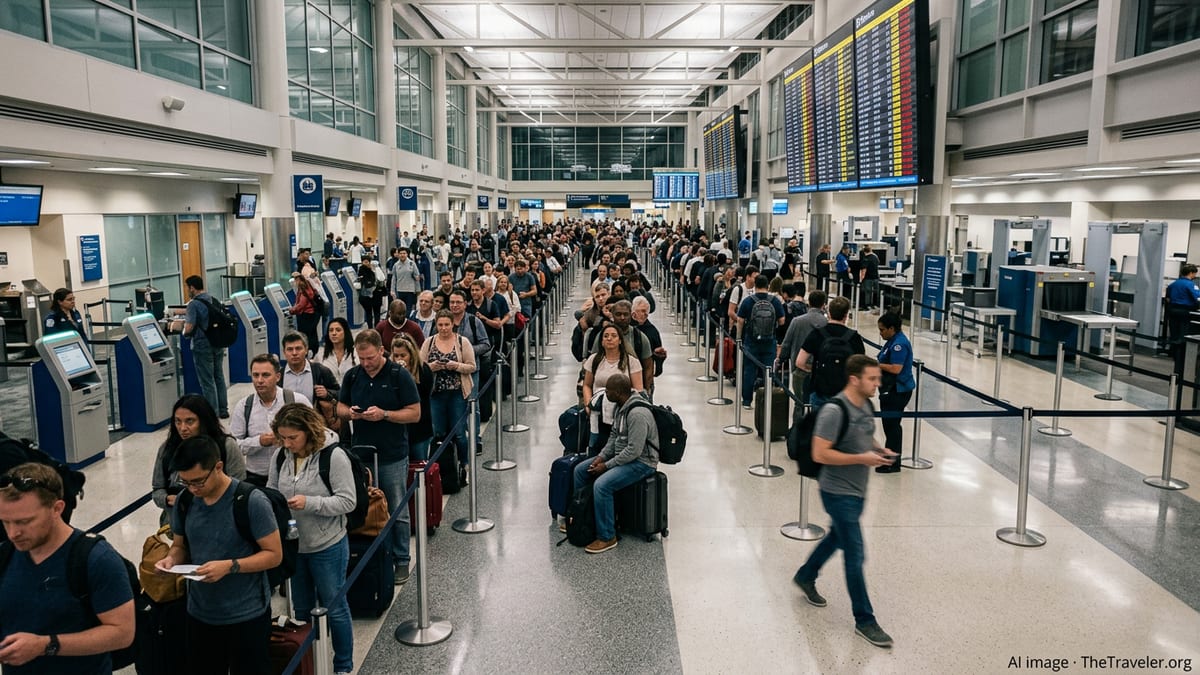
The concentration of delays and cancellations created familiar but unwelcome scenes within Detroit’s terminals. Travelers shared accounts on social platforms of extended waits in customer service queues, crowded gate areas and limited on-the-day rebooking choices, particularly for those headed to Europe or to the West Coast.
Some passengers reported being moved from nonstop itineraries onto multi-stop routings in order to leave Detroit the same day, while others accepted overnight stays in Detroit or connecting hubs when later flights also filled. In several instances, travelers arriving from smaller regional airports missed their Detroit connections to Amsterdam or Paris and were reprotected on next-day departures via alternative hubs such as New York or Atlanta.
Travel forums and user-generated reports in recent months have frequently flagged Detroit as vulnerable to cascading disruptions when weather, air-traffic control constraints or airline staffing challenges align. Although the June 21 situation did not involve a full shutdown of the airport, the clustering of delays and cancellations across multiple carriers highlighted how quickly routine timetable adjustments can evolve into network-wide challenges for travelers.
Advisories issued earlier in 2026 for separate weather events around Detroit encouraged passengers to build in longer connection times and to monitor flight-status tools closely. The events of June 21 reinforced that guidance, as even moderately delayed departures in the afternoon and evening periods proved enough to push many travelers into missed-connection territory on tightly timed itineraries.
What Travelers Can Expect Next At Detroit Metro
Operational data and past patterns suggest that the June 21 disruptions are likely to take at least one additional day to fully clear, particularly for itineraries involving long-haul routes and tightly timed connections. Aircraft and crew displaced by cancellations must be repositioned, and some inbound flights to Detroit may arrive late on June 22 as schedules realign.
Passengers booked on near-term flights through Detroit to Amsterdam, Munich, Istanbul, Paris, Los Angeles, Chicago or Dallas are being encouraged by travel advisories and consumer advocates to check flight status regularly and to consider longer connection windows where possible. For those already en route to Detroit, same-day adjustments within airline mobile apps or at self-service kiosks can, in some cases, secure earlier or more reliable connections before conditions deteriorate further.
Published industry analysis for early 2026 shows that weather remains a primary driver of cancellations in the upper Midwest, but it is often compounded by operational constraints such as crew availability and the limited slack in tightly banked hub schedules. When combined with high summer traffic volumes, even minor disruptions can quickly fill rebooking options and strain customer service resources.
While operational performance typically stabilizes once the immediate disruption period passes, the events at Detroit Metro underline the importance for travelers of monitoring conditions at connecting hubs and maintaining flexible plans, particularly during peak summer travel when flights to and from major cities and European gateways routinely operate near capacity.