


More news on this day
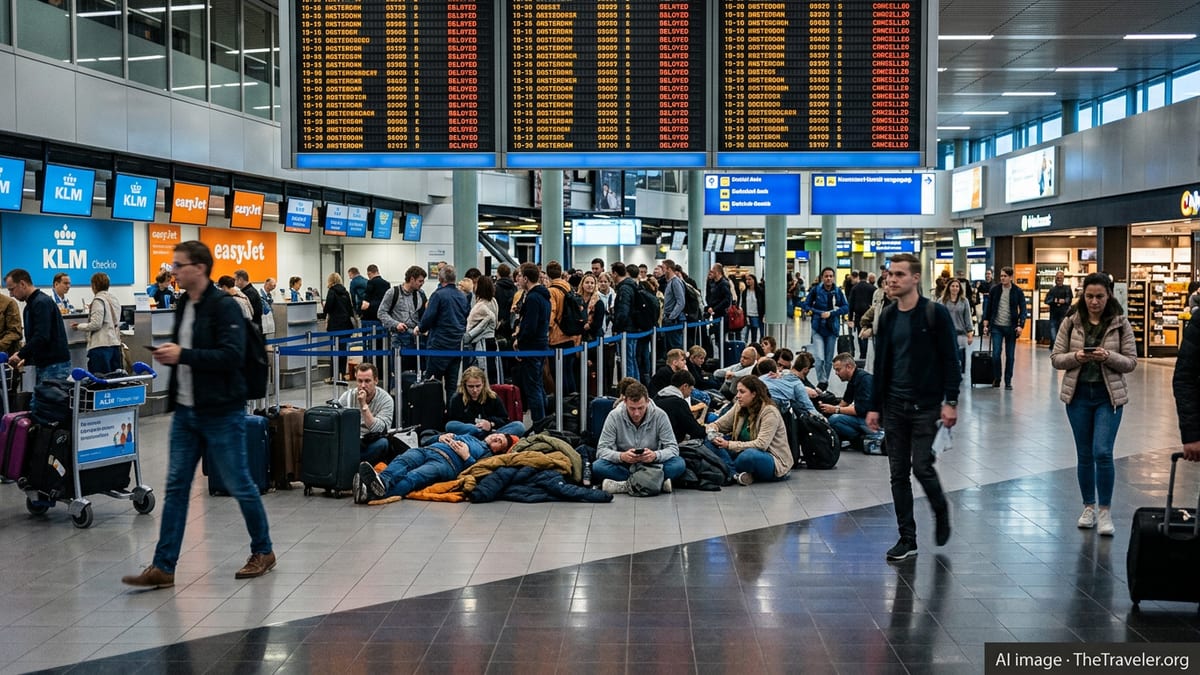
Passengers flying across Europe this weekend are facing another bruising round of disruption, as fresh data and airport reports point to widespread cancellations and thousands of delays affecting major hubs in Spain, Greece, Switzerland, the Netherlands, Sweden, Luxembourg and several other countries.
Get the latest news straight to your inbox!
Network Strain From Weather, Capacity Limits and Peak Demand
Operational data compiled from airport and airline information boards indicates that at least 136 flights have been cancelled and more than 3,000 delayed across Europe over the latest 24-hour period, affecting routes into and out of key hubs such as Zurich, Rome, Athens and Amsterdam. The disruption is concentrated in Spain, Greece, Switzerland, the Netherlands, Sweden and Luxembourg, but impacts are being felt throughout the continent as knock-on effects spread across airline networks.
Publicly available information suggests that a combination of intense early-summer heat, local storms and persistent air traffic control bottlenecks is putting additional strain on what is already one of the busiest travel weekends of the year. Weather alerts in parts of western and central Europe are coinciding with heavy leisure demand, leaving airlines and airports with limited flexibility to recover when individual flights are delayed or grounded.
Recent punctuality and delay reports from European air navigation and airport performance bodies have repeatedly highlighted structural pressure points at major hubs, including Amsterdam Schiphol, Zurich, Rome Fiumicino and Athens International Airport. These airports consistently rank among the continent’s busiest and have been flagged for recurrent airspace and runway capacity restrictions during peak hours, making them particularly vulnerable when weather or technical issues occur.
The latest disruption is unfolding against this backdrop of already fragile resilience, amplifying the experience for passengers who find that a delay or cancellation on one leg can quickly cascade into missed connections and overnight diversions across multiple countries.
Impact on Major Carriers Including Air France, Aegean, KLM and Swiss
Among the services most visibly affected are those operated by pan-European and national flag carriers. Monitoring of schedules and airport boards shows that flights from Air France, Aegean Airlines, KLM and Swiss are all experiencing a mixture of cancellations, extended ground holds and rolling delays. Additional regional and low-cost airlines are also being caught in the turbulence as shared airports and codeshare operations spread the knock-on effects.
At Amsterdam Schiphol, KLM’s primary hub, the combination of slot constraints and weather-related slowdowns has led to a series of late departures and inbound delays, particularly on short-haul services that turn around several times a day. Even modest timetable disruptions in the morning have translated into multi-hour delays by late afternoon, complicating connections to longer-haul flights.
In Zurich, Swiss and partner carriers are facing pressure from dense schedules that leave minimal margin to absorb irregular operations. Arrival and departure data indicate that reactionary delays are building across the day as aircraft and crews struggle to return to their planned rotations. Similar patterns are visible in Rome and Athens, where Aegean and other Mediterranean-focused airlines are managing heavy seasonal traffic to island and coastal destinations at the same time as they handle trunk routes to northern Europe.
Air France services routed through Paris are also feeling the strain where they intersect with the most affected airports, particularly on itineraries that rely on tight transfer windows. The result for many travelers is longer total journey times, additional time spent in transit lounges and, in some cases, last-minute rebookings onto alternative routings.
Patchwork Disruption Across Spain, Greece and Mediterranean Gateways
The Mediterranean region, already dealing with early-season heat and in some areas heightened wildfire risk, is seeing a patchwork of delays and cancellations at popular gateways in Spain and Greece. Flight-status portals for airports such as Málaga in southern Spain and several Greek islands show a mix of late arrivals, revised departure times and occasional cancellations affecting both domestic and international routes.
Reports from travel-rights and passenger-compensation trackers indicate that operators such as Ryanair, along with regional and charter carriers, have been cancelling or significantly delaying selected services linking hubs like Athens, Rome and Spanish coastal airports. While the total numbers vary by day, the aggregate effect is a noticeable deterioration in reliability at precisely the moment leisure travelers are arriving for peak summer holidays.
Airports in Italy and the western Mediterranean, including Rome Fiumicino, are also operating under the combined pressure of holiday traffic and wider European network issues. Even when local weather is stable, the arrival of heavily delayed aircraft from northern Europe can trigger late departures towards Spain and Greece, effectively exporting disruption from one region to another.
These dynamics make it difficult for passengers to predict where problems will arise. A journey that appears straightforward on paper, such as a single stop between northern and southern Europe, can quickly become complicated if an incoming aircraft or connecting crew is held up elsewhere in the network.
Weather Alerts and Constraints in Northern Europe
Further north, meteorological warnings and localized storms in parts of the Netherlands and Sweden have contributed to another layer of operational complexity. National weather services in these countries have recently issued alerts for heavy rainfall, thunderstorms and, in some cases, flooding risk, prompting short-notice adjustments to airport operations.
At Amsterdam, one of Europe’s busiest intercontinental hubs, adverse conditions can require increased separation between aircraft and temporary runway changes, both of which reduce capacity and slow movements. Even brief weather-related restrictions during peak banks of arrivals and departures can lead to queues on the ground and holding patterns in the air, pushing back departure times across multiple airlines.
In Sweden, airports serving Stockholm and other key cities are working through similar challenges when storm systems move through. While not all weather alerts lead to cancellations, they frequently result in cautionary speed reductions and altered flight paths that extend block times, absorbing the slack that airlines build into their schedules.
Luxembourg, which hosts a smaller but strategically important airport with cargo and passenger traffic, is also vulnerable when neighboring airspace in Belgium, Germany, France or the Netherlands is constrained. Publicly available performance reports show that Luxembourg’s punctuality typically tracks wider regional trends, meaning that delays elsewhere in the Benelux region are quickly mirrored in its own departure boards.
What Passengers Can Expect in the Coming Days
Industry performance data from recent months points to a pattern of elevated delay minutes and periodic spikes in cancellations across the European Civil Aviation Conference area, particularly during busy travel periods. With school holidays starting in several countries and high demand continuing into late June, the current wave of disruption is unlikely to resolve immediately.
Airlines are attempting to preserve as much of their summer schedule as possible, but the accumulated impact of tight airport capacity, staffing constraints and unsettled weather leaves little room for recovery once a day begins poorly. Public statements from major carriers in recent days have emphasized efforts to maintain planned routes while acknowledging that last-minute schedule changes remain possible.
Travelers in the short term are likely to encounter longer queues at check-in and security, fuller flights and reduced options for same-day rebooking when things go wrong. Airport and consumer information channels consistently underline the importance of checking flight status frequently and allowing extra time at the airport during these high-pressure periods.
For Europe’s aviation system, the current turbulence underscores how quickly strains in one corner of the network can ripple outward, turning localized weather or capacity events into continent-wide disruption that touches everything from flagship intercontinental services to short island hops in the Mediterranean.