


More news on this day
Passengers traveling through New York’s LaGuardia Airport faced another difficult travel day as publicly available tracking data showed six flight cancellations and 84 delays affecting services operated by Jazz, American Airlines, Endeavor Air and Delta Air Lines, disrupting links to major destinations including Toronto, Montreal, Miami, Orlando, Boston and Houston.
Get the latest news straight to your inbox!
Operational Strain Spurs New Wave of Disruptions
Real time aviation dashboards and schedule data on June 21, 2026 indicated that LaGuardia once again struggled to keep flights moving on time, with a cluster of delays building across the morning and afternoon peak periods. While the total number of outright cancellations remained relatively limited, the volume of delayed departures and arrivals on multiple carriers created cascading disruption across the network.
Publicly available information shows that regional affiliate Jazz, large U.S. carriers American Airlines and Delta Air Lines, and Delta’s regional partner Endeavor Air all had flights affected. Those operators handle a significant share of LaGuardia’s short haul traffic to nearby hubs and business centers, meaning relatively small schedule changes can quickly ripple through connecting banks at other airports.
Aviation analysts note that LaGuardia regularly appears among U.S. airports with lower on time arrival performance, reflecting its tightly packed schedule, congested New York airspace and weather vulnerabilities along the Northeast corridor. Recent consumer reports based on federal data have highlighted that delays and long tarmac waits have been trending upward nationally, putting added pressure on already busy facilities such as LaGuardia.
On Saturday, those wider trends were evident in the form of rolling pushbacks, extended gate holds and departure times repeatedly revised in small increments, a pattern that often leaves travelers uncertain how long they will actually be stuck at the airport.
Canada Links to Toronto and Montreal Affected
The disruptions were particularly visible on cross border routes north to Canada, where Jazz and major U.S. carriers operate frequent services connecting LaGuardia with Toronto and Montreal. Flight tracking boards showed departure and arrival times on several of those rotations pushed back, with at least one cancellation reported on a Canada bound service.
Canadian aviation coverage in recent months has already pointed to schedule adjustments on some transborder routes as airlines respond to demand shifts and operational constraints. When irregular operations hit a key U.S. gateway such as LaGuardia, the impact can be magnified because those flights often connect into broader networks in Toronto and Montreal, affecting onward journeys to Western Canada and Atlantic Canada.
Passengers booked on LaGuardia services to or from Toronto Pearson or Montreal Trudeau on Saturday faced the prospect of missed connections, rebooked itineraries and, in some cases, unexpected overnight stays. Travel advisors generally recommend that passengers on these short haul cross border flights monitor their reservations closely and, where possible, build additional connection time into their itineraries during peak summer travel months.
Industry observers say repeated disruptions on these routes may also test the patience of business travelers who rely on tight day trip schedules between New York and Canada’s financial and political centers, where a return in the same day can quickly become unworkable when delays stretch into multiple hours.
Florida and Texas Leisure Markets See Knock-On Delays
Farther south, flights between LaGuardia and major leisure and business destinations such as Miami, Orlando and Houston also showed notable schedule disruption. Live status pages for multiple American Airlines and Delta Air Lines flights linking the New York area with Florida and Texas indicated late departures or revised arrival times, consistent with wider congestion in the LaGuardia operation.
Miami and Orlando remain among the most heavily trafficked domestic routes from New York, drawing both vacationers and cruise passengers, while Houston serves a mix of corporate energy and medical traffic along with visiting friends and relatives travel. Even modest delays on these routes can result in missed ground transfers, rescheduled cruise embarkations or lost vacation days, particularly on weekend departures.
Reports from recent weeks have also underscored that weather systems moving along the Eastern Seaboard and into the Gulf region can tighten air traffic control spacing and reduce capacity into Florida and Texas hubs. When those constraints intersect with busy departure banks out of LaGuardia, flights to southern destinations are often among the first to be pushed back as controllers manage flows along the corridor.
For travelers heading to Miami, Orlando or Houston on Saturday, the pattern translated into extended waits at LaGuardia departure gates and, in some instances, late night arrivals that compressed already short weekend stays.
Boston Corridor and Regional Operations Under Pressure
The New York to Boston corridor, one of the busiest short haul routes in the United States, also experienced pressure as delays at LaGuardia intersected with congestion at Boston Logan International Airport. Publicly available flight histories for American Airlines and Delta Air Lines services between the two cities on June 21 showed altered departure times and staggered arrivals, reflecting the difficulty of turning short hop aircraft on tight schedules.
Analysts point out that short haul sectors such as LaGuardia Boston or LaGuardia Washington are particularly sensitive to small operational hiccups. A late arriving aircraft has little slack in the timetable before it must operate its next leg, meaning even a minor delay can propagate through the rest of the day in the form of sequential hold ups or an eventual cancellation if crews time out.
Regional operators such as Endeavor Air, which feeds Delta’s network with smaller jets, play a key role in maintaining frequency on these high demand shuttle style routes. Recent history has shown that when these carriers face fleet inspections, staffing constraints or air traffic control slowdowns, the result can be a cluster of cancellations concentrated at a few major hubs, including LaGuardia.
Saturday’s pattern of six cancellations and dozens of delays suggests that while the underlying operation remained largely intact, regional and shuttle flights bore a significant share of the disruption, impacting commuters and day trippers between New York and neighboring states.
Travelers Confront Ongoing Reliability Concerns at LaGuardia
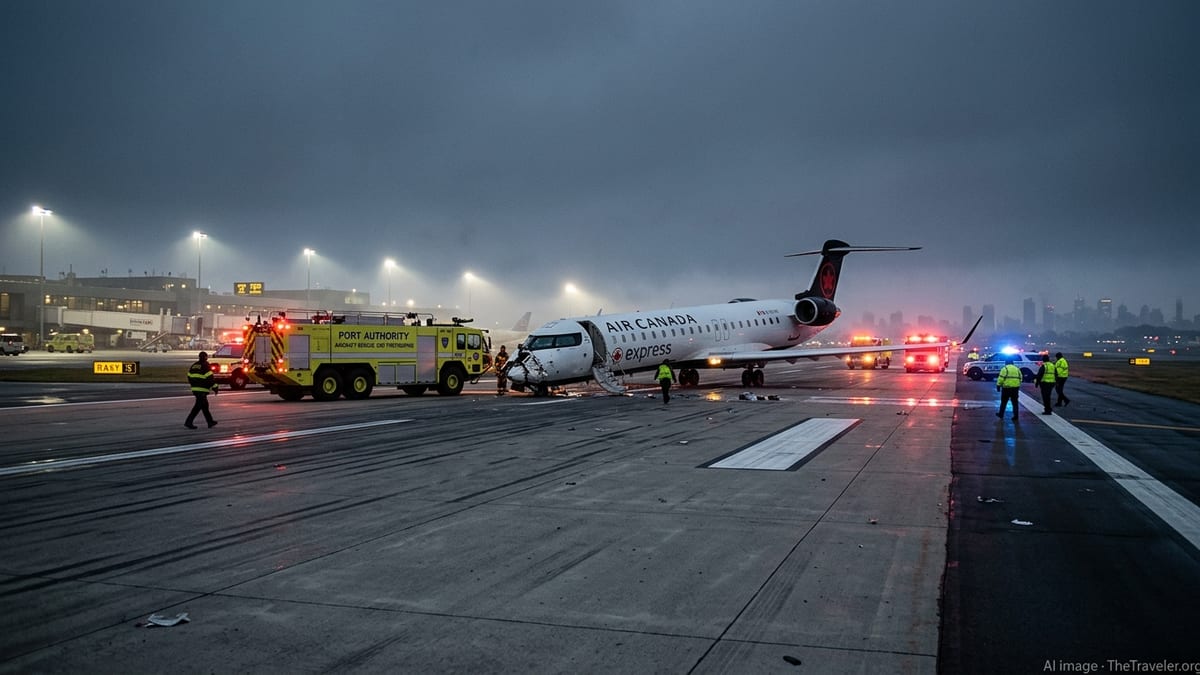
The latest disruption adds to a series of operational challenges at LaGuardia in 2026, a year that has already included a high profile ground incident and subsequent capacity constraints as safety reviews and infrastructure work progressed. Local coverage and traveler accounts over the spring described periods where airlines cut back frequencies or faced elevated cancellation rates as the airport adjusted to revised operating limits.
Consumer advocates have argued that the national pattern of growing delays and tarmac waits reflects a system operating close to its limits, particularly at constrained, high demand airports in the New York and Washington regions. With summer holiday travel now underway, those structural pressures are likely to remain in focus for passengers trying to plan time sensitive trips.
For those caught in Saturday’s disruptions, the immediate challenges were more practical: securing rebooked flights on Jazz, American, Delta or Endeavor, arranging hotel rooms when connections were missed, and communicating last minute changes to family or employers. Travel planning resources generally recommend that passengers departing from LaGuardia build contingencies into their plans, such as earlier departures before critical events, flexible hotel reservations and comprehensive travel insurance that covers delay related costs.
Publicly available data and recent reporting indicate that while carriers and airports continue to make investments in technology, staffing and facilities, travelers using LaGuardia in particular should be prepared for the possibility that even routine weather or traffic constraints can translate into meaningful disruption across multiple routes in a single day.