


More news on this day
Mexican boxing star Canelo Alvarez has arrived in Riyadh ahead of his October 31 world title bout against Christian Mbilli, touching down in Saudi Arabia just as a sharpened United States travel advisory puts a spotlight on missile and drone risks facing visitors to the kingdom.
Get the latest news straight to your inbox!
A superstar lands as security concerns linger
Footage shared on social media in the early hours of October 26 shows Alvarez walking through a central Riyadh hotel lobby alongside heavyweight champion Oleksandr Usyk, greeted by performers in traditional Mexican dress as part of the build up to the “Mexico vs the World” fight card. Event organizers have presented his early arrival as a signal that preparations remain on track despite a volatile regional backdrop.
The bout is scheduled for October 31 at The Venue in Riyadh, a purpose built arena that has become a centerpiece of Saudi Arabia’s push to host major boxing and entertainment spectacles. Fight week is expected to draw thousands of international visitors, from high net worth ticket holders flying in on chartered services to fans traveling on commercial routes through Gulf hubs.
Reports from boxing publications with staff already in Riyadh describe a surreal first night of fight week, with welcome celebrations in hotel lobbies occurring within the same hour as mobile alerts issued across the capital warning of potential danger. The messages followed weeks of attacks on key infrastructure elsewhere in the country, underscoring that Alvarez’s latest Saudi appearance comes at a more precarious moment than previous events.
Despite the heightened mood, publicly available information from promoters and broadcasters indicates that the full fight program remains unchanged. Training sessions, media events and ceremonial arrivals are proceeding at hotels and venues around the city, with organizers emphasizing the scale of investment and the global broadcast footprint attached to the card.
US travel advisory sharpens after airport attacks
Alvarez’s arrival comes only days after the United States updated its guidance for Saudi Arabia, keeping the country at Level 3, “Reconsider travel,” while issuing more detailed language on risks linked to missile and drone activity. The advisory cites the threat of attacks by Iran aligned Houthi forces based in Yemen, which have targeted airports and other critical infrastructure.
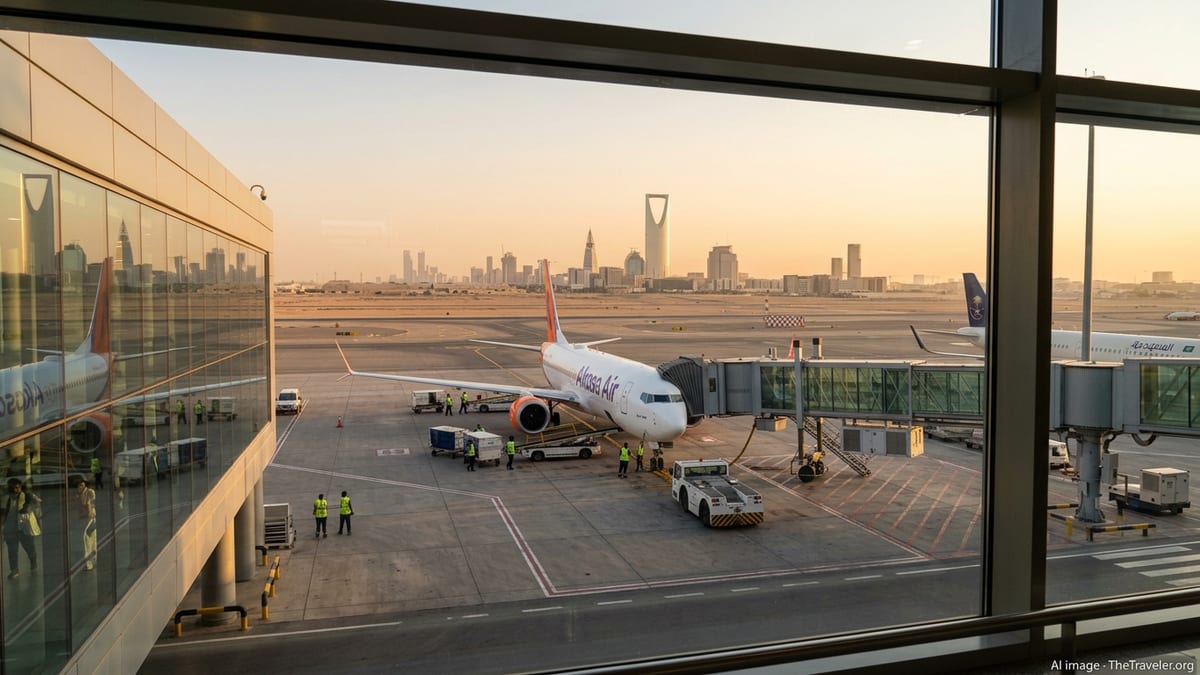
In a separate security alert earlier in October, the US Mission in Saudi Arabia ordered the departure of non emergency American government personnel and family members from the kingdom. That notice followed a series of strikes on Saudi airports, including an attack on Riyadh’s main gateway that disrupted commercial operations and drew international attention to the vulnerabilities of air travel into the capital.
Regional security summaries compiled by international media and risk consultancies note that neighboring Gulf states such as Bahrain, Kuwait, Qatar and the United Arab Emirates are currently covered by the same Level 3 advisory, reflecting concerns about potential spillover from the conflict. Nearby countries including Iran, Iraq, Lebanon, Syria, Yemen and Gaza remain at Level 4, “Do not travel,” placing portions of the wider region at the highest tier of US caution.
Travel industry analysts say the sharpened language presents a complex backdrop for any high profile gathering in Saudi Arabia. While the advisory does not prohibit US citizens from entering the country, it urges travelers to carefully assess their movements, remain aware of possible disruptions and consider contingency plans for leaving the country on short notice if conditions deteriorate.
Riyadh doubles down on mega events and Riyadh Season
The Canelo Alvarez Christian Mbilli title fight is one of the headline attractions of this year’s Riyadh Season, the state backed entertainment program that has turned the Saudi capital into a recurring stage for global sport, concerts and festivals. In recent years the initiative has hosted heavyweight world title fights, mixed martial arts events and international football friendlies, positioning the city as a rival to traditional venues in Las Vegas, London and New York.
Boxing specific coverage indicates that Saudi organizers and their partners have already committed substantial resources to staging the October 31 card, from appearance fees for fighters to construction and branding of temporary venues. That level of investment, combined with long term agreements between Saudi entities and international promoters, appears to be a key factor behind the decision to press ahead with fight week despite the more pointed US warnings.
Within Riyadh, major hotels, shopping districts and entertainment zones are again being dressed in fight themed signage as visiting teams move into training facilities and media centers. Publicly available schedules shared by broadcasters show open workouts, press conferences and ceremonial weigh ins taking place at established Riyadh Season venues, echoing the format used for earlier blockbuster fights in the kingdom.
Observers of the Saudi sports push note that the kingdom’s leadership has consistently framed such events as part of a broader strategy to diversify the economy and enhance international visibility. The willingness to hold to the fight calendar while travel advisories grow more detailed is being interpreted in some quarters as a sign of confidence in local security arrangements, and in others as an indication of how central these spectacles have become to the country’s global brand.
Travel choices for fans weighing risk and reward
The sharpened advisory has not halted travel plans entirely, but reports from fan communities and boxing forums suggest that some ticket holders are reassessing how they reach Riyadh. Contributors describe itineraries that avoid direct arrivals into Saudi Arabia, such as flying first to Bahrain or other Gulf states and then continuing overland into the kingdom, stretching what might have been a short flight into a journey of several hours by road.
Commercial flight schedules into Riyadh and Jeddah remain active, but recent missile and drone incidents have demonstrated the potential for sudden airport closures and diversions. Travel risk specialists advising corporate clients list flexible tickets, comprehensive insurance and backup routing through alternative hubs as practical considerations for anyone planning to attend large scale events in the current environment.
Hotels connected to fight week are advertising typical amenities and hospitality offerings, from high end dining to organized excursions, yet some operators have adjusted booking conditions to allow for shorter cancellation windows or credits in the event of disruption. Travelers who do proceed are being encouraged, in publicly available guidance, to register with their home country’s consular services and to monitor official alerts when moving between venues.
For local fans within Saudi Arabia and neighboring states, the decision calculus is different. Domestic authorities maintain that daily life in Riyadh continues largely as normal, with shopping centers, restaurants and entertainment districts open and busy. However, the overlay of security alerts during a globally televised fight week means any significant incident near transport hubs or event sites would be immediately amplified far beyond the host city.
A showcase fight framed by regional volatility
Inside the ring, the sporting narrative remains straightforward. Alvarez arrives in Riyadh as one of boxing’s most marketable champions, seeking another statement win at super middleweight against Canada based WBC titleholder Christian Mbilli. The bout carries implications for future unification clashes and high profile matchups, adding to its commercial appeal for broadcasters and sponsors.
Outside the ropes, the picture is more complicated. The same images of Alvarez walking through a Riyadh hotel lobby that are being used to promote the “Mexico vs the World” event are also circulating in parallel with footage of damaged airport terminals and air defense interceptions elsewhere in Saudi Arabia. For many observers, the juxtaposition captures the tension between the kingdom’s role as a host for global entertainment and its place within an evolving security landscape.
Risk consultancies note that there has been no public indication of a venue change or postponement, and that organizers continue to market the fight as planned. At the same time, the presence of a sharpened US advisory means that American travelers heading to the card are doing so with a clearer, and more prominently signposted, understanding of the potential dangers than existed for earlier Saudi based boxing events.
As fight week gathers pace, the Riyadh bout is likely to serve as an early test of how major international sports and entertainment productions adapt to a period of heightened geopolitical tension. Canelo Alvarez’s decision to step off a plane into that environment, and the willingness of thousands of fans and industry workers to follow, will be closely watched by other promoters weighing Saudi Arabia as a future host for their own marquee events.