


More news on this day
From walkouts by security staff in Europe to deadly missile and drone strikes on airports in Saudi Arabia, a growing mix of labour unrest and violent attacks is reshaping the risk landscape for global air travel and raising new questions about how safe and reliable flying will be in the coming months.
Get the latest news straight to your inbox!
Industrial action spreads across key European hubs
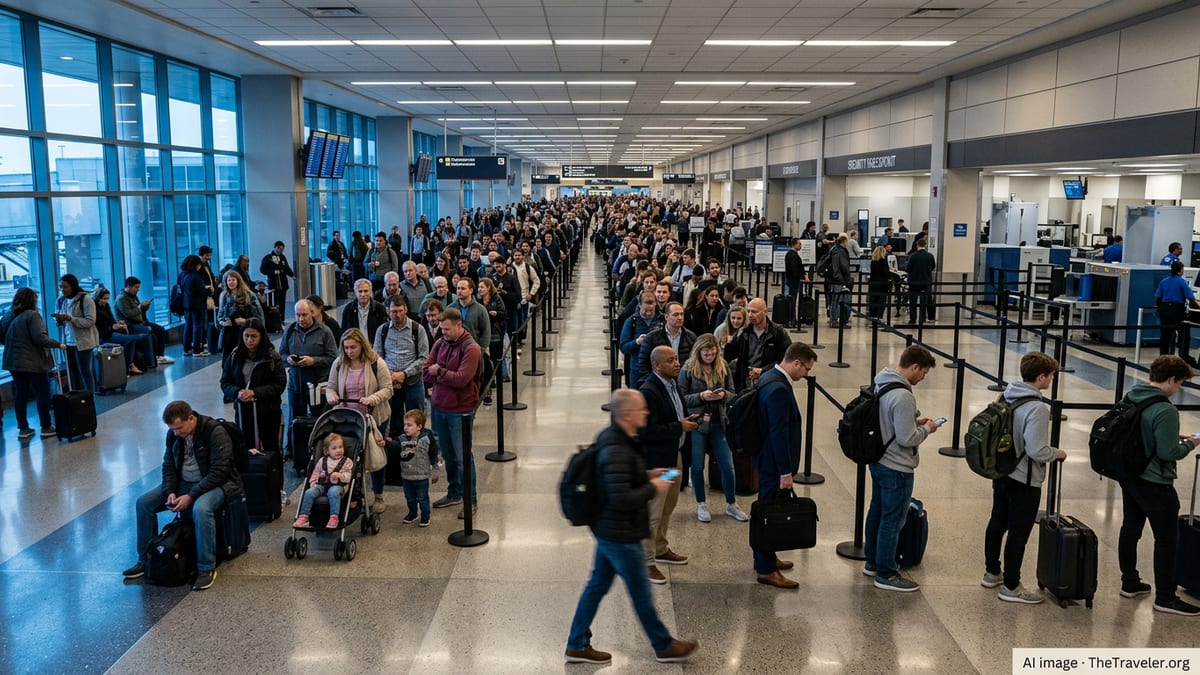
A series of recent and upcoming airport and aviation strikes across Europe has kept passengers on alert as the autumn travel season unfolds. Strike trackers and travel advisories show confirmed or planned industrial action involving airport ground handlers, security staff and air traffic controllers in countries including Belgium, Italy, France and Portugal through October and into November 2026.
At Brussels Airport, unions representing staff at ground handler Alyzia joined a nationwide day of action on 9 October, prompting the airport and airlines to cut schedules. Published information from airline bulletins and business‑travel outlets indicated that around 140 flights were expected to be cancelled, with further delays for those still operating as baggage and ramp operations slowed.
In the Netherlands, security staff at Amsterdam Schiphol staged short work stoppages in late August over rising workloads and staffing levels. Reports from regional media and aviation specialist outlets described queues building at departure security checkpoints and temporarily reduced screening capacity, even as minimum staffing arrangements limited the duration of each walkout.
Strike calendars tracking aviation labour disputes also highlight rolling or time‑limited actions by air traffic controllers and airport workers in Italy and France, many scheduled in tightly defined windows to comply with national rules on minimum services. While some of these strikes are classed as minor, they have already contributed to clusters of delays and cancellations beyond the countries where they originate due to the highly interconnected nature of European airspace.
Deadly attacks heighten security concerns in the Middle East
Alongside labour disputes, a series of recent attacks on airports in Saudi Arabia has focused attention on physical security risks to aviation infrastructure. In early October 2026, multiple missiles and drones targeted Riyadh’s King Khalid International Airport and Abha airport in the country’s south. According to publicly available reporting from international news agencies, the incidents killed several civilians and injured dozens more, prompting temporary flight suspensions and diversions.
In a separate incident later in the month, authorities reported that King Fahd International Airport in Dammam, on Saudi Arabia’s Gulf coast, suffered an attack that killed at least one person and injured others. Travel disruption databases show that operations at Dammam were briefly curtailed before the Saudi civil aviation regulator stated that air traffic had returned to normal, though with heightened security measures.
The attacks, which have been linked in public reporting to Yemen’s Houthi movement amid a broader regional conflict environment, have led to repeated closures or partial shutdowns of key Saudi airports over recent weeks. Travel alerts issued by foreign governments describe these facilities as critical civilian infrastructure that has been targeted with missiles and drones, warning that further incidents could cause sudden disruptions to passenger and cargo flights.
Insurance analysts and aviation security specialists note that the combination of repeated strikes on airports and constrained air‑defence resources has introduced new operational uncertainties for airlines serving Saudi destinations or flying through nearby airspace. Some carriers have published waivers allowing passengers to rebook or reroute journeys to and from affected airports without change fees when attacks occur.
Hybrid threats and drone incidents add pressure to European security
Beyond declared conflict zones, European authorities are also grappling with what security assessments describe as hybrid threats against airports. In early September 2026, German officials publicly attributed an attempted drone attack at Leipzig/Halle Airport to Russia, following incidents in early August in which unmanned aerial vehicles were detected near the airport and one cargo aircraft sustained minor nose damage after an apparent collision.
The Leipzig events fit into a wider pattern of drone activity around airports in central and eastern Europe since 2025. Summaries in regional and international aviation security reports describe repeated airspace restrictions, temporary closures and flight diversions in response to suspected surveillance or disruptive drone flights, often in the context of the ongoing war in Ukraine and broader regional tensions.
Data from a recent annual aviation security review published by the International Air Transport Association (IATA) indicates that low‑cost, hard‑to‑detect drones have become a notable driver of sporadic airport closures and diversions. The report notes that these devices, when used to probe defences or disrupt operations, can force airports to halt movements until the airspace is declared safe, with knock‑on effects for passengers far beyond the immediate incident location.
European Union threat assessments referenced by aviation groups also point to increasing risks from cyberattacks and attempts to exploit insider access at airports. Specialist briefings highlight scenarios ranging from interference with airport IT systems to the misuse of staff credentials to gain access to secure areas, adding further complexity to an already crowded security agenda.
Why unions link working conditions with safety
As airport walkouts continue to disrupt travel, labour organisations are framing many of their demands in explicitly safety‑related terms. Union statements collected in national strike registries and reported in the European press argue that chronic understaffing, extended shifts and pressure to process ever‑rising passenger volumes are eroding both worker welfare and the margin of safety at airports.
In Paris, unions representing ground handlers and other staff at Charles de Gaulle and Orly called a strike for June 2026 that combined pay and job‑security concerns with resistance to tighter background‑check rules. A joint statement cited in French media argued that proposed regulations would allow workers to lose security clearances over minor infractions or unresolved legal cases, which unions characterised as disproportionate and likely to worsen staffing shortages.
At Schiphol and other busy European hubs, employee representatives have repeatedly warned that sustained high traffic levels without commensurate hiring or training undermine the ability to maintain robust screening and ground‑handling standards. An information brief produced for the European Parliament on air transport workers noted that the pandemic exposed already precarious working conditions in parts of the sector, with short‑term contracts, subcontracting and wage pressure remaining sources of tension even as traffic recovered.
International union federations have amplified these concerns on a global scale. In a statement released in March 2026, the International Transport Workers’ Federation called for stronger protections for civil aviation workers and clearer commitments that airports and their staff should not be treated as legitimate targets in armed conflicts. The organisation linked operational disruptions from rerouted flights and closed airspace directly to the strain felt by crews and ground personnel.
What travelers can expect in the months ahead
For passengers planning trips through affected regions, current disruption trackers maintained by travel‑claims firms and specialist aviation sites underline how fluid the situation remains. As of late October 2026, these trackers list multiple active or recently resolved airport‑related strikes in Europe, from short air traffic control stoppages in Italy to national days of action hitting ground handlers in Belgium, as well as planned limited strikes in early November.
These same resources, along with official notices to air missions and airport bulletins, show that sudden closures or capacity reductions tied to security incidents are increasingly part of the disruption picture. Many airports can now resume operations relatively quickly after an incident, but even brief shutdowns often lead to rolling delays as airlines re‑sequence flights and reposition aircraft.
Travel rights in the face of such disruption differ depending on its cause. Consumer guidance derived from EU and UK passenger‑rights regulations indicates that when an airline’s own staff go on strike, travelers on eligible flights may be entitled to fixed compensation on top of refunds or rerouting. By contrast, when disruption stems from airport staff walkouts, security events or airspace closures, compensation is less likely, even though carriers are still expected to provide care such as meals and hotel rooms during long delays.
Analysts contributing to recent industry and policy reports suggest that both labour disputes and deliberate attacks on airports are likely to remain part of the aviation landscape for the foreseeable future, particularly in regions affected by armed conflict or intense geopolitical rivalry. For travelers, this means that monitoring strike calendars, security advisories and airline updates has become an essential part of planning, even well outside traditional peak seasons.