


More news on this day
Carnival Corporation has declared a quarterly cash dividend of 15 cents per share, with a record date of May 18 and payment on May 29, a move widely viewed as a clear marker of the cruise sector’s post-pandemic recovery and the company’s strengthening financial footing.
Get the latest news straight to your inbox!
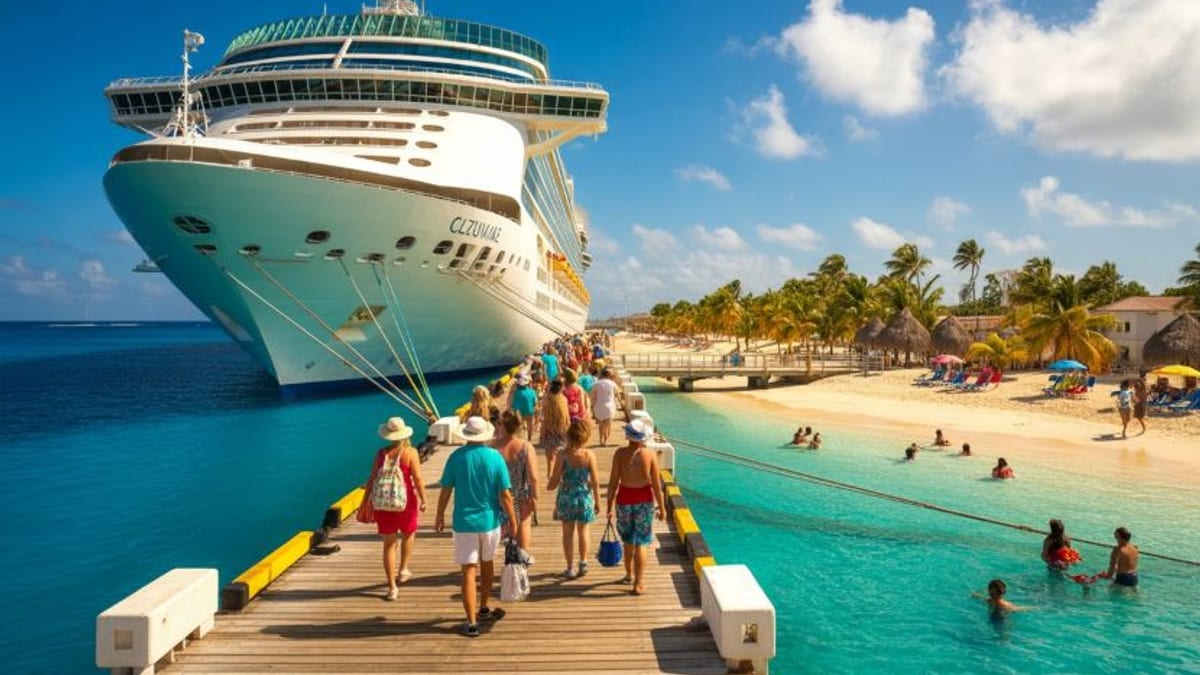
Dividend Marks Another Step in Carnival’s Financial Reset
According to published company disclosures and financial news coverage, Carnival Corporation’s board has approved a regular quarterly dividend of 0.15 dollars per share, continuing the payout level it reinstated as profits and cash flow improved. The upcoming distribution is scheduled for shareholders of record on May 18, with the cash payment due on May 29, reinforcing the new cadence of shareholder returns after several years without dividends.
Publicly available market data indicate that the current dividend represents a modest yield compared with pre-pandemic payouts, but analysts note that its consistency matters more than the headline rate. The decision to maintain the 15 cent level, rather than treat it as a one-off reward, is being interpreted as a signal that Carnival’s management now sees its earnings and balance sheet as resilient enough to support ongoing cash distributions.
The company had suspended dividends during the height of the health crisis, when ships were idled and revenue collapsed, relying on debt and equity raises to ride out an extended shutdown of global cruising. The resumption and continuation of a cash dividend, timed alongside record profit guidance, point to a business that is shifting from survival mode to a more normalized capital allocation strategy focused on both debt reduction and direct shareholder returns.
Equity research commentary suggests that dividend reliability has become an important talking point for income-focused investors who largely avoided the sector during its most volatile years. The steady 15 cent payment, while far below historic highs, is being viewed as an early-stage commitment that could grow if earnings targets are met over the next several reporting periods.
Record Results and Strong Bookings Underpin Payout
Recent earnings releases and analyst summaries describe Carnival Corporation as operating at or near record levels of profitability. The company has reported all-time highs in key metrics such as net income, operating income, and EBITDA, supported by higher ticket prices, strong onboard spending and disciplined cost control across its global fleet.
Forward-looking guidance points to adjusted net income expected to rise further on only modest capacity growth, suggesting that the earnings base behind the new dividend is broad and not solely dependent on adding ships. Cruise costs per available berth have been trending up more slowly than revenue, which has improved margins and helped free up cash for both balance sheet repair and shareholder distributions.
Booking trends detailed in corporate filings show that the company entered 2026 with a larger portion of capacity already sold at higher prices, especially for marquee itineraries in the Caribbean, Alaska and Europe. Industry trade coverage notes that bookings for 2026 and even 2027 are running ahead of capacity growth, with particularly strong interest in private-island destinations and newer, higher-yield ships.
These dynamics have given Carnival a clearer line of sight on future cash generation. With demand visibility stretching several seasons ahead, the board appears more comfortable using a portion of operating cash flow to fund dividends while still prioritizing debt reduction. Commentators describe this balance as central to sustaining investor confidence in a sector that remains sensitive to macroeconomic shifts and travel sentiment.
Cruise Tourism Recovery Accelerates Across Key Markets
The dividend announcement arrives against the backdrop of a broader resurgence in global cruise tourism. Travel industry reports highlight that capacity across the major cruise brands has largely returned to or exceeded pre-pandemic levels, supported by strong leisure demand and a rebound in international travel. Carnival, as the world’s largest cruise operator, has been a primary beneficiary of this shift.
Analysts tracking cruise pricing trends note that ticket prices have risen meaningfully compared with several years ago, yet ships are still sailing at historically high occupancy. Consumers appear willing to absorb higher fares in exchange for longer itineraries, upgraded onboard experiences and access to new private destinations. This combination of healthy pricing power and robust load factors has underpinned Carnival’s revenue growth and helped restore profitability.
Destination-specific coverage points to the Caribbean and Bahamas, Mediterranean, Alaska and select Asian routes as particular bright spots. Carnival’s investment in new port developments and private islands is drawing repeat visitors and first-time cruisers alike, while new entertainment concepts and loyalty program enhancements are being used to increase onboard spending per guest.
For tourism-dependent ports, the company’s recovery has direct spillover effects in the form of revived passenger traffic, employment and local business activity. Several port authorities and tourism boards have reported that call volumes tied to Carnival brands are approaching or exceeding earlier peaks, reinforcing the perception that cruising has moved beyond recovery into a new phase of disciplined growth.
Shareholder Returns Balanced With Debt Reduction
Financial filings and investor presentations emphasize that, even as Carnival resumes and maintains its dividend, debt reduction remains a central objective. The company accumulated substantial borrowings to bridge the shutdown period, and recent updates describe a multi-year refinancing and repayment program aimed at lowering interest expense and extending maturities.
Reports indicate that Carnival has already refinanced large tranches of high-cost pandemic-era debt into lower-rate instruments, cutting its average cash interest rate and improving free cash flow. This progress has given the company more flexibility to commit to recurring dividends and to authorize share repurchases that are scheduled to begin once shareholder approvals are in place.
Market commentary suggests that investors are closely watching the balance between returning capital and fortifying the balance sheet. A sustained 15 cent quarterly dividend, when combined with targeted buybacks, is being viewed as a manageable outlay so long as Carnival continues to deliver against its earnings and cash flow targets and keeps leverage trending lower.
Some analysts caution that the cruise sector remains exposed to changes in consumer discretionary spending, fuel prices and regulatory requirements, all of which could influence future dividend decisions. For now, however, the company’s improving credit metrics, strong booking pipeline and record operating performance are seen as sufficient support for the current payout.
Implications for Cruise Travelers and the Wider Tourism Economy
While a dividend is primarily an investor story, Carnival’s latest payout decision also reflects broader confidence in traveler demand that has implications for consumers and destinations worldwide. If the company continues to generate robust profits from full ships and higher per-guest spending, it is more likely to fund new onboard products, port investments and sustainability initiatives that shape the cruise experience.
Travel sector analysts point out that strong financial results can encourage further upgrades to existing vessels, expansion of shore excursion offerings and development of new routes, all of which diversify options for cruisers. Stable dividends and improving leverage may also support future fleet renewal, including more fuel-efficient and lower-emission ships that address environmental and regulatory pressures.
The timing of the May dividend, positioned just ahead of the peak summer sailing season in the Northern Hemisphere, underscores the role of cruising within the broader recovery of global tourism. As passenger volumes climb and onboard spending rises, related sectors such as air travel, hotels, tour operators and local attractions in port cities are likely to benefit from increased traffic linked to Carnival’s brands.
For now, Carnival’s decision to keep returning cash to shareholders at a regular pace is being read as a barometer of health for the cruise industry as a whole. It suggests that the world’s largest cruise operator views its recovery as not only complete, but durable enough to support both continued investment in guest experience and a renewed focus on rewarding those who financed its turnaround.