


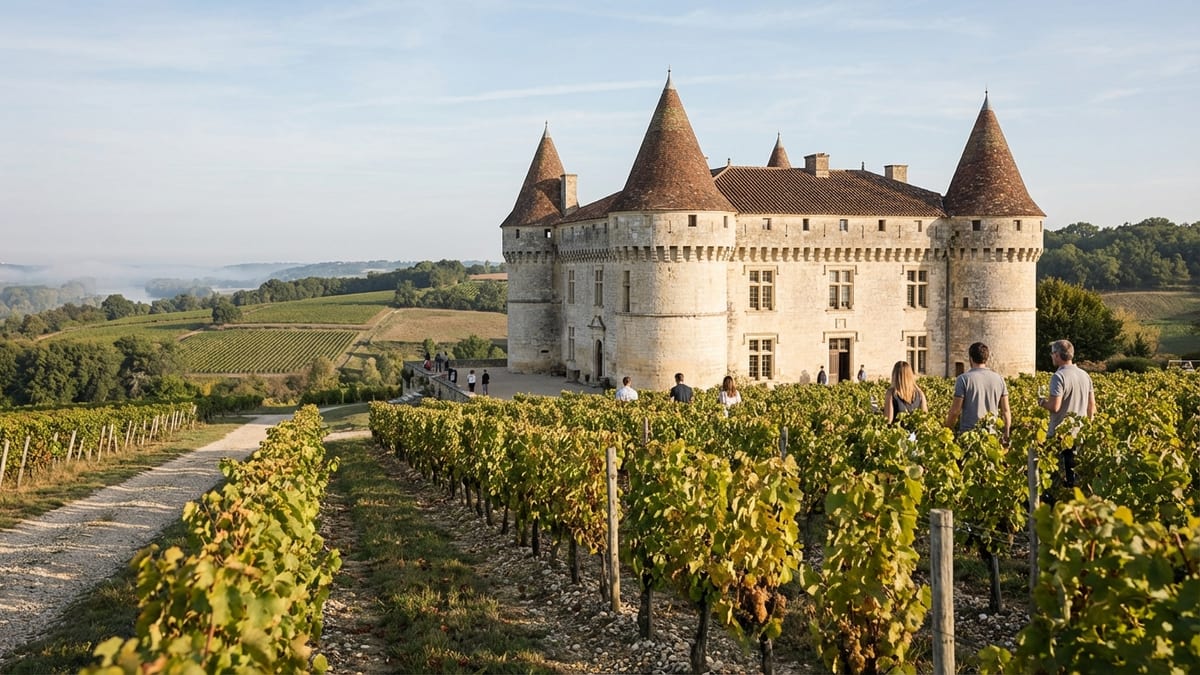
Rising above a quilt of vineyards on a gentle Dordogne hillside, Château de Monbazillac is one of southwest France’s most atmospheric wine estates. Part fortified castle, part Renaissance country house and today a thoroughly modern visitor attraction, it offers an immersive journey through history, architecture and the alchemy behind one of France’s great sweet wines. This guide brings together the story of the château, what to look for in its design, and everything you need to know to plan a rewarding visit.
Setting the Scene: Monbazillac in the Dordogne Valley
Château de Monbazillac stands a short drive south of Bergerac, in the heart of the Monbazillac appellation, on the left bank of the Dordogne River. From its terraces you look out across orderly rows of vines and wooded ridges towards the river valley, a landscape that has shaped local life, trade and viticulture for centuries. The sense of place here is powerful: the château is not an isolated monument but the focal point of a working wine territory where geography and climate dictate the style of wine.
The Dordogne’s autumn mists are essential to Monbazillac’s identity. As the river cools at night and warmer air lingers in the valley, a fine fog forms that encourages the growth of Botrytis cinerea, the so‑called noble rot that concentrates the sugars in late-harvest grapes. The château’s position on a slope above the valley floor offers both an aesthetic advantage, with panoramic views, and a viticultural one, as breezes help regulate humidity and ensure grapes ripen fully while the fungus does its work.
Today the commune of Monbazillac is a compact but renowned wine village, and the château is its emblem. Just ten minutes by car from Bergerac and around one hour forty minutes from Bordeaux, it is an easy detour on a wider Dordogne or Bordeaux vineyard itinerary. For many visitors it becomes an anchor point for exploring nearby bastide towns, prehistoric caves and other wine estates while still returning to the hushed beauty of the vines each evening.
From Fortress to Wine Estate: A Brief History
The present Château de Monbazillac dates largely from the second half of the 16th century, built between about 1550 and 1582 for Charles d’Aydie de Ribérac. This was a time when the Wars of Religion were tearing through France, and the new residence had to serve two roles. It needed to broadcast the owner’s status in the new Renaissance style while still offering credible defenses against potential siege or attack. The solution was a hybrid design that would become the château’s architectural signature.
Ownership passed through several important families over the centuries, reflecting the shifting fortunes of the region. In the early 17th century it came into the hands of Louis de Bouchard d’Aubeterre, a Huguenot nobleman. Later, during the 18th century, François Hilaire de Bacalan, a figure connected with the broader Bordeaux wine world, acquired the estate. Each owner left subtle marks in the interiors and in the organization of the vineyard, even as the overall silhouette of the château remained remarkably consistent.
By the 20th century the building’s age and the pressures of upkeep brought a turning point. Classified as a historic monument in 1936, the château was formally recognized for its architectural and cultural value. In 1960 it was purchased by the local winegrowers’ cooperative, which continues to own and operate it. This unusual model, with a cooperative at the helm, has anchored the château firmly in local economic life and allowed wine and heritage to be interpreted together for visitors.
Recent decades have seen a thoughtful reinvention. A major program of restoration and reinterpretation culminated in the reopening of an updated visitor route in 2022. The aim was not to freeze the château in time but to present its layered history and winemaking story through contemporary exhibition design, from immersive multimedia to curated art installations, while respecting the integrity of the original rooms and fabric.
Architectural Highlights: Where Medieval Meets Renaissance
One of the most striking aspects of Château de Monbazillac is its silhouette. From a distance you see a square central corps de logis flanked by four massive round towers, each capped with sharply pointed conical roofs. This geometry and the persistent presence of towers speak directly to late medieval fortification traditions, even though the château emerged in the age of gunpowder and courtly refinement.
A closer look reveals the hybrid character that so many architectural historians admire. Defensive elements survive in the form of machicolations high on the walls, from which objects could once be dropped on attackers, and narrow openings that recall arrow slits. Yet these are softened and almost theatrical, sitting alongside large rectangular windows typical of Renaissance houses, which flood the interiors with light and overlook the vineyards rather than the battlefield.
The materials are very much of the region: pale local stone, weathered roof tiles and thick walls that moderate the interior climate. Walking the perimeter you will notice the careful symmetry of the façades, balanced by the vigorous vertical thrust of the towers. This dialogue between mass and elegance is repeated in the courtyard and gardens, where terraces frame geometrically planted vines beyond, merging the vocabulary of fortified architecture with that of a landscaped wine domain.
Inside, the twenty or so furnished rooms open to visitors offer a cross-section of domestic life from the 16th to the 19th centuries. Vaulted cellars beneath the château hint at its storage and defensive functions, while upper levels feature panelled rooms, tiled or parquet floors, fireplaces and period furniture. Temporary displays explore specific themes, from religious conflict to daily Périgord life, while respecting the bones of the building. The result is neither a sterile museum nor a purely decorative showpiece, but a house that feels as if its former inhabitants have just stepped out into the vines.
Understanding Monbazillac Wine: Terroir, Grapes and Noble Rot
To understand why Château de Monbazillac is more than simply a scenic castle, you have to appreciate the wine that bears its name. Monbazillac is an Appellation d’Origine Contrôlée created in 1936 specifically for sweet white wines produced around the village. The appellation covers roughly two thousand hectares of vineyards and is devoted to late-harvest, botrytized wines that can rival more famous Sauternes in character and longevity.
The key grape varieties are Sémillon, Sauvignon Blanc and Muscadelle, often blended but sometimes singled out in specific cuvées. Sémillon brings structure and aging capacity, Sauvignon Blanc adds acidity and aromatic lift, and Muscadelle contributes heady floral and grapey notes that can be particularly marked in Monbazillac. Regulations limit yields and insist that grapes must be affected by noble rot, not simply harvested late, to qualify for the appellation.
The presence of Botrytis cinerea is deliberate and essential. Far from being a common grey rot that destroys grapes, noble rot is a highly particular expression of the fungus that perforates the grape skins, allowing water to evaporate and concentrating sugars, acids and flavor compounds. It needs a careful balance of morning humidity and dry, sunny afternoons. The Dordogne’s autumn mists provide the former, while the slopes around the château, exposed to breezes and light, furnish the latter.
The result in the glass is a complex sweet wine, typically with notes of honey, dried apricot, quince paste, citrus peel and sometimes exotic fruits. Good Monbazillac shows freshness as well as richness, its sugar balanced by acidity. While the appellation once produced simpler semi-sweet styles, modern examples are more often fully botrytized, with producers focusing on meticulous hand-harvesting in successive passes through the vineyard to pick only the most perfectly affected berries.
Inside the Visitor Experience: Exhibitions, Technology and Tastings
Château de Monbazillac has embraced a contemporary approach to interpretation, making a visit engaging for wine lovers and casual travelers alike. The tour route weaves through four main thematic areas that combine historic displays with interactive elements. Expect a blend of traditional exhibits and new media: films projected onto stone walls, light shows that dramatize architectural details, and audio narratives that bring past inhabitants and winemakers to life.
As you move from vaulted cellars to furnished salons and into the upper rooms, you encounter a curated progression of stories. Some rooms explore the religious tensions of the 16th and 17th centuries, including the impact of the Wars of Religion on the region. Others focus on everyday domestic life, from cooking and heating to child-rearing and hospitality. Another cluster of spaces is devoted to the vineyard cycle and winemaking, explaining in clear terms how noble rot develops and how harvest decisions are made.
One of the hallmarks of the new visitor experience is its collaborative and playful dimension. Families will find puzzles, interactive stations and mapping projections that encourage children to decode clues or trigger animations. Audio content is produced in multiple languages, and guided tours are offered in both French and English at certain times. The tone is informative but accessible, designed so that visitors without any background in wine or French history can follow the narrative with ease.
The visit culminates in wine tasting, which forms an integral part of the experience rather than an afterthought. Depending on the ticket chosen, you might enjoy a single glass of Monbazillac on the terrace facing the château or a more in-depth tasting of several wines in a dedicated aroma pavilion. Knowledgeable staff guide you through the sensory aspects of the wines, explaining how to read the color, identify aromas and consider food pairings, transforming what could be a simple refreshment into a short masterclass.
Exploring the Grounds: Vines, Views and Contemporary Art
Stepping outside, the atmosphere shifts from the enclosed world of stone rooms to the open air of the estate park and vineyards. The grounds are deliberately left as much for wandering as for formal sightseeing. Paths lead between lawns, trees and the first lines of vines, opening up ever-changing perspectives on the château and the Dordogne valley below. In good weather, deckchairs invite you to pause and simply take in the view, a luxury as integral to the visit as any exhibit upstairs.
The park is also the setting for seasonal events, especially in high summer. Outdoor gatherings bring visitors together with local winemakers for informal discussions about biodiversity, soil management and the challenges of growing healthy grapes in a changing climate. For families, the space doubles as a safe and visually stimulating environment, where children can burn off energy while adults linger over the panorama or photograph the changing light on the stone walls.
Contemporary art has become another strand in the château’s identity. Each year an artist-in-residence is invited to use the building and its grounds as a canvas or backdrop for new work, often drawing on themes of landscape, memory and the passage of time. Installations might occupy a room, a stairwell or a section of the park, adding a layer of dialogue between old and new. The contrast between centuries-old architecture and experimental art reinforces the sense that this is a living site rather than a frozen monument.
For many visitors, the simple pleasure of contemplating the vineyards is the highlight. Informational signs scattered along the paths explain grape varieties, pruning choices and seasonal tasks. The goal is to help you connect what you see in the rows outside with what you tasted in the glass, and to appreciate the patience required before a bottle bears the Monbazillac name. In autumn especially, with noble rot developing and the foliage turning, the vineyard becomes a natural classroom in slow motion.
Practical Information: Hours, Tickets and Visiting Tips
Château de Monbazillac operates on a seasonal schedule that reflects both visitor demand and the rhythms of the vineyard. In January and February it observes an annual closure, reopening in March. During March it typically welcomes visitors on weekends from mid-morning to late afternoon. From April through May and again from October to mid-November, the château opens daily, generally from 10 a.m. to 6 p.m., with final entry about an hour before closing. In June and September hours extend to around 7 p.m., while July and August bring the longest days, often up to 8 p.m. with an early evening last entry. A special schedule is set for the festive period around late December and early January, with shorter afternoon openings on selected days.
Ticketing is structured around different levels of experience. A standard visit, sometimes branded as a Monbazill’Art itinerary, includes access to the full exhibition route and a tasting of one wine in front of the château. A more in-depth Monba’licieux option adds a guided tasting of three wines in a dedicated aroma pavilion, ideal if you want to deepen your understanding of the appellation. Prices vary by category, with adult, child and concession rates, as well as family packages and reduced prices for groups of fifteen or more.
Because the château is a historic structure with steps and uneven floors, visitors with reduced mobility are encouraged to check ahead for access details, although the estate has made efforts to improve accessibility where possible. Small dogs carried in arms are usually permitted within exhibition spaces, but larger pets are not allowed inside the château itself. Languages on signage and audio supports include French and English, with additional languages offered on certain guided tours or printed materials.
To make the most of a visit, consider timing your arrival to avoid the peak of midday in high season, when groups and coach tours are most common. Late morning or late afternoon light is particularly flattering for photography on the terraces. Allow at least ninety minutes to follow the full route, taste the wines and explore the grounds, and longer if you plan to linger over the view or browse the shop. As with all wine-related travel, arranging a designated driver or transport if you intend to taste more than a small sample is a sensible precaution.
Wine Tasting and the Cellar Experience
Wine tasting at Château de Monbazillac is framed not just as a reward at the end of the tour but as an educational experience that ties together the estate’s history, architecture and landscape. In the main tasting spaces, staff introduce the basics of Monbazillac’s style. They might start with a younger, fresher wine that emphasizes citrus and floral notes before moving on to a more mature bottling with deeper honeyed and dried-fruit flavors. The contrast illustrates how the wines evolve in bottle and why cellaring them can be so rewarding.
Depending on the option chosen, tastings can range from an informal standing sample enjoyed while looking back at the château façade to a seated, guided session in the aroma pavilion. The latter is designed to help you identify specific scents associated with botrytized wines, from orange marmalade and acacia honey to apricot and spice. Simple exercises might invite you to compare the nose of a Monbazillac with that of a drier Bergerac wine from the same cooperative, underlining the influence of noble rot and residual sugar.
Beyond the château itself, the cooperative’s cellar shop nearby showcases a wide range of Monbazillac and Bergerac wines, reflecting the output of around fifty cooperating winegrowers. Here you can explore various cuvées and vintages, from entry-level bottlings to more concentrated and age-worthy selections. Labels often highlight whether grapes come from particular parcels or follow organic or high environmental value practices, giving insight into how producers are responding to contemporary concerns about sustainability.
For visitors keen to explore food pairings, staff are usually happy to discuss classic and more adventurous options. Traditional matches include foie gras, blue cheeses and fruit-based desserts, but Monbazillac can also work beautifully with spicy dishes, roasted poultry or simply as a contemplative glass at the end of a meal. The tasting room is an ideal place to experiment temporarily, then translate that knowledge back into your own kitchen once you return home with a bottle or two.
The Takeaway
Château de Monbazillac offers a rare combination: a historically significant 16th-century château, a living wine estate and a thoughtfully designed visitor experience that uses modern tools without overwhelming the building’s character. It is a place where you can trace the arc from fortified architecture to elegant country living, then step directly into the vineyards that still sustain the estate today.
Whether you come primarily for the wine, for the views over the Dordogne valley or for the chance to walk through centuries of regional history under one roof, the château rewards unhurried exploration. Tastings provide an accessible introduction to Monbazillac’s distinctive sweet wines, while the park and terraces invite you to slow down and absorb the quiet rhythms of a working landscape. For travelers mapping a route through southwest France, it is a compelling stop that encapsulates the region’s art of living in one carefully tended hillside.
FAQ
Q1. Where exactly is Château de Monbazillac located?
Château de Monbazillac is situated in the commune of Monbazillac in the Dordogne department of southwest France, about ten minutes by car south of the town of Bergerac and roughly one hour forty minutes from Bordeaux.
Q2. What is Château de Monbazillac best known for?
It is renowned both for its distinctive 16th-century architecture, which blends medieval defensive features with Renaissance elements, and for its production of Monbazillac, a prestigious sweet white wine made from botrytized grapes.
Q3. How long should I plan for a visit?
Allow at least ninety minutes to follow the full exhibition route through the château, enjoy the panoramic views, and participate in a tasting. If you plan to linger in the park, take many photographs or browse the shop in detail, two to three hours is more comfortable.
Q4. When is the château open to visitors?
The château usually closes in January and February and then opens from March through late autumn, with varying hours depending on the month, and specific afternoon openings around late December and early January. Opening days and times can change from year to year, so it is wise to check the current schedule before you travel.
Q5. Are guided tours available, and in which languages?
Yes, guided tours are regularly offered, most commonly in French and English. Self-guided visits with multilingual signage and audio content are also available, allowing you to explore at your own pace while still accessing detailed explanations.
Q6. Do I need to be a wine expert to enjoy the visit?
No prior knowledge is required. The exhibitions and tastings are designed to be accessible for all visitors, from curious beginners to experienced wine enthusiasts, with clear explanations of concepts such as noble rot and grape varieties.
Q7. What should I wear and bring for the visit?
Comfortable footwear is recommended due to steps, uneven floors and outdoor paths. A light jacket can be useful, as interiors may feel cool even in summer, and sun protection is advisable for spending time on the terraces or walking among the vines.
Q8. Is the château suitable for children and families?
Yes, families are welcome. The immersive displays, puzzles and light projections appeal to children, and the park offers safe outdoor space for them to explore. Tastings are reserved for adults, but children can still participate in the educational aspects of the visit.
Q9. Can I buy wine on site and have it shipped home?
Visitors can purchase Monbazillac and other regional wines in the estate’s shops, and shipping options are often available to various destinations. Staff can advise on current shipping possibilities, costs and customs considerations for your home country.
Q10. Is it necessary to book tickets in advance?
Advance booking is recommended in peak season, on public holidays and for larger groups to ensure availability at preferred times, especially for guided tours or extended tastings. Outside the busiest periods, it is often possible to visit without a reservation, though checking ahead is still advisable.