


More news on this day
Travellers across Asia faced another day of severe disruption on May 7, as more than 75 flights were cancelled or heavily delayed across Indonesia, Malaysia, Hong Kong, Taiwan and other destinations, leaving passengers stranded at airports and scrambling to rebook travel to key hubs including Jakarta, Kuala Lumpur, Bali, Penang and Hong Kong.
Get the latest news straight to your inbox!
Wave of Cancellations Hits Regional and Long Haul Routes
Operational data from flight-tracking dashboards and airline advisories indicates that a fresh wave of same-day cancellations has affected services operated by Garuda Indonesia, Batik Air, AirAsia, Malindo-branded Batik Air Malaysia, United Airlines, Saudia and several smaller regional carriers. The disruptions are concentrated on routes linking Southeast Asian gateways with Hong Kong and other North Asian points, but knock-on effects have extended to connections throughout the region.
Published coverage on recent disruption patterns across Asian hubs shows that Jakarta Soekarno Hatta, Kuala Lumpur International, Bali’s Denpasar, Penang and Hong Kong International have all reported elevated levels of schedule changes since early May, with airlines trimming frequencies, consolidating lightly booked services and cancelling select flights outright. The current set of cancellations adds to a broader May travel picture in which Asia Pacific routes account for a disproportionate share of global flight cuts.
In several cases, passengers reported arriving at airports to find flights removed from departure boards or retimed multiple times before ultimately being cancelled. This has been particularly visible on intra‑ASEAN routes such as Jakarta to Kuala Lumpur and Bali to Kuala Lumpur, as well as on longer services connecting the region to the Middle East and North America that rely on aircraft and crew rotations through Jakarta and Kuala Lumpur.
Publicly available airline statements and schedule updates suggest that the number of affected flights across today’s operations surpasses 75 across the named carriers and their codeshare partners, when considering both outright cancellations and late-notice substitutions that required passengers to be reprotected on alternative services.
Fuel Prices, Geopolitics and Capacity Resets Drive Decisions
Industry reporting in recent weeks links the renewed wave of cancellations across Asia to a combination of elevated jet fuel costs, uncertainty around Middle East airspace, and a broader recalibration of capacity following the sharp rebound in regional travel demand. Analysis from aviation publications indicates that some airlines in Indonesia and Malaysia have been trimming planned flight schedules for the northern summer season, particularly on thinner secondary routes, to concentrate resources on higher-yield services.
Batik Air and its Malaysian affiliate, still widely known under the former Malindo name, have previously warned that flights operating toward the Middle East could face changes, including cancellations, as carriers reassess routings and block times. More recently, AirAsia group airlines have updated passengers on temporary route suspensions and reduced frequencies on select services beginning in early May, as part of what the carrier describes as operational adjustments.
According to travel-industry analysis focused on May operations, Asia Pacific airlines have been among the most exposed to fuel-price volatility and to the impact of any airspace restrictions along long-haul corridors. This has translated into more frequent short-notice schedule changes when aircraft need to be repositioned or when longer routings reduce daily utilization, increasing the likelihood that marginal flights may be combined or cancelled.
For network carriers such as Garuda Indonesia, United and Saudia, disruption on one sector can cascade through the system, affecting onward connections to and from hubs like Jakarta, Jeddah and major United States gateways. Even when only a handful of flights on a given day are cancelled outright, the resulting misalignment of aircraft and crews can lead to rolling delays and further cancellations in subsequent days.
Airports Across Indonesia, Malaysia, Hong Kong and Taiwan Feel the Strain
Airports in Indonesia and Malaysia have borne much of the immediate impact, with Jakarta, Bali, Kuala Lumpur and Penang all experiencing visible congestion at check‑in counters and transfer desks as stranded passengers sought alternative options. Operational snapshots from flight-data platforms show clusters of cancellations and long delays on services touching these hubs since May 6, adding to a backlog of disrupted itineraries.
Jakarta’s Soekarno Hatta, one of the region’s busiest transfer points, has seen particular strain when weather, air traffic flow restrictions or runway works coincide with tighter airline schedules. Earlier analyses of disruption patterns at the airport highlight how even short ground delays can snowball into missed slots for departing aircraft, forcing last‑minute retiming or cancellation of flights later in the day.
In Malaysia, Kuala Lumpur International and Penang are both dealing with the double challenge of strong seasonal demand and schedule reductions on certain routes. Passengers traveling between these airports and Indonesian destinations such as Jakarta and Bali, or onward to Hong Kong and Taiwan, have reported limited same-day rebooking options once a flight is cancelled, pushing many to accept overnight stays or multi‑stop routings.
Hong Kong and airports in Taiwan, including Taipei, are also experiencing ripple effects as arriving aircraft from Southeast Asia operate behind schedule or fail to depart at all on affected days. Local media and travel platforms tracking these developments note that when inbound services from Jakarta, Bali or Kuala Lumpur are disrupted, airlines often need to adjust subsequent legs to maintain maintenance windows and crew duty limits, resulting in further cancellations or downgauged aircraft.
Passengers Confront Long Queues, Limited Rebooking Options
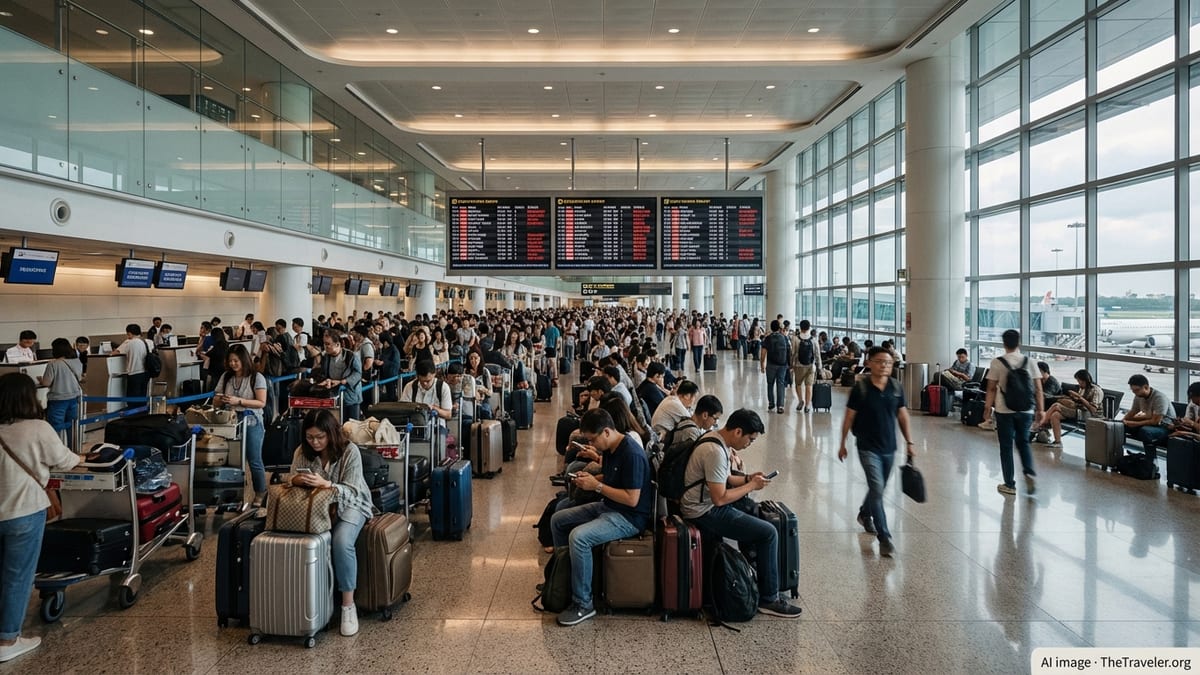
The human impact of the latest cancellations has been most visible in departure halls, where images shared on social media and travel forums show long queues forming at airline service counters. Many affected travelers report being offered rebookings one or more days later, or on itineraries involving connections through secondary hubs, reflecting tight seat availability at short notice at the start of the peak travel period.
Commentary on traveler forums over the past week underscores recurring complaints around communication, with some passengers stating that notifications of cancellations or major schedule changes arrived only hours before departure, or in a few cases after they had already reached the airport. This has particularly affected those using low-cost carriers, where alternative flights may be less frequent and where call centers are quickly overwhelmed during widespread disruption.
At the same time, publicly available airline advisories emphasize that customers whose flights are cancelled are typically entitled to options such as full refunds, credit for future travel or free rebooking onto the next available service, subject to seat availability. Some carriers have also reminded passengers that changes can be processed via mobile apps and websites, which can be faster than waiting at service desks when disruption is extensive.
Travel analysts commenting on the situation note that, while the absolute number of cancellations remains a small fraction of total daily flights across Asia, the concentration of disruptions on popular leisure and visiting‑friends‑and‑relatives routes amplifies the impact, with many journeys involving important family events or long‑planned holidays.
What Travelers to and Within Asia Should Do Now
With schedules still in flux and further short-notice adjustments possible in the coming days, travel advisory platforms and industry observers are urging passengers with imminent trips to and within Asia to adopt a more proactive approach. This includes checking flight status repeatedly in the 24 hours before departure, confirming that contact details in airline bookings are up to date, and allowing extra time at the airport in case of long queues at check‑in and security.
For those yet to book, analysts suggest considering flights earlier in the day, as morning departures tend to be less exposed to knock‑on delays than evening services that rely on aircraft completing multiple legs. Passengers may also wish to build longer connection times into itineraries that involve transfers at busy hubs like Jakarta, Kuala Lumpur and Hong Kong, reducing the risk that a short delay on the first sector will lead to a missed onward flight.
Travelers already affected by cancellations are being encouraged by consumer-rights organizations and online travel communities to document all expenses and communications with airlines, in case they become eligible for reimbursement or compensation under applicable regulations or airline policies. While rules differ by jurisdiction and ticket type, maintaining clear records can help support any later claims.
Despite the current disruption, industry commentary suggests that airlines across the region are working to stabilize schedules as they move deeper into the northern summer season. As aircraft and crew rotations gradually normalize and fuel markets potentially become less volatile, observers expect the rate of ad hoc cancellations to ease, although pockets of turbulence in the network remain likely throughout the coming weeks.