


More news on this day
The sudden collapse of Spirit Airlines on May 2 has left thousands of passengers stranded at airports across the United States and roughly 17,000 workers facing an uncertain future, as the pioneering low-cost carrier begins an accelerated wind-down of its operations after years of mounting financial strain.
Get the latest news straight to your inbox!
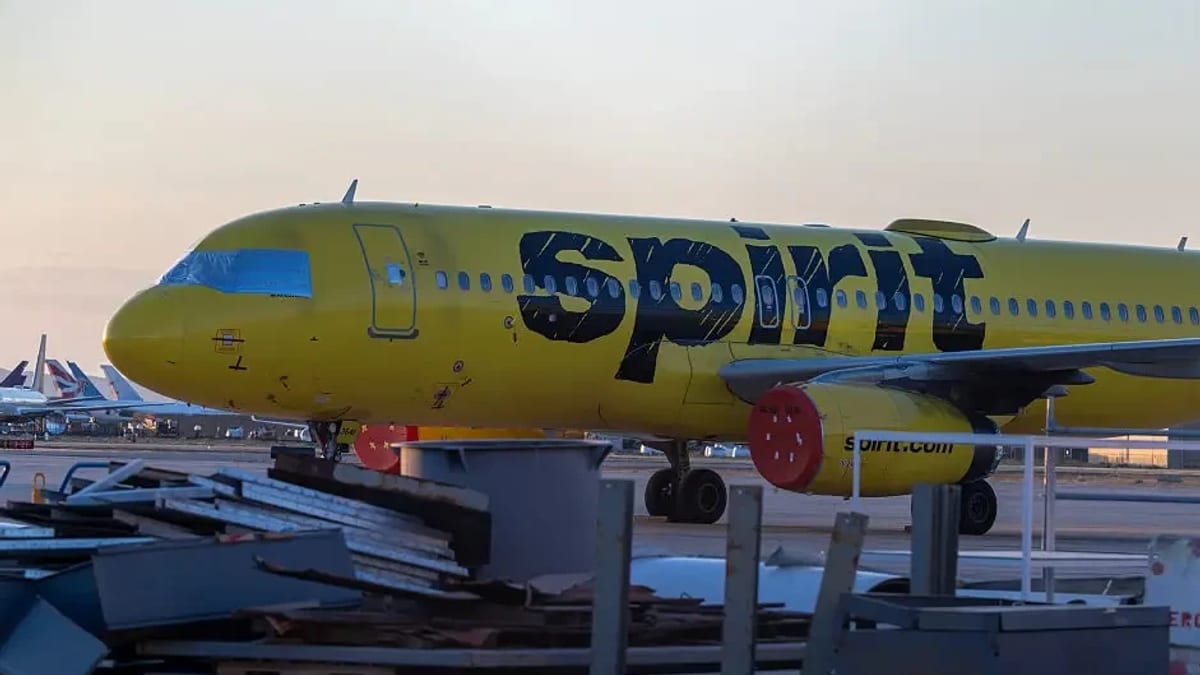
Sudden shutdown halts flights nationwide
Spirit Airlines announced early on May 2 that it had begun an orderly wind-down of operations, immediately canceling all flights and instructing customers not to go to the airport. Publicly available information shows that the carrier also shut down its customer service channels, redirecting travelers to a dedicated restructuring website with basic guidance on refunds and next steps.
The halt in flying abruptly grounded an airline that, until days ago, was operating hundreds of daily flights across the Americas and carrying tens of thousands of passengers. Coverage from multiple outlets indicates that Spirit transported around 50,000 passengers on its final day of operations before aircraft were repositioned or parked and airport check-in counters were covered over.
The timing of the announcement, coming just hours before many weekend departures, meant that travelers woke up to find their bookings canceled and limited information at crowded airport terminals. Reports describe families stranded en route to vacations, workers unable to reach jobs, and students and military personnel scrambling to piece together alternative transport, often at far higher last-minute fares.
While some competing airlines have introduced “rescue fares” or flexible policies for affected travelers, most stranded Spirit customers have been left to rebook on their own. Public guidance from the carrier explains that it will provide automatic refunds for unused tickets purchased directly with credit or debit cards, but confirms that it is not arranging rebooked travel on other airlines.
Thousands of jobs vanish as airline winds down
The shutdown has also triggered a labor shock across Spirit’s network of bases and destination airports. Published coverage and corporate filings indicate that the airline employed about 17,000 people, including pilots, flight attendants, ground handlers, mechanics and corporate staff, along with thousands more working indirectly through contractors and airport service providers.
Union bulletins and public statements from worker groups describe employees learning of the final decision with little advance notice, despite months of warnings about the carrier’s precarious finances. Many crew members and ground staff were left in distant stations when flying stopped, relying on ad hoc travel arrangements or special accommodations from other airlines to return home.
Materials circulated by major U.S. carriers and industry groups indicate that some airlines are offering preferential hiring processes or streamlined applications for former Spirit employees, particularly flight and cabin crew. Even so, analysts note that many workers may face gaps in income, relocation pressures and the challenge of competing for roles in already lean operations at rival carriers.
Airport communities that relied on Spirit’s presence, particularly in Florida, Nevada, Texas and the Caribbean, are also bracing for ripple effects. The loss of crew bases, maintenance work and station jobs is expected to hit local economies, especially at smaller airports where the yellow-liveried airline represented a significant share of flights.
Bankruptcies, bailout drama and an energy shock
The carrier’s collapse follows a turbulent two-year period marked by repeated trips to bankruptcy court and a failed rescue from Washington. Court filings and business reporting show that Spirit first sought Chapter 11 protection in 2024, emerging under a new leadership team in 2025, only to file again later that year as debt pressures and operational challenges mounted.
In early 2026, as oil prices surged amid the widening conflict in Iran and a broader energy shock, Spirit’s already thin margins were squeezed further. Financial disclosures cited in media coverage indicate that the airline’s fuel bill jumped by roughly 100 million dollars in March and April alone, eroding the liquidity it had hoped to use to complete a restructuring.
Negotiations over a proposed federal bailout package, reportedly valued at around 500 million dollars, dragged into late April. Public reports indicate that discussions included options for government investment or guarantees that might have allowed Spirit to keep flying through the high-price period. Those talks ultimately collapsed at the end of April, and on May 2 the company announced that it would liquidate rather than pursue another reorganization.
Industry analysts point out that Spirit’s ultra low cost model, built on dense seating layouts and unbundled fees, left little room to absorb such a rapid spike in fuel costs. Once oil prices surged and financing options narrowed, the business case for continuing operations weakened quickly, leading to the decision to ground the fleet.
Stranded passengers navigate refunds and rebooking
For travelers with Spirit tickets in hand, the collapse has set off a complicated process of seeking refunds while trying to salvage disrupted plans. The airline’s shutdown website explains that customers who paid for future travel using credit or debit cards will receive automatic refunds to the original form of payment, though timelines are not guaranteed and may depend on the pace of the bankruptcy proceedings.
Passengers who booked through online travel agencies, tour operators or third-party platforms are being directed to contact those intermediaries, creating an additional layer of uncertainty and delay. Consumer advocates note that travelers who used travel insurance or paid with credit cards that include trip protection may have additional avenues for reimbursement of nonrefundable hotels and activities.
Meanwhile, published travel-industry coverage shows that several major U.S. airlines have rolled out temporary rescue fares or discounted seats for customers who can show canceled Spirit itineraries. These offers, while helpful for some, are subject to seat availability and may not exist on every route or on peak travel dates, leaving a portion of affected passengers with few affordable alternatives.
Regulators have also emphasized existing passenger rights under federal rules, including entitlement to refunds for canceled flights, but there is no obligation for other airlines to honor Spirit tickets or to match its low fares. As a result, many travelers whose budgets were built around the carrier’s rock-bottom prices are now confronting significantly higher costs to complete trips or are abandoning travel altogether.
Budget travel market faces a shake-up
Beyond the immediate disruptions, Spirit’s exit is reshaping the competitive landscape for low-cost air travel in the United States and neighboring regions. Data compiled by aviation analysts show that, prior to shutting down, Spirit ranked among the country’s largest carriers by number of seats, with a dense network of routes connecting secondary airports and leisure destinations in Florida, the Caribbean and Latin America.
With those flights off the board, other low-cost and full-service airlines are moving to fill the gap. Public announcements highlight new or expanded routes, larger aircraft on former Spirit city pairs and promotional pricing designed to attract displaced customers. Industry commentators suggest that this race to capture market share may offer short-term bargains on certain routes, particularly where multiple carriers are vying to replace Spirit’s presence.
Over time, however, many economists and consumer groups warn that the disappearance of a major ultra low cost competitor could push average fares higher, especially in markets where Spirit had been the primary driver of price competition. Without its aggressive discounting and fee-based model, airlines may face less pressure to undercut each other on base ticket prices, potentially reshaping what budget travel looks like for millions of passengers.
For now, the bright yellow jets that helped define a generation of bare-bones flying have been grounded, and travelers and workers alike are left to navigate the fallout. The collapse of Spirit Airlines marks the first failure of a large U.S. carrier in more than a decade, and its consequences for jobs, prices and accessibility in the skies are only beginning to emerge.