


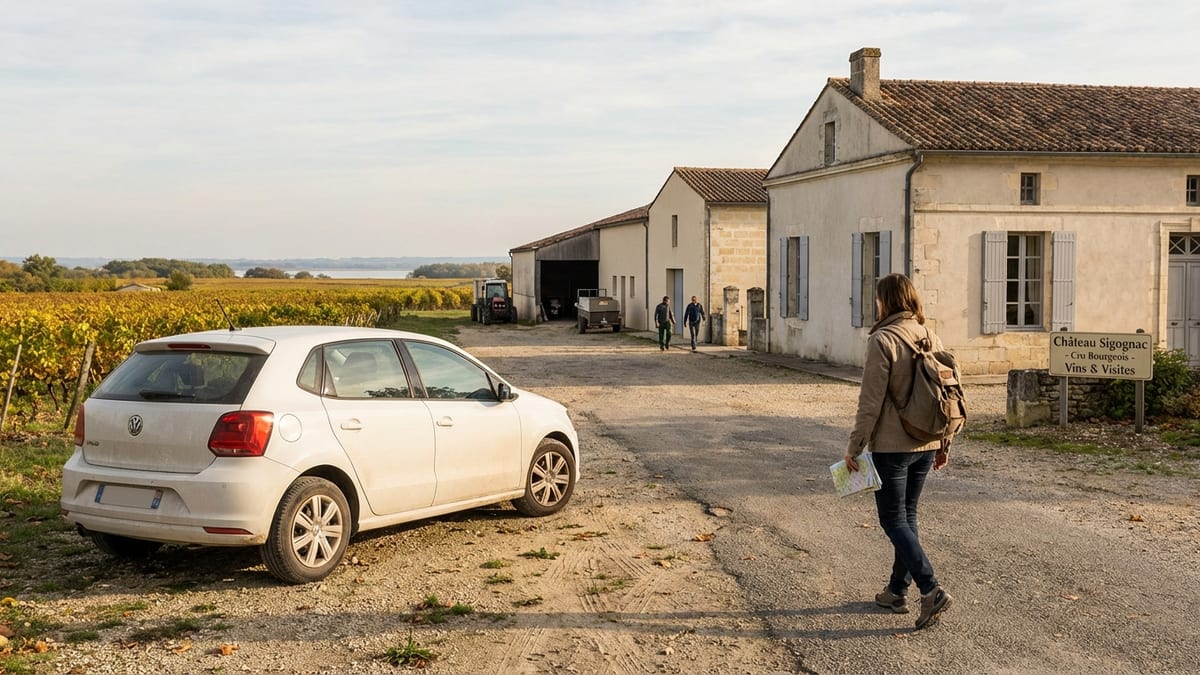
I arrived at Château Sigognac with that familiar mix of jet‑lag and excitement that only a Bordeaux wine trip can produce. Medoc had been on my list for years, but I deliberately chose Sigognac because it promised something slightly different from the polished, ultra‑staged world of the big-name crus classés.
On paper it looked like a working cru bourgeois estate with real vines, real barrels and a real family behind it, not a wine theme park. What I actually found was more nuanced: some genuine charm and authenticity, a few lovely wines, but also gaps in hospitality polish and logistics that are worth understanding before you go.
Getting There: Romantic Route, Real-World Hassles
Château Sigognac sits in Saint‑Yzans‑de‑Médoc, along the classic D2 “Route des Châteaux.” That sounds very cinematic until you are actually trying to reach it without a car. I based myself in Bordeaux city and quickly learned that the Medoc is one of the least convenient Bordeaux regions for independent travelers relying on public transport. Trains and buses exist, but they rarely line up neatly with tour times, and distances between villages are greater than they look on a map. Taxis in the area are limited and rarely available on short notice, and ride‑share apps work only sporadically.
In the end I rented a small car, which felt like overkill for a single château but turned out to be the right choice. The drive from Bordeaux took about 1 hour 20 minutes under normal traffic. The last stretch along the estuary is beautiful, with long, flat vineyards and glimpses of the Gironde on the horizon, but signposting to Sigognac itself is a bit minimal. If you are not using a GPS, you can easily overshoot the small road leading up to the property.
One important thing I learned, and would stress for anyone considering a visit: although some sources imply that the tasting room is broadly “open to the public” on weekdays, the local tourist office clearly notes that guided tours are by appointment only and that weekend visits are strictly on request. In practice, if you simply turn up on a random afternoon expecting a structured visit and tasting, there is a good chance you will be disappointed or rushed. This is a working estate first, hospitality venue second, and it shows in how they handle unannounced visitors.
First Impressions: Understated Estate, Working Farm Feel
Pulling into the gravel courtyard, I did not get the postcard-perfect château facade that dominates Instagram feeds. Sigognac is more discreet and a little more lived‑in. The buildings form a loose ensemble around the courtyard, with the château itself modest rather than grandiose. It feels like an old noble house that evolved into a serious wine estate, not like a palace built to impress tour buses.
On the positive side, that immediately set a different tone from the more theatrical properties in Margaux or Pauillac. I did not feel like I was entering a museum or a brand showroom. Staff walked by in work clothes, a tractor moved slowly across a parcel, and there was a faint smell of fermenting or recently worked wine. It felt, reassuringly, like people actually make wine here.
On the less positive side, the arrival experience is not especially curated. There is no staffed reception desk, no clear sign in English directing visitors where to go, and no obvious waiting area. I wandered around the courtyard for a few slightly awkward minutes, popping my head into an open door that turned out to be a storage area, before someone noticed me and walked over. If you are used to New World wineries where every step of the visitor journey is scripted, the informality here might feel disorganized rather than charming.
Booking, Welcome and Language: A Mixed Bag
I had booked my visit by email a couple of weeks in advance, which I highly recommend. The estate’s official information indicates that they are open Monday to Friday year‑round, roughly 9:00 to 12:00 and 13:00 to 16:00, with weekends available only by advance appointment. What they do not spell out is that “open” does not necessarily mean that an English‑speaking guide is always on hand or that tours can start at the drop of a hat. When I arrived at my agreed time, they clearly knew I was coming, but I was asked to wait about 10 minutes while someone finished in the cellar.
The welcome itself was warm in a low‑key way. This is a family‑run estate, and there is none of the corporate script or rehearsed jokes that you sometimes get in larger châteaux. My guide, a member of the small team rather than a dedicated hospitality staffer, shook my hand, asked where I had come from, and apologized for the wait. The conversation slid naturally between French and English; if you do not speak any French, you will still be fine, but I suspect that more nuanced technical explanations land better if you can follow some French wine vocabulary.
That said, expectations matter. If you anticipate a highly polished, museum‑style experience with multimedia elements, historical exhibitions and carefully staged photo stops, you may be underwhelmed. Sigognac’s “visitor program” feels more like being taken behind the scenes at a functioning farm. For me, that was largely a positive, but I met another couple in the courtyard who clearly expected something grander and seemed confused by the casual structure of it all.
The Tour: Authentic Vineyard Insight With Rough Edges
The visit began outside, looking over a parcel of vines that slopes gently toward the estuary. The estate has converted to organic viticulture, and my guide was proud to talk about their move away from systemic pesticides and toward more environmentally conscious practices. I appreciated that this was framed less as marketing and more as a practical challenge: more frequent passes with tractors, more labor in the vineyard, more risk management when mildew pressure is high.
From a wine‑geek perspective, I found this part of the tour genuinely interesting. We discussed the clay‑chalk and clay‑sand soils typical of this corner of the Medoc, the dominance of Cabernet Sauvignon in their blends, and the age of the vines. I could sense that my guide spends most of their time working with vines and barrels, not giving speeches, which made the explanation feel honest if occasionally a little rambling. If you crave polished storytelling with dramatic pauses, you may find this less satisfying; if you value candid, slightly technical talk, you will likely enjoy it.
Inside, the cellar and winery are firmly functional rather than decorative. Stainless steel vats, concrete, barrels, hoses on the floor, a bit of humidity in the air: nothing Instagram‑ready, but everything you would expect from a serious working property. There are no light shows or projections. We talked through their fermentation approach, maceration times and barrel aging, and I was invited to smell one of the vats that had recently been racked. It was all very hands‑on. At moments, I did wish there were a few simple interpretive panels in English for less experienced visitors; as it stands, the quality of your understanding will depend heavily on the guide you get and on how many questions you are comfortable asking.
One frustration: timing. The estate lists its hours fairly tightly around office‑style slots, and my tour was squeezed into what felt like a busy work day. I did not feel rushed exactly, but there was not the leisurely pace you might find at a château that has dedicated staff just for visitors. It is a subtle difference, yet you feel it: slight glances at the clock, quick transitions between spaces, and a sense that your visit is just one of many operational tasks that day.
The Tasting: Solid, Honest Medoc Rather Than Trophy Bottles
The tasting took place in a modest room that doubles as a sales area. A small table, a few bottles, some printed material, and a window looking back over the vines. This is not a designer tasting room with high‑end furniture, but it serves its purpose. I tasted several wines: the main Château Sigognac red, a second label, and a white wine from the estuary range. The lineup can vary depending on what is open and what they are currently promoting, so do not expect an exhaustive vertical.
Across the board, the reds were classic Medoc: firm structure, clear Cabernet profile, and a style that favors balance over showiness. These are not wines built to impress in a five‑minute tasting with opulent oak and extracted fruit. Instead, they reveal themselves gradually. I particularly liked a recent vintage of the main estate wine that showed cassis, tobacco leaf and a precise, saline edge. It felt like excellent value when I heard the price, especially compared to more famous neighbors where a single bottle costs what a mixed case does here.
However, the tasting format itself felt a bit transactional. There was limited context about vintages, and no food pairing or small bites to soften the tannins. The glasses were adequate but not especially fine. Spittoons were provided, but there was no discussion about how to taste, which could leave beginners a bit lost. I found myself wishing they offered a slightly more structured, tiered experience: perhaps a basic tasting for casual visitors, and a more in‑depth, paid option for those willing to spend longer and open more bottles.
On the plus side, there was zero sales pressure. After the tasting, I was gently asked if I wanted to buy anything, and when I hesitated over luggage space, the staff suggested shipping options without pushing. They have an online shop and can arrange delivery to various countries, but the explanation was practical rather than salesy. I left with a couple of bottles and a mental note that, had the tasting been just a bit more polished, I would probably have bought a few more.
Service, Atmosphere and How It Compares to Other Medoc Visits
In terms of atmosphere, Sigognac sits in a gray area between rustic and professional. The people I met were clearly invested in the estate and proud of the wines, yet hospitality is not their primary job. You see that in small things: slightly dated brochures, a tasting room that feels improvised, and a welcome that depends heavily on who notices you first when you arrive. At no point did anyone behave rudely; if anything, they were kind. But if you compare this to the choreographed, brand‑driven welcome at some classified growths, you feel a gap.
Whether that gap is a problem or a plus depends on your expectations. I spoke with another visitor who had spent the previous day at a famous château in Margaux and described it as “gorgeous, but a bit like visiting a luxury boutique.” At Sigognac, the experience is closer to visiting a serious family domain in Burgundy or a working farm in Tuscany: real, slightly messy, and not always visitor‑optimized. I enjoyed that authenticity, but there were moments when I wished for a bit more interpretive structure to tie everything together.
Compared with other Medoc estates I visited on the same trip, Sigognac sits firmly in the middle of the pack in hospitality terms. It is more welcoming and accessible than some highly prestigious neighbors that barely open their doors at all, but less polished than a few smaller properties that have invested heavily in visitor experiences, gastronomic pairings or on‑site accommodation. If your goal is to tick off famous labels, this is not the place. If your goal is to see how a serious, organic‑leaning cru bourgeois works from the inside, it is genuinely instructive.
Practicalities: Opening Hours, Costs and Logistics
On the practical side, it is essential to align your plans with how Sigognac actually operates. Officially, they are open year‑round, Monday to Friday, in a split schedule approximately 9:00 to 12:00 and 13:00 to 16:00. Weekend visits are possible by prior arrangement. Within those hours, guided tours are only offered by appointment. This is not a drop‑in tasting bar where you can wander in late afternoon expecting a leisurely session. Harvest season, public holidays and local events can lead to changes or temporary closures, and prices for visits can shift from year to year, so I would always recommend confirming details directly with the estate or through the Medoc tourist office shortly before your trip.
As for costs, my visit was reasonably priced compared to other Medoc options. The tasting and tour fell somewhere in the lower to middle range of what I have paid in Bordeaux, especially given the length of the visit and the number of wines poured. Payment methods were flexible: cards, cash and French checks were all accepted, which is useful if you are mixing domestic and international spending.
Parking is straightforward and free, but accessibility is a mixed picture. The courtyard is gravel and can be uneven, and some cellar spaces require navigating steps. The tourist office notes that the property is accessible with a stroller, but if you have reduced mobility or use a wheelchair, I would contact them directly to clarify exactly what is and is not comfortably accessible. There is a park‑like outdoor area that would be pleasant in good weather, but the visit is otherwise mostly indoors, so the experience is less affected by rain than many vineyard tours.
Timewise, I would budget around 1 to 1.5 hours on site, plus driving time. It is tempting to stack several châteaux in a single day in the Medoc, but distances and rural roads make that more tiring than it looks on a map. If I were to redo the day, I would pair Sigognac with just one other nearby estate and build in a proper lunch stop, rather than trying to sprint from one tasting to the next.
Who Will Appreciate Château Sigognac, And Who May Be Disappointed
By the time I drove away, a couple of things were clear to me. First, Château Sigognac does not pretend to be something it is not. You are not paying for a brand, a glossy visitor center or a famous label. You are paying, in effect, for an hour of access to a real working estate in a beautiful corner of the Medoc, and for an honest look at wines that are made to be drunk at the table rather than displayed in a cellar as trophies.
You will appreciate Sigognac if you care more about authenticity and agricultural reality than about luxury. If the idea of chatting with someone who might have been pruning vines that morning appeals more than a polished marketing presentation, you will likely find the visit rewarding. Wine enthusiasts who already have some knowledge of Bordeaux vineyards will probably get the most out of the technical explanations and the subtlety of the wines.
On the other hand, if this is your very first winery visit ever and you secretly want the fairy‑tale château experience, Sigognac alone may not satisfy you. The buildings are modest, the tour is unvarnished, and the tasting is functional rather than theatrical. Families with young children might also find it challenging, as there are no specific activities for kids and the atmosphere is quite adult and work‑focused.
If I were planning my trip again, I would still include Château Sigognac, but I would frame it differently: I would combine it with one more architecturally spectacular estate earlier in the trip to scratch the “grand château” itch, then come here specifically to ground that image in reality. I would also make a more precise appointment, ideally in late morning, and allow more time afterward to explore the nearby villages and estuary vistas rather than rushing straight back to Bordeaux.
The Takeaway
So, is Château Sigognac worth visiting? For me, the answer is yes, with qualifications. It is not the most dramatic, the most polished or the most famous estate in the Medoc, and it does not try to be. Some aspects of the visitor experience feel underdeveloped: signage is sparse, the welcome can be a bit improvised, and the tasting format could benefit from clearer options and a touch more hospitality finesse. Those shortcomings are noticeable if you are used to wine regions where tourism has been fully industrialized.
Yet I walked away feeling I had seen something real. I met people who actually make the wines they pour, stood in vineyards where the move to organic farming is unfolding vine by vine, and tasted bottles that offer classic Medoc character at prices that remain accessible. There were no staged moments, no rehearsed origin stories, just a working estate opening its doors for a brief window.
If you are a curious wine traveler willing to look beyond the top‑tier names, comfortable with a bit of logistical planning and happy to trade some gloss for authenticity, then under those conditions Château Sigognac is absolutely worth a stop. Go with realistic expectations, book ahead, and pair the visit with a broader Medoc day that includes a more theatrical château if you crave that side of Bordeaux too. Do that, and you will leave with a more complete, and more honest, picture of what this famous wine region really is.
FAQ
Q1. Do I need to book a visit to Château Sigognac in advance?
Yes. Although the estate is generally open on weekdays, guided tours are only offered by appointment, and weekend visits require prior arrangement. I would not recommend turning up without a confirmed time.
Q2. What are the usual opening hours?
When I visited, the estate was operating on a split schedule similar to local tourist office listings: roughly 9:00 to 12:00 and 13:00 to 16:00 from Monday to Friday, with weekends on request. Always reconfirm close to your visit, as hours can change with the season and harvest.
Q3. Is it possible to visit without a car?
Technically yes, but in practice it is difficult. Public transport in the Medoc is limited, and taxis or ride‑shares are not always easy to find. I ended up renting a car and would strongly suggest doing the same or booking a private tour that includes transport.
Q4. How long does a tour and tasting last?
My visit, including vineyard walk, cellar tour and tasting, lasted around 1 to 1.5 hours. It felt fairly compact, and I would not try to schedule another château visit immediately afterward without some buffer time.
Q5. What level of wine knowledge do I need to enjoy the visit?
You do not need to be an expert, but you will get more from the explanations if you already understand basic Bordeaux terminology. The tour is quite straightforward and focused on real production rather than visitor education, so beginners may want to read a little beforehand.
Q6. Are tours and tastings available in English?
Yes, but not all staff are full‑time guides. My visit was conducted in a mix of English and French, and I felt that the nuances came through better because I could follow both. If you need a fully English‑language visit, mention that when you book.
Q7. Is Château Sigognac family‑friendly?
It is not particularly geared toward children. There are no playgrounds or dedicated activities for kids, and much of the visit takes place in working cellars and vineyards where supervision is important. Quiet, older children interested in how wine is made would cope better than restless younger ones.
Q8. How much does a visit and tasting cost?
During my trip, the fee for a tour and tasting was in the lower to mid‑range compared with other Medoc estates, especially considering the number of wines poured. Prices can change from year to year, so I would ask for current rates when booking.
Q9. Can I buy wine on site and ship it home?
Yes. There is a small sales area where you can purchase bottles, and the estate can arrange shipping to various destinations, subject to local import rules and costs. The process felt practical rather than pushy, with no pressure to buy.
Q10. Who is Château Sigognac best suited for as a visitor?
In my experience, it suits travelers who value authenticity and are curious about the everyday reality of a working Medoc estate more than they crave luxury or famous labels. It is ideal as part of a broader itinerary that balances one or two high‑profile châteaux with smaller, more grounded properties like this one.