


Chichester, a compact cathedral city on England’s south coast, has quietly become one of the country’s most intriguing short-break destinations. According to recent Expedia search data, interest in Chichester holidays has risen by around 30 percent year on year, reflecting a broader appetite for smaller, culture-rich cities with easy access to countryside and coast. With fast rail links from London, a walkable historic core and a web of cycling paths reaching into the South Downs and Chichester Harbour, it makes an ideal base for a low-stress, car-free escape in West Sussex.
Get the latest updates straight to your inbox!
Why Chichester Is Having a Moment
Chichester’s growing profile is no accident. Expedia’s latest UK destinations insights highlight the city as one of its emerging English breaks, noting that travel interest has climbed by roughly 30 percent compared with the previous year. That uptick mirrors what visitors find on the ground: a place that combines serious heritage with contemporary arts, good restaurants and quick access to sandy beaches and rolling downland. Unlike larger urban centres, Chichester manages to stay relaxed in feel while offering enough to fill several days without a car.
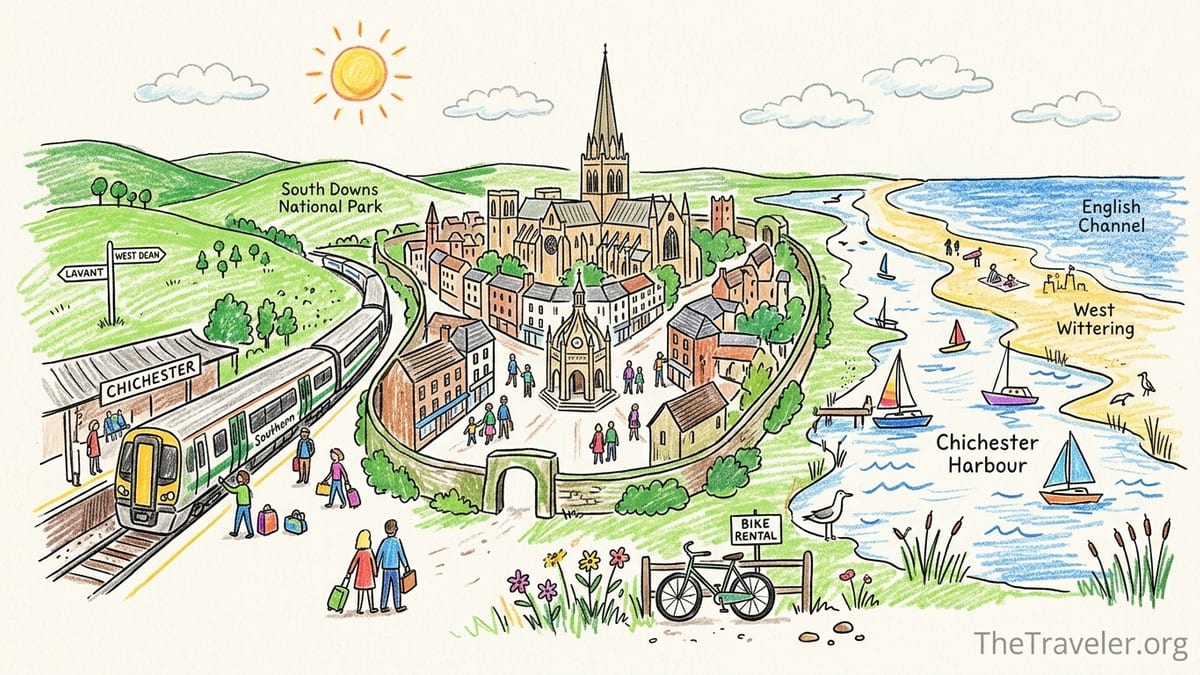
At the heart of the appeal is scale. The city centre fans out from the Market Cross, where four pedestrianised shopping streets radiate to still-visible Roman walls. Most major sights, including Chichester Cathedral, Pallant House Gallery and the Festival Theatre, are within a 10 to 15 minute walk of each other. For many Londoners arriving by train, that means dropping a bag at a guesthouse near South Street and being on the city walls path or in a café courtyard within minutes, rather than negotiating buses or taxis across town.
Chichester also serves as a practical hub for wider West Sussex. To the north, the South Downs National Park rises within a few miles of the city, with villages such as Lavant and West Dean reached by bike or bus. To the south and west, Chichester Harbour’s creeks and marinas line up towards Bosham and Itchenor, while the sandy sweep of West Wittering beach sits around 12 miles from the station. For travellers balancing limited time with a desire to see coast, countryside and historic sites, it is an efficient base.
Affordability plays a role too. While prices change with demand, midweek advance rail tickets from London Victoria to Chichester currently start from around £8 each way when booked in advance, with typical walk-up off-peak returns costing more. Hotel rates in the city trend lower than in Brighton or central London, especially outside summer weekends and major events at nearby Goodwood, making it a realistic option for a long weekend rather than a once-a-year splurge.
Historic Heart: Cathedral, Walls and Galleries
Chichester’s story begins with the Romans, and the city centre still follows the classic Roman street grid. Sections of the defensive walls remain walkable for roughly 1.5 miles, forming a green ring that appeals to first-time visitors who want a quick orientation loop. Access points near Priory Park and West Street make it easy to climb up from the pavement, and the circuit typically takes 30 to 45 minutes at a gentle pace, with views over gardens, church towers and the cricket pitch.
The focal landmark is Chichester Cathedral, whose spire rises above the low roofs of the city. Founded in the 11th century, it is known for a mix of medieval stonework and modern art, including a prominent tapestry by John Piper. The cathedral currently offers free entry, with donations encouraged, and opens daily for sightseeing outside service times. Visitors often combine a walk through the nave and cloisters with coffee at the on-site Cloisters Kitchen & Garden, a café serving locally roasted coffee, pastries and light lunches within the cathedral precincts.
Art lovers have strong reasons to linger in the city centre. Pallant House Gallery, set in a Grade I listed 18th-century townhouse with a contemporary extension, is recognised nationally for its collections of modern British art. Standard adult admission is currently advertised at around the mid-teens in pounds, with concessions available, and temporary exhibitions can focus on figures ranging from Lucian Freud to contemporary printmakers. The combination of period staircase, walled garden and white-cube galleries provides an engaging contrast for a half-day visit.
Just north of the centre, Chichester Festival Theatre anchors the city’s reputation for performance. The main auditorium is known for staging new productions that often transfer to London’s West End, alongside revivals of classic plays and musicals. Ticket prices vary widely by show and seat, but midweek performances outside peak periods often feature discounted seats, making it feasible to pair a matinee with morning sightseeing. Together, these cultural institutions give Chichester a depth of activity that belies its modest size.
Reaching Chichester by Rail and Getting Around Without a Car
For many visitors, the easiest way to reach Chichester is by rail. Direct trains from London Victoria, typically operated by Southern, run along the West Coastway line. Current journey planners show an average travel time of about 1 hour 45 to 1 hour 50 minutes for the roughly 53-mile route, with an advertised minimum of around 1 hour 30 on faster services. There are usually several direct trains each hour during the day, with additional options involving a change at Horsham or Barnham. Booking platforms list advance singles from about £8 when purchased early, though same-day fares can be substantially higher.
Chichester station sits at the southern edge of the city centre. From the station, pedestrians reach South Street in around five minutes on foot by following the signed route under the road bridge and along the main shopping street. Local buses to West Wittering, Bosham and other harbour villages leave from stops close to the station and along South Street, which allows visitors to continue on to the coast without hiring a car. Taxis typically queue outside the station entrance, useful for those with luggage heading to out-of-town accommodations.
Once in the city core, walking is the most practical way to explore. The compact grid means even those with just an afternoon can see the Market Cross, cathedral, city walls and canal basin on foot. For travellers keen to cover slightly more ground, bike rental is a valuable option. Several independent cycle shops in and around Chichester provide day rentals, often including helmets and locks, for sums that usually range from the mid-teens to the low twenties in pounds for a standard hybrid bike. It is worth reserving in advance for summer weekends or during Goodwood events, when demand increases.
Travellers relying solely on public transport should pay attention to the timing of last buses back from coastal villages, especially outside peak season. For example, services returning from West Wittering or the Witterings area towards Chichester may thin out in the evening. Checking the latest timetable upon arrival at the station, or asking at the bus operator’s information point if available, reduces the risk of an expensive taxi back after a sunset walk on the beach.
Cycling the Centurion Way and Salterns Way
Two dedicated cycle routes place Chichester firmly on the map for leisure cycling: the Centurion Way to the north and the Salterns Way towards the coast. Together they offer largely traffic-free riding between Roman roads, riverside towpaths and saltmarsh creeks, all starting within a short pedal of the city centre. Visitors travelling by train can roll out of the station and be on either route within around 10 to 15 minutes, depending on traffic and familiarity with the one-way system.
The Centurion Way follows the line of a former railway from Chichester towards Lavant and West Dean. According to West Sussex County Council, the route currently runs for about 5.5 miles, or 9 kilometres, between the northern edge of the city and West Dean, with the name referencing the Roman road that once crossed the line. The path is largely off-road and relatively flat, which makes it suitable for families and less experienced cyclists. One of the visual highlights is the Chichester Road Gang sculpture, a line of metal figures representing Roman workers with spades, located near the crossing with the historic road.
Southwards, the Salterns Way links Chichester with the beaches at West Wittering. Official route maps describe roughly 12 miles of largely flat cycling between the city and the sand, using a mix of quiet lanes, harbour-side paths and dedicated cycle tracks. Sections pass marinas and boatyards near Chichester Marina and Itchenor, with viewpoints over mudflats and saltmarsh that form part of Chichester Harbour’s protected landscapes. Many riders choose to treat it as a one-way journey, cycling out to the coast in the morning, spending the day on the beach and returning by bus with bikes or by pre-arranged lift.
Conditions on these routes can change with maintenance works or seasonal flooding, so it is sensible to consult the most recent maps from local authorities or visitor information centres before setting out. Surfaces range from smooth tarmac to compacted gravel, and wet weather can leave sections muddy, particularly under tree cover near West Dean or along field-edge paths towards the harbour. Riders should carry basic tools, water and lights, as well as a secure lock if planning to leave bikes while exploring local pubs, galleries or beaches on foot.
Best West Sussex Day Trips from a Chichester Base
One of Chichester’s strongest selling points is the range of day trips within easy reach by bus, train or bike. To the west, Fishbourne Roman Palace sits barely 1.5 miles from the city, reachable by local train to Fishbourne station, by bus or by bike along the South Coast cycle route. The site preserves remains of an extensive Roman villa complex, including some of the most impressive mosaics in Britain. Current adult entry prices fall in the low teens in pounds, with family tickets and concession rates available, making it an accessible half-day outing for those interested in Roman Britain.
Continuing along the harbour, the village of Bosham is a favourite for its tidal quayside, historic church and low, tile-roofed cottages clustered around the water. Buses from Chichester reach Bosham in under 30 minutes, depending on traffic. Many visitors time their walk along the waterfront with the tide: at high water, the road around the harbour edge can flood, submerging parked cars that ignored warning signs. Cafés and an arts and crafts centre near the quay make it a rewarding stop even in cooler months, especially for those interested in local ceramics and textiles.
To the north, the Weald and Downland Living Museum at Singleton offers a different perspective on regional history. This open-air museum features more than 50 relocated historic buildings from across south-east England, set in a rural valley within the South Downs National Park. The site is reachable by bus from Chichester in around 20 to 30 minutes, or by bike for confident riders comfortable with hilly roads. Current published adult admission sits in the high teens to low twenties in pounds, with gift aid and concessions affecting the exact price, but the scale of the site supports a full day of exploration.
Coastal day trips centre on West Wittering, where a wide, sandy beach attracts both families and watersports enthusiasts. Travellers without a car should book beach parking in advance if meeting friends who are driving, as spaces are controlled and can sell out on peak summer days. Buses from Chichester serve the Witterings, though journey times can lengthen in holiday traffic. Away from summer, the beach becomes a quieter place for brisk walks and birdwatching, with a handful of beach cafés and kiosks providing hot drinks and snacks when open.
Exploring Chichester Harbour and the Coast
Chichester Harbour, officially designated an Area of Outstanding Natural Beauty, is integral to the region’s character. The harbour’s creeks and channels are best appreciated slowly, whether on foot, by bike or from the deck of a small boat. From Chichester city centre, visitors can walk or cycle to the canal basin and follow the towpath southwards towards the marina, passing narrowboats and reed beds along the way. Local information boards describe the canal’s 19th-century origins and current use for leisure boating and paddle sports.
Boat trips in the harbour operate seasonally from locations such as Itchenor and Emsworth, with small passenger vessels offering short cruises that focus on birdlife, sailing scenes and views back towards the South Downs. Ticket prices vary by operator and duration but commonly sit in the low double digits per adult for one to two-hour cruises. Advance booking is recommended on summer weekends and during school holidays, when day trippers from London and the Midlands converge on the area.
Walkers can access a network of footpaths that trace the shoreline around the harbour. Popular stretches include the route from Dell Quay to Fishbourne, where an old quay and waterside pub provide a natural pause, and paths skirting the channels near West Itchenor with constant views of moored yachts. Tide tables are important: some paths and causeways become impassable or wet underfoot around high water, and local signage should be followed to avoid disturbing nesting birds in protected zones.
At the open coast, the transition from sheltered harbour to English Channel is marked by expanses of shingle and sand. Beyond West Wittering, East Head’s sand dunes and saltmarshes form part of a National Trust managed area, with clearly marked paths designed to protect fragile habitats. Windsurfers and kitesurfers take advantage of the combination of shallow water and reliable breezes, while families gravitate to the gentler shallows on calmer days. Simple facilities such as toilets, seasonal cafés and hire outlets make the beach practical for a full day out, provided visitors plan ahead for parking or public transport.
Practical Tips, Seasons and Planning Around Events
Chichester’s coastal climate means relatively mild winters and pleasantly warm, though not usually extreme, summers. For many visitors, late spring and early autumn offer the best balance of manageable crowds and comfortable weather for walking or cycling. During school holidays, especially in July and August, West Wittering beach and harbour villages can feel busy, and accommodation prices in and around the city may rise. Booking rail tickets, rooms and any car hire well in advance is advisable in those peak weeks.
Local events have a significant impact on availability and atmosphere. The Goodwood Estate, located a few miles north of Chichester, hosts major fixtures such as the Festival of Speed, Goodwood Revival and Glorious Goodwood horse racing. On those weekends, hotel rates in Chichester and wider West Sussex can climb sharply, and trains from London may be crowded. Travellers who are not attending the events might choose to avoid those dates, or alternatively embrace the buzz and book early to secure central accommodation and dinner reservations.
Within the city, the Chichester Festival Theatre season, cathedral concerts and temporary exhibitions at Pallant House Gallery frequently draw cultural visitors. While the city handles these events smoothly, performances that attract national attention can make last-minute theatre tickets hard to find. Checking programme calendars ahead of time and aligning a visit with a particular show or exhibition can turn a standard weekend away into a more focused cultural break.
For budgeting, visitors should expect café coffees in central Chichester to cost in the region of £3 to £4, with simple lunches in independent cafés or pubs usually falling in the £10 to £18 range before drinks. Dinner in mid-range restaurants commonly lands between £20 and £35 per person excluding alcohol, depending on the style of cooking and menu. Entry to major sights such as the cathedral, city walls and canal towpath is free or donation-based, which helps offset ticketed attractions like the Weald and Downland Living Museum, Fishbourne Roman Palace and special exhibitions at Pallant House Gallery.
Conclusion: A Compact Gateway to Coast and Downs
Chichester’s recent 30 percent growth in travel interest reflects tangible strengths rather than hype. The city combines a walkable Roman street plan, an active cultural scene and broad choice of independent cafés and shops with direct rail links from London and other southern hubs. For visitors choosing to travel by train and bike, it offers the rare chance to access sandy beaches, harbour creeks and downland villages without the complications of driving and parking.
Using Chichester as a base unlocks a surprisingly wide slice of West Sussex in a few days. One morning might begin with quiet contemplation under the stone vaults of the cathedral and end with salt on your skin at West Wittering, reached by a leisurely ride along the Salterns Way. Another could run from mosaics at Fishbourne Roman Palace to sunset over Bosham’s tidal quayside. Whether you are drawn by historic streets, traffic-free cycling, harbour scenery or simply the ease of stepping off a train into a compact, characterful city, Chichester makes a compelling case for being your next English short break.