


More news on this day
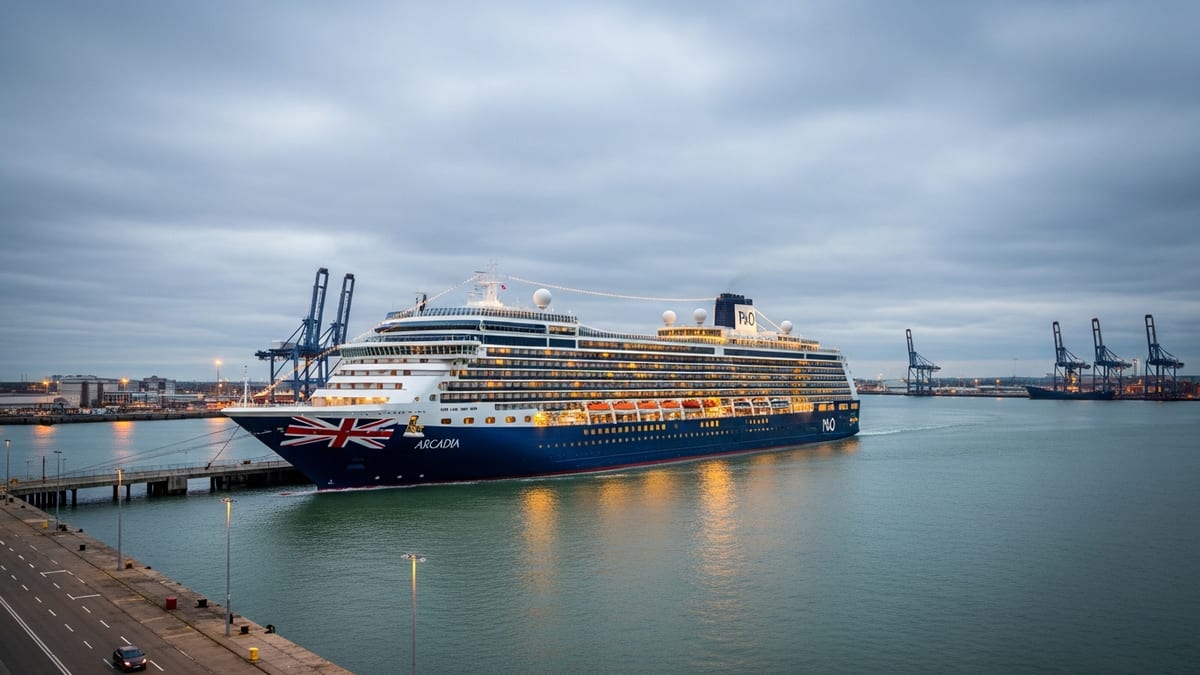
The residential cruise ship Villa Vie Odyssey, which once marketed an open-ended global voyage, has departed the Cambodian port of Sihanoukville without any passengers on board after abruptly halting operations and disembarking residents amid mounting financial and fuel cost pressures.
Get the latest news straight to your inbox!
From “never-ending” journey to sudden standstill
The Villa Vie Odyssey was promoted as a long-term residential cruise, offering cabins that could be owned or leased by travelers seeking a life at sea. Publicly available information indicates that the vessel, with capacity for several hundred residents and a crew complement in the low hundreds, had been sailing multi-year itineraries around the world before its abrupt stop in Cambodia.
According to published coverage, the ship arrived in Sihanoukville in late October 2026 and soon afterward informed residents that operations were being suspended due to surging operating costs, especially fuel prices linked to wider geopolitical tensions and disruptions in energy markets. Reports indicate that travelers, some of whom had invested significant sums for multi-year or even lifetime stays, were told to pack up and disembark with their belongings in Cambodia.
Accounts compiled from news outlets and passenger social media posts describe a hurried and emotional departure, with residents relocating into local hotels or arranging emergency flights to other countries. Many had treated the Odyssey as a primary home, which contributed to the logistical and financial strain of leaving the ship on short notice.
The halt of the voyage in Sihanoukville marked a dramatic reversal for a concept that had been marketed as a stable alternative to traditional retirement and long-term travel, turning what had been billed as a “never-ending” cruise into an unplanned stay onshore.
Empty departure from Sihanoukville
On November 4, 2026, Cambodian and international media outlets reported that the Odyssey sailed out of Sihanoukville without any passengers on board. Coverage drawing on port and local tourism officials’ information states that only crew remained as the ship left the pier, with estimates suggesting several dozen to more than one hundred staff were still on board at the time of departure.
The ship’s exit followed roughly a week of lay-up in the Cambodian port, where it had been berthed while residents were arranging onward travel and the operator was reassessing its options. Publicly available vessel tracking data, referenced in several reports, shows the Odyssey departing Cambodian waters on a course believed to be toward a regional shipyard or alternative anchorage, although the final destination has not been formally confirmed.
News coverage indicates that the decision to move the vessel was driven by cost and logistics. Keeping a large cruise ship alongside a commercial pier can be expensive, especially when no paying passengers are on board. Relocating to lay-up facilities or shipyards in other parts of Southeast Asia may reduce daily expenses while the ship’s future is negotiated between owners, lenders, and the operator.
Details on the number of crew who remained with the Odyssey as it left Cambodia vary among reports, reflecting limited public documentation. Figures cited range from around 50 to more than 150 crew members, with some outlets noting that not all may have sailed with the vessel. What is clear from the available information is that no fare-paying residents were allowed to stay aboard when the ship departed Sihanoukville.
Financial pressures and the future of residential cruising
The Odyssey episode highlights the particular financial vulnerabilities of residential cruising, a niche segment of the cruise industry where guests purchase or lease cabins instead of buying conventional cruise tickets. The model relies on long-term commitments from residents and stable operating expenses over years rather than weeks. When fuel costs rise sharply or financing conditions tighten, publicly available commentary suggests that operators may struggle to balance budgets while honoring long-term promises made to residents.
Reports tracing the ship’s recent history note that the Odyssey’s operator had already been facing funding challenges in the months leading up to the Cambodia lay-up. Articles analyzing the situation describe attempts to raise additional capital and adjust itineraries, along with appeals to residents for further financial contributions to cover fuel and port costs. The eventual halt in Sihanoukville indicates that these efforts were not sufficient to sustain operations.
Industry observers quoted in various analyses point out that residential cruise ventures require a delicate balance between attractive pricing for residents and realistic budgeting for fuel, maintenance, insurance, crew salaries, and port charges. The Odyssey’s suspension adds to a short but notable list of experiments in long-term sea-based living that have run into financial or operational obstacles before completing their promised itineraries.
For prospective travelers attracted to the idea of full-time life at sea, the Cambodia incident may encourage closer scrutiny of an operator’s capitalization, contingency planning, and refund policies before committing to multi-year contracts. Commentators note that, unlike conventional cruises that usually last days or weeks, residents face a more complex risk profile when a residential ship changes course or suspends operations mid-contract.
Stranded travelers navigate the fallout
In the days after residents were instructed to disembark, social media posts and interviews cited in news coverage showed Odyssey passengers scattered across Sihanoukville’s hotels and guesthouses, working quickly to reorganize their lives. Many had sold or rented out land-based homes for the duration of the voyage, which magnified the challenge of suddenly securing long-term accommodation onshore.
Reports indicate that some travelers were able to book flights out of Cambodia within a few days, routing through hubs such as Bangkok, Singapore, and Kuala Lumpur. Others stayed in Sihanoukville longer as they waited for travel funds to clear or sought reimbursement from insurers, credit card companies, or the operator’s customer service channels. The wide range of individual circumstances has made it difficult to quantify the total number of people affected or the exact scale of their unexpected expenses.
Coverage in financial and consumer media notes that passengers are now navigating a complex patchwork of contracts and protections. Because the Odyssey was marketed as a residential product rather than a series of discrete cruises, refund and compensation mechanisms may differ from those that typically apply to standard cruise itineraries. Some residents had reportedly paid substantial sums for multi-year or lifetime arrangements, and it remains unclear how much of that money, if any, will be returned.
Travel law specialists quoted across multiple outlets suggest that residents will likely need to rely on a combination of contract terms, jurisdiction-specific consumer protection rules, and any financial guarantees that may have been in place. As of early November 2026, no comprehensive settlement plan had been publicly announced, leaving many former residents uncertain about their long-term financial recovery.
What the Odyssey case signals for global travelers
Beyond its immediate impact on former residents, the Odyssey’s departure from Cambodia without passengers raises broader questions for global travelers considering nontraditional travel models. Residential cruising and similar offerings often promise a blend of adventure, convenience, and community, but the Cambodia incident illustrates that these benefits can be accompanied by heightened exposure to business and operational risk.
Analysts commenting on the case emphasize that prospective customers may wish to examine not only glossy marketing materials but also factors such as the operator’s access to financing, the structure of ship ownership, and whether funds paid in advance are held in protected accounts. Published commentary suggests that clear, enforceable refund mechanisms and transparent communication protocols become critical when the travel product spans years and involves a quasi-residential commitment.
For destinations like Sihanoukville, the sudden arrival and departure of a passenger-free ship underscores the way global travel disruptions can ripple through local economies. While the Odyssey’s residents did spend on hotels, dining, and transportation during their unplanned stay, the end of a long-term voyage also represents the loss of a steady stream of visitor spending that might have accompanied a fully operational residential cruise calling at ports around the world.
As the Odyssey sails away from Cambodia under uncertain ownership and operational plans, its story serves as a case study in both the allure and the fragility of ambitious travel concepts. Travelers, destinations, and industry stakeholders will be watching closely to see whether the ship finds a new role at sea or becomes a cautionary marker in the evolution of long-term cruising.