


Childcare provision in Germany is extensive and legally supported, but the actual costs for expatriate families vary widely by region, child age, provider type and household income. Understanding how public and private fees are structured, what is subsidised and which costs are typically excluded is essential for realistic relocation budgeting.
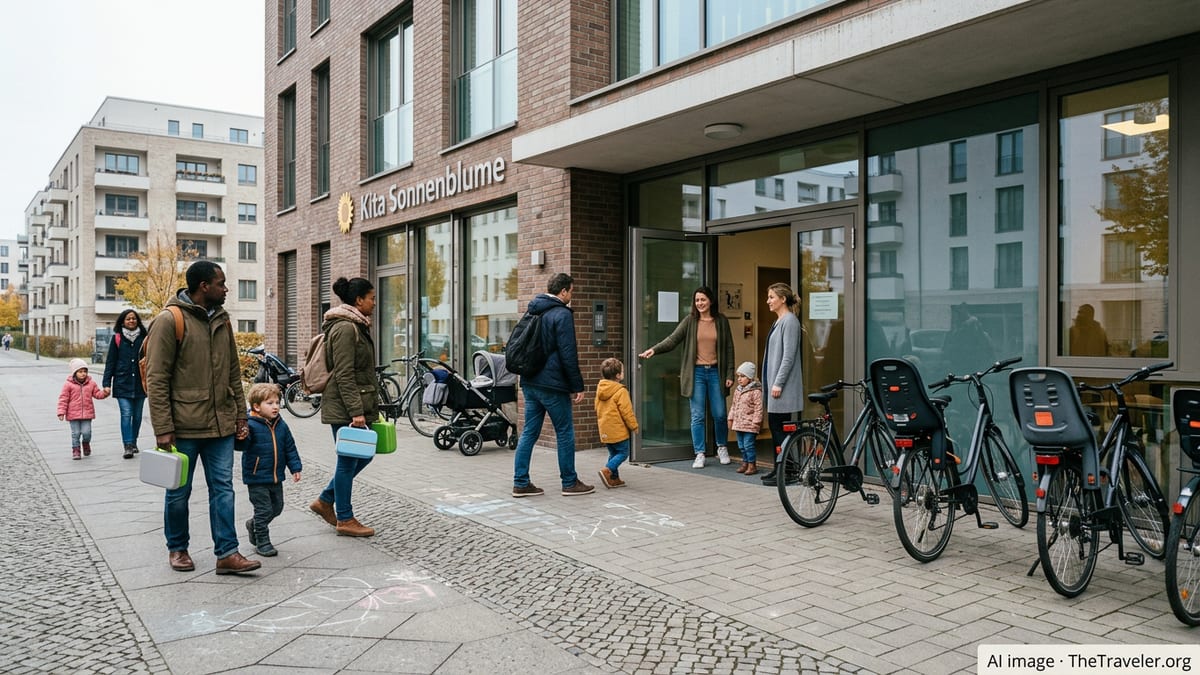
Overview of the German Childcare Landscape
Germany offers a relatively dense network of formal childcare, including crèches for under‑threes (Krippe), kindergarten for ages three to school entry (Kita or Kindergarten), and after‑school care for primary pupils (Hort or Ganztagsbetreuung). In parallel, there are childminders (Tagespflege) and a growing segment of private and international early‑years providers in large cities. For most resident families, including expatriates legally settled in Germany, a statutory entitlement exists to publicly supported childcare places from the age of one, but the extent of availability and the level of parental contributions differ by federal state and municipality.
Childcare costs in Germany are strongly influenced by the principle of income‑related parental contributions. Public and non‑profit providers typically charge monthly fees scaled to gross household income, number of children and booked hours. Some federal states have introduced partial or complete fee waivers for specific age groups, while others retain moderate but not negligible contributions. As a result, two expatriate families on similar salaries can face very different childcare bills depending on their place of residence within Germany.
Expatriate parents should also be aware that formal childcare fees usually cover only the basic care and education component. Additional mandatory charges are common for meals, extended opening hours, extracurricular activities and occasional projects or excursions. These can significantly increase effective monthly costs, especially for full‑day care, and should be explicitly factored into relocation budgets.
Public Kita Fees for Children Under and Over Three
For children under three years of age in public or publicly funded crèches, parental contributions remain relatively high compared with those for older children. In many cities, full‑day Krippe places can cost several hundred euros per month even after municipal subsidies, with income and hours booked as the main price drivers. For a dual‑income expatriate household on above‑average earnings, it is common to encounter monthly contributions in the range of approximately 300 to 600 euros per child for full‑time care in western urban regions, with some variation above and below this band depending on the municipality.
For children from age three until school entry, several federal states have introduced contribution‑free years in childcare, especially for standard hours. Berlin and Mecklenburg‑Western Pomerania offer largely contribution‑free public childcare for this age group, while other states provide one or more free years or cap parental fees at moderate levels. In practical terms, an expatriate family with a child aged three to five in a public Kita might pay no base fee at all in some states, yet still incur around 50 to 120 euros per month for meals and extras. In states without broad fee waivers, base contributions can range from minimal amounts up to a few hundred euros monthly for high‑income households.
Even where contribution‑free policies apply, they usually refer only to the core educational offer. Booked care hours beyond the local standard, such as very early drop‑off, late pick‑up or extended holiday coverage, may trigger surcharges. Additionally, private or semi‑private Kita operators that receive partial subsidies may set higher base fees than municipal facilities, especially in high‑demand urban neighbourhoods where waiting lists are long. Expats who prioritise specific pedagogical concepts or bilingual groups may therefore face higher out‑of‑pocket costs even within the public system.
After‑School Care and School‑Age Childcare Costs
Childcare costs do not end when a child starts primary school. Although lessons at state schools are free, supervision outside teaching hours is often charged separately. Many primary schools offer all‑day formats that combine teaching with structured afternoon care and activities. For families using these services, typical parental contributions for after‑school care can range from low double‑digit amounts in more subsidised states to roughly 100 to 250 euros per month per child in others, depending on income, local policy and hours used.
Where all‑day school options are limited, parents rely on Hort centres or school‑linked clubs. Fee structures here mirror those of Kitas, with income‑related scales and additional costs for meals and activities. In large cities, after‑school care with extended hours up to late afternoon or early evening can approach the cost levels of kindergarten care for older preschoolers, particularly for higher‑income expatriate households. Transport to external after‑school facilities, if not provided, can introduce further indirect costs such as public transport tickets or private shuttle solutions.
For older primary children and lower‑secondary pupils, some municipalities reduce or phase out direct childcare subsidies. Families then use a mix of paid holiday programmes, sports clubs and private tutoring to bridge working hours. While these are not typically captured in official childcare statistics, their cumulative cost over a year can rival or exceed formal childcare fees, especially where parents need reliable coverage during school holidays that together amount to around twelve to thirteen weeks per year.
Private, Bilingual and International Childcare Options
In major expatriate destinations such as Frankfurt, Munich, Hamburg, Berlin and Düsseldorf, private, bilingual and international early‑years providers represent a growing segment of the childcare market. These institutions often align their calendars and pedagogical approaches with international schools and cater explicitly to global mobility populations. However, they operate at significantly higher fee levels than municipal Kitas, and subsidies may be limited or absent for non‑local or non‑resident parents.
Monthly tuition in international early‑years programmes can reach or exceed four‑figure amounts per child, especially where the same organisation also runs a fee‑paying international school. For example, fee schedules for early‑years groups at international schools in Frankfurt indicate annual tuition in the low to mid‑five‑figure range, equivalent to around 1,000 to 1,200 euros per month, with additional charges for registration, capital contributions, meals and extended care. In some cases, municipal support partially offsets tuition for families officially resident in the city, but non‑resident or newly arrived expatriates may initially face full fees.
Within the private segment, there are also smaller bilingual Kitas and corporate childcare centres that combine public subsidies with additional parental contributions. These facilities frequently charge higher monthly fees than comparable municipal Kitas, reflecting enhanced facilities, language programmes or longer opening hours. Expatriate families who prioritise an English‑speaking environment or specific international curricula should plan any such fees as a substantial recurring cost item rather than a marginal premium.
Typical Cost Components and Hidden Expenses
Beyond the headline childcare fee, expatriate families in Germany encounter a range of additional cost components. Regular meal charges are almost universal, particularly for full‑day care and after‑school programmes. Typical lunch fees fall in the approximate range of 50 to 120 euros per month per child, depending on provider standards, catering model and whether snacks are included. These meal fees usually apply even when base childcare is contribution‑free, and they are rarely income‑scaled.
Many Kitas and Horte charge annual or semi‑annual contributions to parent associations or support societies, which can amount to tens of euros per year. Families may also be asked to pay modest material or activity fees for special projects, excursions or language courses. While individually small, these charges accumulate across the year and can noticeably raise the effective cost of care. In addition, some providers request voluntary donations during fundraising campaigns, which, although not mandatory, are often socially expected in close‑knit parent communities.
Where waiting lists are long, parents sometimes secure places through private childminders or emergency childcare services as an interim solution. Hourly rates for qualified childminders outside the publicly subsidised framework can exceed 10 to 15 euros per hour, increasing the overall childcare budget during transition periods. Similarly, when official opening hours do not fully match working schedules, expatriate families may need to employ part‑time babysitters to cover early mornings, late evenings or business travel, further increasing outlays beyond formal childcare fees.
Regional and Income‑Based Variations
Childcare contributions in Germany are set at municipal or federal state level, leading to pronounced regional differences. Eastern states and some northern regions tend to have lower average parental fees relative to income, while prosperous southern and western states with high living costs often charge higher contributions for upper‑income households. Even within the same metropolitan region, neighbouring municipalities can apply different income brackets, fee caps and discount rules for siblings.
Income‑based fee scales mean that expatriate professionals with higher salaries commonly pay at the upper end of local contribution ranges. For a full‑time place in a Krippe or Kita, gross household income above a local threshold often moves the family into the top fee band, with monthly contributions several times higher than those for low‑income households in the same facility. On the other hand, families with lower or fluctuating earnings, including some newly arrived expats on modest contracts, may qualify for reduced fees or even complete exemption, especially if they receive certain social benefits.
Policies on sibling discounts also differ. Some municipalities waive fees entirely for the second or third child, while others apply percentage discounts on the standard rate. This can materially change affordability for larger expatriate families. Similarly, rules on contribution‑free years are not harmonised nationally: one state might cover the final two years before school, another only the last year, and yet another finance the full period from age three in public Kitas. Consequently, relocation decisions within Germany, for example between cities for a corporate assignment, can significantly alter a family’s childcare cost profile.
Tax Relief and State Benefits Offsetting Childcare Costs
Germany provides several financial mechanisms that indirectly offset childcare expenses. The most universal is the child benefit payment, which as of 2025 amounts to 255 euros per month per child and is scheduled to rise further in 2026. This payment is generally available to residents regardless of income and can be used flexibly, including to help cover childcare fees. In parallel, higher‑income households may benefit instead from child‑related tax allowances, with the tax office automatically applying whichever option is more advantageous.
Low and lower‑middle income families can receive an additional targeted supplement per child per month, which is designed to top up household income just above the social assistance threshold. Eligibility is subject to detailed income and housing‑cost tests, but qualifying parents may as a result be exempted from or significantly relieved of daycare fees. For expatriates in more modestly paid roles, these programmes can translate into very low net childcare costs, especially in municipalities with generous contribution waivers for benefit recipients.
Childcare expenses themselves can be partially deducted from taxable income, subject to national caps and conditions such as the child’s age and the nature of the care provider. Planned reforms are set to increase the maximum amount of childcare costs that can be claimed and the share of expenses recognised for tax purposes. For dual‑earner expatriate households in higher tax brackets, this can generate non‑trivial annual tax refunds, effectively reducing the net cost of formal childcare by a meaningful percentage, even though upfront cash payments remain unchanged.
The Takeaway
For expatriate families considering a move to Germany, childcare is generally accessible and, in many cases, significantly subsidised compared with market prices. However, the assumption that childcare is universally inexpensive can be misleading. Costs for under‑threes remain substantial, regional disparities are wide, and high‑income households in certain cities face notable monthly contributions, especially when using private, bilingual or international providers.
Decision‑grade planning should therefore be based on specific local information rather than national averages. Key variables include the child’s age, the desired type of provider, expected weekly hours, household income, number of children and the exact municipality of residence. When these factors are mapped against likely public contributions, fee scales, additional charges and available tax relief, childcare in Germany often emerges as manageable but rarely cost‑neutral, particularly during the early years before school entry.
Relocating families are advised to model several scenarios that reflect different provider types and locations, including at least one option in the fully public system, one in a partially subsidised bilingual setting and, where relevant, an international school‑linked early‑years programme. Comparing these scenarios against net income and available benefits provides the most realistic picture of childcare affordability, and ultimately whether a German assignment is compatible with the family’s financial expectations.
FAQ
Q1. Are public Kitas in Germany free for expatriate families?
Public Kitas are not universally free, but many federal states offer contribution‑free years for children aged three to school entry. Under‑three care usually involves income‑based fees, and even in contribution‑free states parents still pay for meals and extras.
Q2. How much should expats budget per month for childcare in Germany?
Budget needs vary widely. For a full‑time public place, many expatriate families pay roughly 300 to 600 euros per month for under‑threes, and from negligible fees up to a few hundred euros for children over three, plus 50 to 120 euros for meals and minor extras.
Q3. Are childcare fees different for expats compared with local families?
Fee scales are usually based on residence, income and hours, not nationality. Expatriate families who are tax‑resident and registered locally generally pay the same as comparable local households, while newcomers without local registration may have limited access to subsidies at private providers.
Q4. How expensive are private and international childcare options?
Private, bilingual and international early‑years programmes are significantly more expensive than municipal Kitas. Monthly tuition can reach or exceed four‑figure amounts per child, with additional registration, meal and extended‑care fees.
Q5. What additional childcare costs beyond basic fees should expats expect?
Common additional costs include meal charges, parent association contributions, materials, excursions and special activities. Families may also incur costs for interim childminders, babysitters or holiday programmes when regular care is unavailable or insufficient for work schedules.
Q6. How do regional differences affect childcare costs in Germany?
Federal states and municipalities set their own fee policies, leading to major regional variation. Some offer full contribution‑free childcare for certain age groups, while others charge higher income‑related fees, especially for under‑threes and in prosperous urban areas.
Q7. Does Germany provide financial support to offset childcare expenses?
Yes. Universal child benefit payments, targeted child supplements for low‑income families and tax deductions for childcare expenses all help offset costs. The extent of relief depends on income level, tax situation and benefit eligibility.
Q8. How early should expatriates apply for childcare places?
In high‑demand cities, it is advisable to register for a place many months in advance, particularly for under‑three care and bilingual or international settings. Early registration improves the chance of securing a subsidised public place rather than relying on costlier interim solutions.
Q9. Are meals usually included in German childcare fees?
Meals are often charged separately as a fixed monthly amount. Even where base childcare is contribution‑free, parents typically pay for lunch and sometimes snacks, with meal fees commonly ranging from about 50 to 120 euros per month per child.
Q10. Can childcare costs be deducted from German income tax?
Yes, a portion of childcare expenses for eligible children can usually be deducted from taxable income up to defined annual limits. For higher‑income expatriate households, this can generate meaningful tax savings and reduce the effective net cost of childcare.