


More news on this day
Travelers flying between South Korea, Guam and the United States are facing fresh disruption after Korean Air, Air Seoul and American Airlines canceled more than a dozen services on key international and domestic routes, affecting links to Guam, Dallas, Incheon, Seoul, Busan and Jeju.
Get the latest news straight to your inbox!
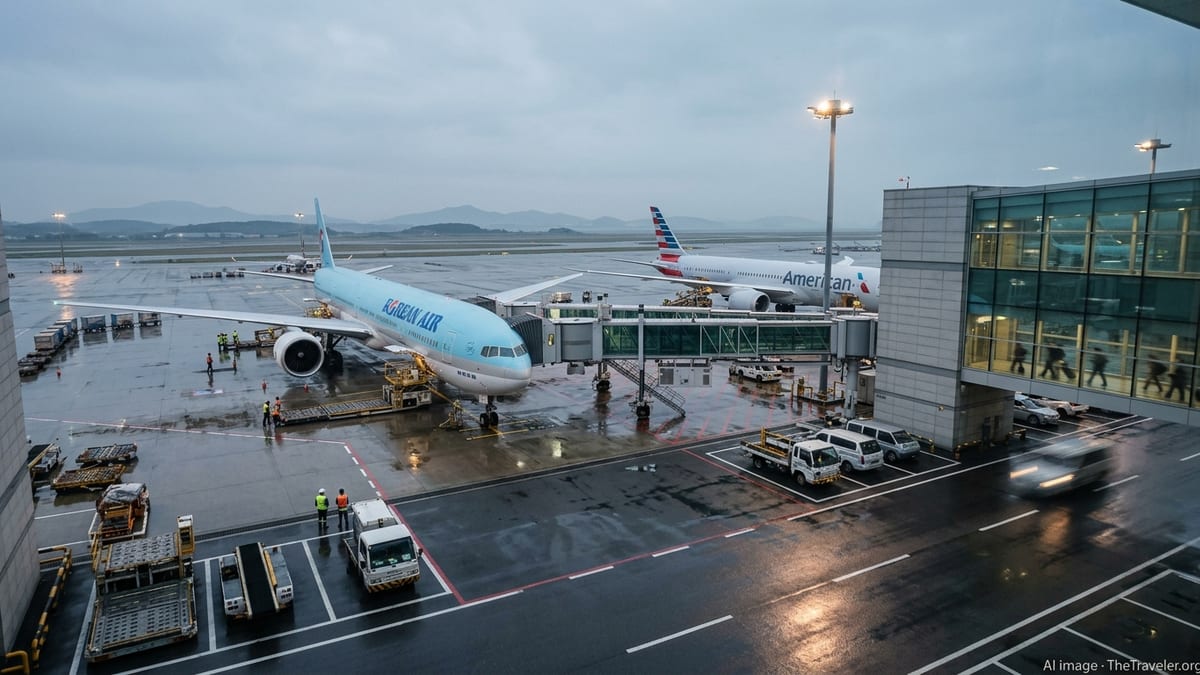
Wave of Cancellations Across Korean and U.S. Carriers
Published coverage and live schedule data indicate that a cluster of cancellations over recent days has hit routes operated or codeshared by Korean Air, Air Seoul and American Airlines. While not on the scale of a nationwide shutdown, the disruption has been concentrated on high-demand leisure and long-haul services, creating knock-on effects for connections across the region.
The most visible impact has been on flights linking South Korea to Guam and Dallas Fort Worth, as well as on selected domestic services between Seoul, Busan and Jeju. These routes serve a mix of holidaymakers, business travelers and visiting friends-and-relatives traffic, meaning even a limited number of cancellations can strand hundreds of passengers and complicate onward plans.
Airlines have attributed recent schedule changes to a combination of operational constraints, weather exposure on long-haul networks, and continued aircraft and crew imbalances. Publicly available information suggests that, although core schedules remain intact, travelers on affected days are seeing last-minute cancellations, rolling delays and aircraft swaps.
For passengers, the immediate consequences include missed connections, overnight stays near hubs such as Incheon and Dallas Fort Worth, and rebookings onto later departures or different carriers. Travel forums and social media posts show a rise in reports of disrupted itineraries involving at least one of the three airlines.
Guam Links Under Pressure as Air Seoul and Korean Air Adjust
On the South Korea–Guam corridor, Air Seoul has issued recent notices highlighting cancellation of specific Incheon–Guam rotations, including at least one date in mid-April, and further selective cuts into early May. These changes follow the carrier’s relaunch of the Incheon–Guam route late last year, which had been promoted as a boost to tourism and outbound leisure travel.
Local Guam airport information and recent travel reporting show that Air Seoul’s Guam schedule has been more volatile than originally forecast, with individual flights removed or rescheduled at relatively short notice. While many services continue to operate on time, the pattern of ad hoc cancellations has left some travelers scrambling for alternatives during peak holiday periods.
Korean Air, which also serves Guam from Incheon, has maintained most of its published operations but has contributed to the wider disruption through isolated cancellations and equipment changes on selected days. Industry analyses point to tight aircraft utilization and overlapping long-haul commitments as limiting the carrier’s flexibility when irregular operations occur elsewhere in its network.
The Guam market is additionally sensitive because of broader capacity reshuffling in the wake of the ongoing integration of Korean Air and Asiana Airlines. Regulatory limits on seats between South Korea and Guam, combined with shifting strategies among Korean leisure carriers, have left the island more exposed when one or two key flights are pulled from the schedule.
Dallas–Incheon Long-Haul Services Face Operational Strain
Long-haul services between Dallas Fort Worth and Seoul Incheon, jointly marketed by American Airlines and Korean Air, have also experienced pockets of disruption. Flight-tracking data for early May show days when one or more Dallas–Incheon rotations were canceled or significantly retimed, compelling passengers to be shifted to later departures or different routings across the Pacific.
American’s travel alert pages for the Korean market, updated in recent days, reference travel-flexibility options for customers flying around mid-May, indicating that schedule changes and cancellations on certain international routes are anticipated. While the alerts do not single out Dallas–Incheon by name, route-level data and traveler reports align the disruption with this key transpacific link.
In practice, this has meant that some itineraries ticketed on American but operated by Korean Air, or vice versa, have been affected even when one partner’s own aircraft still operate. When a primary flight is removed from the schedule, codeshare passengers can face additional complexity in securing reaccommodation, especially if they booked through one carrier but are due to fly on the other’s metal.
For travelers departing from or connecting through Dallas, weather-related congestion in North Texas during the spring travel period has added to operational stress. Recent patterns show that severe storms and ground stops can force American to trim its schedule across multiple hubs, with wide-body aircraft on international routes sometimes among the casualties when crews and aircraft are out of position.
Domestic South Korean Routes Feel the Ripple Effect
Within South Korea, the disruption has also spilled onto heavily traveled domestic corridors, particularly between Seoul, Busan and Jeju. Air Seoul’s cancellation of multiple services on a single day in early May, as documented by regional travel coverage, affected both international flights and shorter segments touching Incheon and Gimpo.
These domestic legs are central to South Korea’s aviation system, feeding passengers from across the country into Incheon’s long-haul network. When a carrier trims flights or consolidates frequencies, travelers face longer layovers, more limited time-of-day options and, in some cases, same-day connections becoming unworkable.
Jeju, one of the country’s most popular holiday destinations, is particularly sensitive to schedule swings. Seats between the island and mainland cities such as Busan and Seoul already tend to sell out around national holidays and peak weekends. Reduction of even a handful of rotations by one carrier can push demand onto competitors and drive sharp price increases on remaining flights.
In Busan, travelers using Gimhae International Airport have reported tighter availability and schedule shifts on short-haul routes feeding into international departures. Although most services continue to operate, the margin for error has narrowed, and a cancellation on a morning domestic flight can jeopardize an afternoon long-haul connection from Incheon.
What Travelers Should Expect in the Coming Days
Publicly available timetables and booking engines suggest that Korean Air, Air Seoul and American Airlines intend to operate the majority of their scheduled services over the next week. However, the recent pattern of targeted cancellations indicates that travelers on Guam-bound flights and Dallas–Incheon rotations should remain alert to potential changes.
Analysts note that carriers are still managing the downstream effects of earlier schedule cuts, aircraft maintenance bottlenecks and crew rostering challenges. In this environment, airlines are more likely to proactively cancel selected flights rather than risk cascading delays across their networks, particularly when demand can be consolidated onto nearby departures.
Passengers booked on itineraries touching Incheon, Seoul, Busan, Jeju, Guam or Dallas are being advised by travel industry commentators to monitor their reservations closely in the 24 to 48 hours before departure. Same-day adjustments, including aircraft swaps and departure-time shifts, remain possible even when flights appear confirmed several days in advance.
For now, the disruption remains localized rather than systemic, but the experience of the past week underlines how quickly conditions can tighten on popular corridors linking South Korea with key leisure and long-haul destinations. Until operations fully stabilize, flexibility in travel plans and close attention to schedule updates will be critical for minimizing the risk of being caught out by a last-minute cancellation.