


More news on this day
Passengers across China faced hours-long queues, missed connections and overnight airport stays as China Eastern Airlines cancelled 20 flights and delayed a further 368 services, disrupting operations at Shanghai Pudong, Beijing Daxing, Kunming Changshui, Xi’an Xianyang, Shanghai Hongqiao and several other major airports.
Get the latest news straight to your inbox!
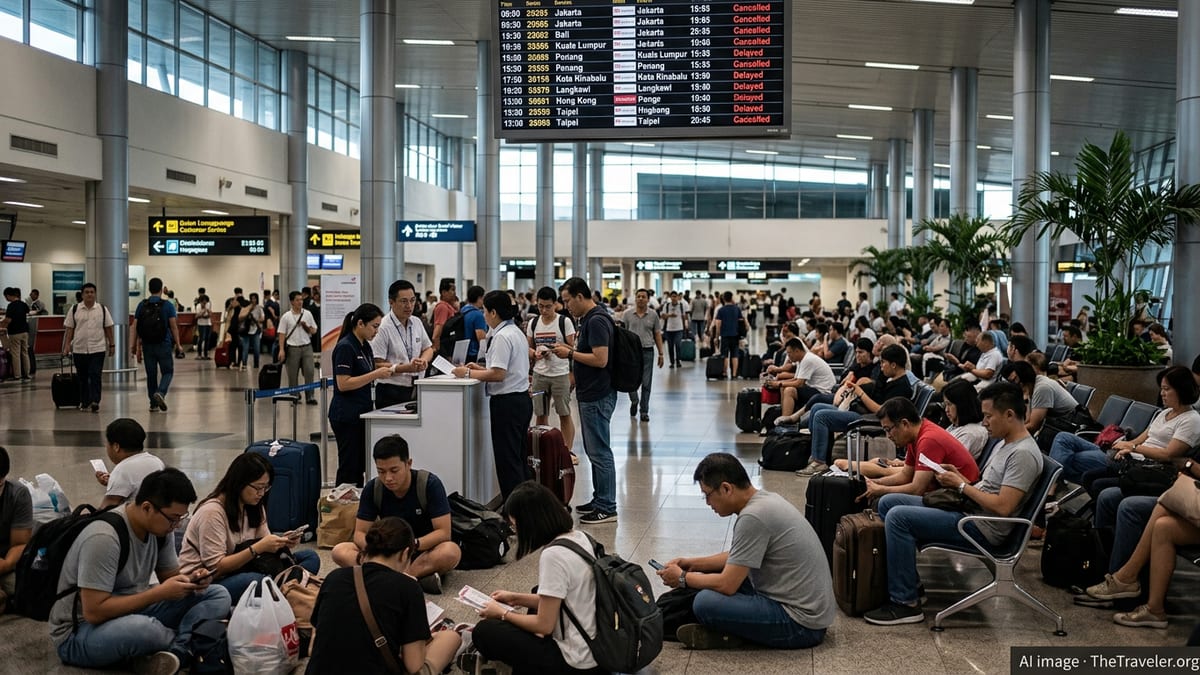
Major Hubs Struggle With Wave of Disruptions
Live operational data compiled from flight-tracking dashboards on Tuesday indicates that China Eastern’s latest schedule disruption has rippled through the country’s busiest aviation hubs. Shanghai Pudong, the carrier’s primary international gateway, has seen clusters of delayed departures layered on top of outright cancellations, with departure boards showing multiple late-running China Eastern services alongside other affected carriers.
At Beijing Daxing, a key northern hub for the airline’s expanding domestic and long haul network, late aircraft arrivals and tight turnaround windows have contributed to rolling delays. Departures to and from Kunming, Xi’an and Shanghai have been particularly affected, creating a knock-on effect that extends to secondary cities reached via these trunk routes.
Further south and west, Kunming Changshui and Xi’an Xianyang, both important bases in China Eastern’s domestic network, are reporting elevated delay levels relative to a typical weekday. Passengers connecting through these airports are experiencing missed onward flights and the need to queue for rebooking onto later services, often competing for limited remaining seats.
Shanghai Hongqiao, which handles a large share of China’s high-frequency business traffic, has also been caught in the disruption. Short-haul shuttles between Shanghai, Beijing, and key regional centers have recorded departure and arrival times significantly beyond schedule, complicating same-day return plans and tightly timed itineraries.
Passengers Face Long Queues, Missed Connections and Limited Options
The combined total of 20 cancellations and 368 delays has translated into significant disruption on the ground for travelers. Publicly available reports from recent Chinese flight disruption events suggest that even modest cancellation numbers can leave thousands of passengers waiting in terminals when services are concentrated at peak travel periods.
At major hubs, crowded check in halls and transfer zones are often the most immediate visible impact. Travelers arriving to find their flights cancelled or heavily delayed must line up at carrier service desks for rebooking or refund processing, with some facing waits lasting several hours when multiple flights are affected at once.
Missed connections are a particular concern for those using China Eastern’s hubs in Shanghai, Beijing, Kunming and Xi’an to reach smaller regional destinations or international gateways. When inbound flights land late, the remaining inventory on later departures can be extremely limited, forcing some passengers to accept overnight stays or rerouting through entirely different airports.
Available accounts from previous China Eastern disruptions indicate that while some travelers secure rebooked itineraries on the same day, others have had to reorganize hotel stays, ground transport and even onward international segments at short notice. This latest wave of irregular operations is likely producing a similar pattern of inconvenience and unexpected expense.
Shanghai, Beijing, Kunming and Xi’an at the Center of Repeated Gridlock
The current disruption is the latest in a series of operationally difficult days for Chinese aviation in 2026. Earlier events tracked by aviation analytics services and travel-industry coverage highlighted how clusters of cancellations and hundreds of delays at Shanghai and Beijing can quickly ripple across the wider domestic network.
Shanghai’s dual-airport system at Pudong and Hongqiao, along with Beijing’s Capital and Daxing airports, routinely rank among the country’s most delay prone when severe weather, air traffic control restrictions or fleet imbalances occur. When China Eastern experiences schedule disruption at these hubs, the impact is amplified by the airline’s role as a dominant tenant with dense waves of departures at peak times.
Kunming Changshui and Xi’an Xianyang, important inland connecting points for southwest and northwest China, can act as pressure valves or bottlenecks depending on how quickly airlines can recover from earlier schedule slips. Data from previous nationwide disruption days shows that when trunk routes between these airports and Shanghai or Beijing are delayed, secondary cities can see late evening arrivals pushed well beyond their planned times, or canceled outright.
While each disruption event has its own mix of underlying causes, the recurring pattern in 2026 has been one of cascading delays once the first set of flights falls significantly behind schedule. The imbalance between strong travel demand and tight aircraft and crew availability has made it harder for carriers to absorb shocks without widespread knock-on effects.
What Affected Travelers Can Expect From Airlines
China Eastern’s published conditions of carriage and travel notices state that flight times are not guaranteed and that schedules may be adjusted for operational reasons. In practice, publicly available accounts suggest that the airline typically offers rebooking on the next available service, with refunds available when a flight is cancelled and alternative options are not acceptable to the traveler.
Assistance on the day can vary depending on the specific circumstances of the disruption, such as whether the cause is classified as an operational issue within the airline’s control, air traffic restrictions, or severe weather. On previous high-disruption days, some carriers operating in China have provided meal vouchers, hotel accommodation or ground transport when passengers were left overnight, while others have limited support to rebooking and fare refunds.
Passengers connecting to or from international flights may face additional complexity. Those who booked separate tickets rather than a single through itinerary often have fewer protections if a delayed domestic leg causes them to miss an onward long haul service on another airline. Travel industry guidance frequently advises leaving generous connection windows at Chinese hubs to mitigate this risk, particularly during peak holiday periods or the summer travel season.
Travelers affected by cancellations or long delays are generally encouraged by consumer advocacy groups and travel advisors to keep records of boarding passes, booking references and written notices from airlines. Such documentation can be important later when seeking refunds, travel insurance claims or, on eligible routes, statutory compensation under applicable passenger rights regimes outside mainland China.
Growing Scrutiny of Reliability Amid Rapid Network Expansion
China Eastern is in the midst of a rapid expansion of its international and domestic route map, increasing capacity from key hubs such as Shanghai Pudong and Beijing Daxing while adding new long haul services. Recent industry reports have highlighted new links from Shanghai to destinations in Europe and Central Asia, alongside frequency increases on established regional routes.
This growth is taking place against the backdrop of a sharp post pandemic recovery in domestic travel demand, with passenger numbers at or above pre 2020 levels on many Chinese trunk routes. The combination of fuller aircraft, dense schedules and periodic weather or airspace constraints has left the system more vulnerable to cascading disruption when problems arise at one or two major hubs.
For China Eastern, the latest incident involving 20 cancellations and hundreds of delays is likely to add to wider discussion about the reliability of Chinese carriers as they push deeper into global markets. While operational missteps and severe weather events affect airlines worldwide, repeated episodes of large scale disruption can influence traveler preferences, especially among international passengers with alternative options at similar price points.
Industry observers note that the challenge for carriers such as China Eastern is to balance network and fleet expansion with investments in resilience, such as spare aircraft capacity, flexible crew scheduling and enhanced real time passenger communication. Without such measures, even relatively contained schedule adjustments can quickly strand large numbers of travelers at hubs like Shanghai Pudong, Beijing Daxing, Kunming Changshui, Xi’an Xianyang and Shanghai Hongqiao, as seen in the latest wave of cancellations and delays.