


More news on this day
Arizona is emerging as one of the strongest job engines in the United States travel sector, with new data showing record tourism employment and visitor spending even as the broader U.S. travel economy powers ahead to historic highs.
Get the latest news straight to your inbox!
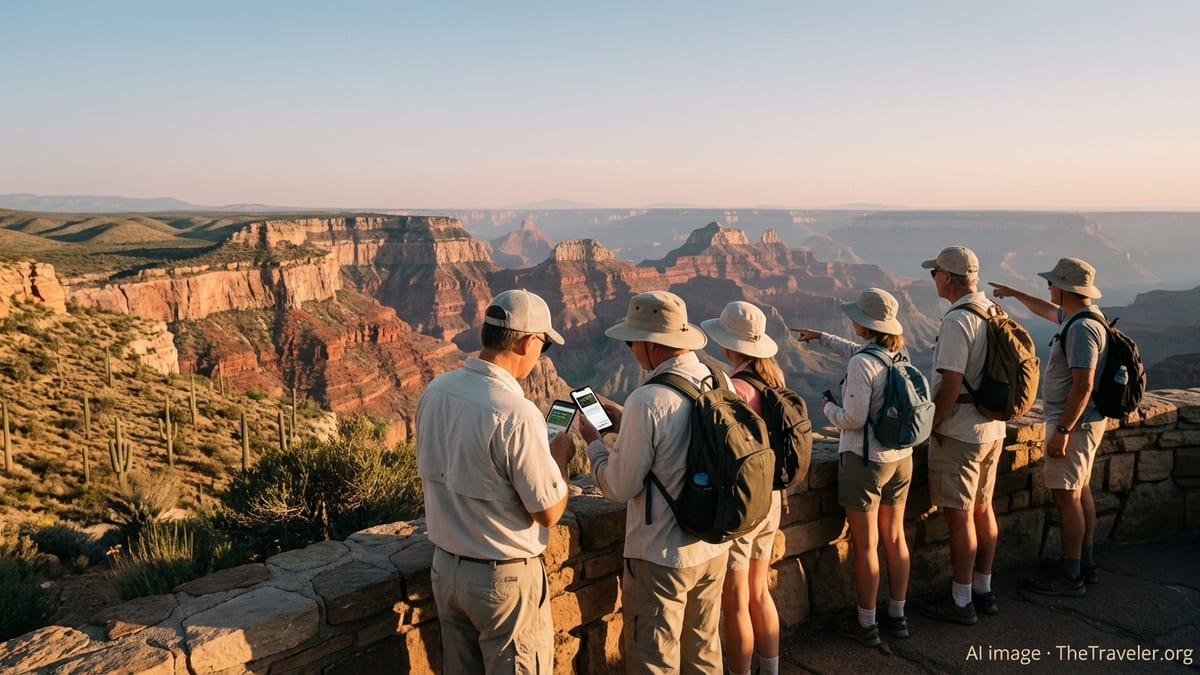
Record Tourism Jobs and Visitor Spending in Arizona
Recent analysis from the Arizona Office of Tourism indicates that travel-related employment in the state has climbed to record levels, supported by steady gains in visitation and spending across 2023 and 2024. Industry reports show that tourism-related jobs in Arizona grew again in 2023, outpacing overall statewide job growth and underscoring how hospitality, recreation and travel services have become structural pillars of the labor market.
Economic impact studies commissioned by the state show direct travel spending in Arizona running into tens of billions of dollars annually, with associated state and local tax revenues reaching new highs. One series of reports prepared for the Arizona Office of Tourism estimates that tourism activity now supports well over 180,000 jobs when direct, indirect and induced employment are combined, signaling that the sector has moved decisively beyond its pre-pandemic baseline.
The growth is broad-based, from hotel and short-term rental workers in metro Phoenix and Tucson to guides, restaurant staff and attraction employees in smaller communities across the state. Publicly available data presented at state tourism conferences highlights that employment in visitor-serving industries has increased alongside gains in room demand, visitor spending per trip and average daily hotel rates.
Arizona’s performance has drawn attention because it comes as some traditional source markets, including Canada, show volatility, yet overall tourism employment remains near or at record highs. Analysts note that rising domestic leisure travel, stronger business events and resilient outdoor recreation demand have helped keep job numbers elevated even when individual market segments soften.
National Travel Jobs Rebound Keeps U.S. Economy Aloft
Arizona’s record-setting tourism workforce is unfolding against the backdrop of a powerful nationwide rebound in travel employment. Research circulated by the U.S. Travel Association and other industry groups shows that travel-supported jobs across the United States have returned to, and in some measures surpassed, pre-2020 levels, fueled by pent-up demand for leisure trips, meetings and large events.
National tallies point to visitor spending in the United States surpassing 1.3 trillion dollars in 2024, helping to support millions of jobs in accommodation, food service, transportation, attractions and retail. These travel-supported roles are spread across urban gateways, resort communities and rural destinations, extending the benefits of the recovery well beyond the coasts and major cities.
Business and group travel, which lagged leisure tourism early in the recovery, has become an increasingly important contributor to job growth. Industry briefings indicate that meetings, conventions and large-scale events are generating fast-rising volumes of hotel nights and air travel, which in turn support front-line workers in hotels, airlines, venues and local service businesses.
Economists tracking the sector note that travel employment has been a stabilizing force for the broader U.S. labor market, helping to offset slowing job creation in some interest rate-sensitive industries. That trend is apparent in states such as Arizona, Nevada, Florida and Hawaii, where tourism has long been a major employer and remains central to local economic performance.
Grand Canyon and Parks Anchor Arizona’s Tourism Labor Market
Within Arizona, national parks and public lands continue to serve as foundational job generators. Data from the National Park Service’s visitor spending reports show that Arizona’s national parks, including Grand Canyon National Park and a network of monuments and recreation areas, welcomed more than 11 million visitors in 2024. Their in-state spending, estimated at well over 1.4 billion dollars, supports thousands of jobs in gateway communities.
These jobs range from hotel and campground staff to outfitters, tour operators, retailers and restaurant workers in towns that rely heavily on peak-season visitation. Economic modeling included in federal visitor-spending analyses indicates that park-related travel supports more than 15,000 jobs in Arizona alone, illustrating how public lands play a central role in sustaining rural employment.
State-level research also shows that Arizona’s parks and natural attractions continue to draw visitors at or near record levels. Visits to state and national parks have climbed back from pandemic-era lows, with many sites reporting multi-year highs in attendance. That momentum has translated into growing payrolls in communities that historically struggled to build diverse employment bases beyond seasonal work.
Observers note that this park-driven tourism workforce has spillover effects across the regional economy, bolstering construction, transportation, professional services and small businesses that serve both residents and visitors. As Arizona invests in sustainable tourism initiatives, there is growing emphasis on ensuring that the jobs created around parks and outdoor recreation are resilient to shifting travel patterns and climate-related pressures.
Urban Destinations Propel High-Wage Tourism Roles
While parks draw global attention, Arizona’s cities have become powerful engines for higher-wage tourism and hospitality employment. Visitor impact studies from Phoenix, for example, show that the state capital and its neighboring communities are welcoming more than 20 million visitors per year, with total visitor spending surpassing 5 billion dollars in the latest reported period.
This activity supports tens of thousands of jobs in hotels, resorts, conference centers, restaurants and entertainment venues across the metropolitan area. Analysts point out that many of these positions, particularly in management, event production, culinary services and technology-enabled operations, offer higher average wages than traditional seasonal tourist work, expanding the sector’s appeal to local workers.
Secondary urban destinations such as Mesa and other fast-growing cities in the Phoenix metro are also seeing sizable employment gains. Tourism economic impact reports for Mesa, for instance, attribute more than 8,000 jobs to visitor spending, with strong growth in sectors such as food and beverage, cultural attractions and sports tourism.
These urban tourism hubs help diversify Arizona’s travel economy beyond its iconic desert landscapes, creating year-round job opportunities tied to business events, youth sports, arts and culture, and medical and educational travel. That mix has provided a buffer against shifts in any single market segment while still leveraging the state’s climate and accessibility advantages.
Competitive Landscape: How Arizona Stacks Up Against Other States
Across the country, states are competing aggressively for travel-related jobs, but current data suggests Arizona is holding a particularly strong position. National rankings compiled from federal employment statistics and industry research regularly place the state among the leaders in travel and tourism job intensity relative to overall employment, reflecting how central the sector is to Arizona’s economy.
States such as Nevada, Florida, California and Hawaii remain heavyweights in absolute tourism job counts, given their larger visitor volumes and established resort infrastructure. However, Arizona’s combination of outdoor recreation, fast-growing metropolitan areas and year-round events has allowed it to gain share in key segments like road trips, national park tourism and winter leisure travel.
Industry comparisons indicate that Arizona’s travel employment recovery was faster than that of several Midwestern and Northeastern states that rely heavily on international arrivals and business travel tied to legacy corporate centers. While some destinations are still rebuilding tourism payrolls to pre-2020 levels, Arizona’s most recent figures suggest the state has already moved into a new phase of expansion, with record or near-record job totals.
Analysts caution that the environment remains competitive, particularly as other states roll out incentive programs, marketing campaigns and infrastructure investments to capture visitor spending. Even so, publicly available numbers on job creation, tax revenues and visitor spending suggest that Arizona presently stands out as one of the clearest examples of how a diversified tourism economy can keep America’s broader travel jobs engine aloft.