


More news on this day
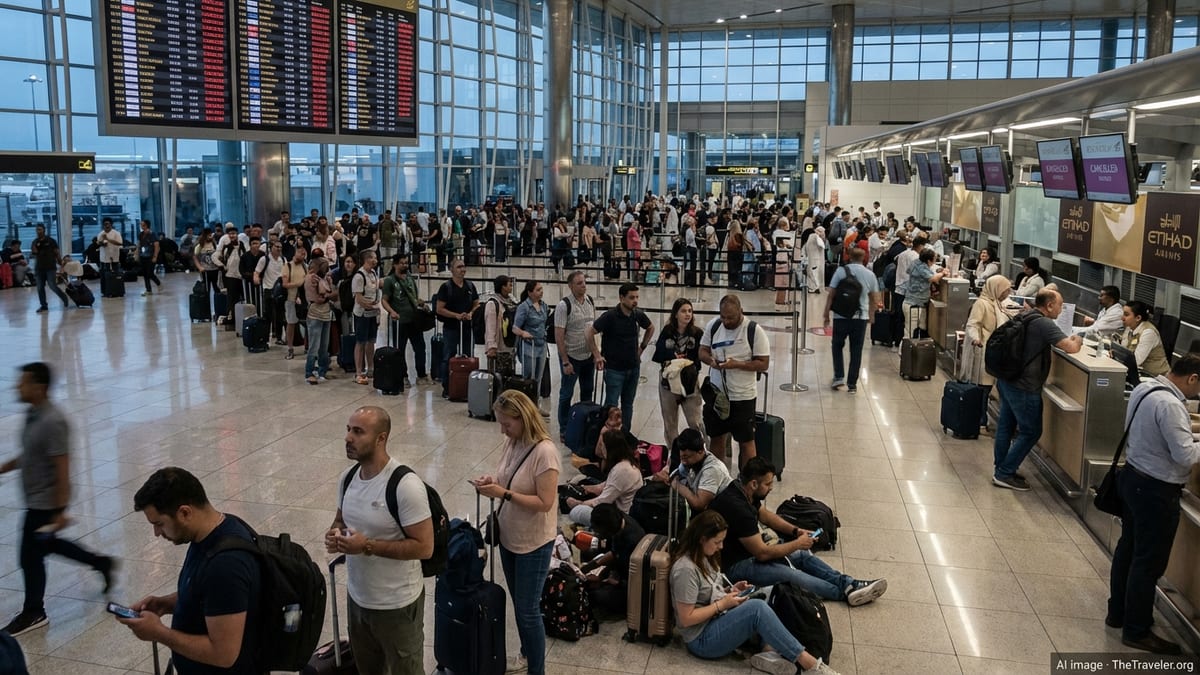
Major Gulf airports are facing renewed disruption as continuing tensions and shifting airspace restrictions trigger fresh waves of cancellations and delays, unsettling travel plans for passengers across Asia, Europe and North America at the height of the summer season.
Get the latest news straight to your inbox!
Airspace closures ripple across the Gulf
Flight tracking data and industry analyses indicate that airspace closures linked to the wider regional conflict continue to upend traffic patterns across the Middle East, with key corridors over Iran, Iraq, Kuwait and parts of the Gulf constrained or shut at various points this year. International aviation assessments describe the situation as one of the most disruptive shocks to regional air travel since the pandemic, citing the scale of rerouting and capacity reductions imposed on carriers.
According to recent aviation outlook reports, airspace restrictions now funnel large portions of Europe Asia traffic into a limited number of northern and southern corridors, primarily via the Caucasus, Afghanistan, Egypt and Saudi Arabia. This concentration has generated bottlenecks, longer flight times and higher operating costs, all of which contribute to knock on delays and a thinner buffer when disruption strikes a major hub.
Industry research suggests that tens of millions of annual journeys that would normally originate in or transit through Middle Eastern hubs are currently at risk of disruption. Airlines have trimmed future schedules, removed capacity over the summer months and adopted more conservative planning assumptions, particularly on routes most exposed to restricted airspace.
Gulf megahubs struggle with cancellations and congestion
Dubai, Abu Dhabi and Doha, long positioned as high reliability super connectors between continents, are experiencing intermittent spikes in cancellations and delays as the conflict driven aviation crisis drags on. Published coverage earlier this year documented periods when departures from major Gulf airports were severely curtailed, including days when a significant majority of scheduled flights could not operate normally after strikes and retaliatory attacks damaged infrastructure and forced emergency closures.
Operational bulletins and local media reports describe how temporary suspensions at Dubai International and Abu Dhabi International, combined with constraints on neighboring airspace, turned routine hub operations into complex recovery efforts. Aircraft and crews were left out of position across multiple continents, while transfer passengers missed onward connections and spent extended periods in transit terminals waiting for rebooked services.
In recent weeks, monitoring of daily schedules has continued to show elevated levels of disruption. One widely shared summary of flight status data highlighted a mid July period in which more than 180 flights were cancelled and over 1,200 delayed across Dubai, Doha, Riyadh and Kuwait City in a single day, underscoring how quickly strain can build across the network when a few choke points seize up.
Kuwait and Bahrain highlight vulnerability of smaller hubs
The crisis has been particularly acute for smaller Gulf states whose primary airports sit close to contested airspace. Kuwait International Airport has been heavily affected since late February, when aerial attacks on its facilities and the surrounding airspace forced a halt to scheduled traffic. Publicly available summaries indicate that commercial operations there remain severely restricted, with local carriers diverting activity to airports in neighboring Saudi Arabia and passengers facing lengthy overland transfers.
Bahrain has also experienced repeated disruption. Operational advisories from maritime and aviation risk consultancies note that Bahraini airspace was temporarily closed around peaks in regional tension, with Bahrain International Airport subsequently reopening on a limited basis. Resumed flights have come with caveats, including reduced frequencies, selective destination lists and an emphasis on operational flexibility as airspace conditions change.
These cases illustrate how quickly a single incident can sideline an entire national gateway. When primary airports such as Kuwait City and Bahrain reduce or suspend activity, the impact cascades through partner hubs in the Gulf and beyond, affecting everything from long haul connections to regional feeder flights and air cargo routes.
Knock on effects for global passengers and fares
The disruption radiating from Gulf hubs is increasingly visible to travelers far from the region. Aviation consultancies tracking the impact of the conflict report widespread rerouting of Europe Asia and Asia North America traffic, with many flights now flying longer southern or northern arcs to skirt restricted airspace. These detours lengthen journey times, consume more fuel and leave airlines with fewer spare aircraft to deploy when delays accumulate.
Capacity constraints have also pushed up fares on some of the most popular intercontinental routes. Trade press coverage notes that Asia Europe airfares on certain itineraries have risen sharply compared with expectations earlier in 2026, reflecting both higher operating costs and reduced seat supply as airlines pare back schedules through the Middle East. Travelers who once relied on Gulf carriers for competitively priced one stop connections are increasingly rebooked via alternative hubs in Europe or Asia, often at higher prices.
Passenger experiences shared on consumer forums and social platforms suggest a growing sense of unpredictability. Some travelers describe smooth transits through Gulf hubs with minimal disruption, while others report missed connections, rolling delays and last minute cancellations attributed to changing airspace conditions or knock on congestion. The unevenness reinforces industry warnings that schedules are subject to rapid change and that recovery from individual incidents can take days rather than hours.
Airlines adapt strategies as outlook remains uncertain
Airlines operating in and around the Gulf are adjusting their strategies in response to the protracted volatility. Industry reports point to a mix of measures, including cutting or consolidating flights on the most exposed routes, adding longer contingency routings into standard schedules and prioritizing fleet flexibility so that aircraft can be reassigned quickly when a corridor closes or a hub experiences disruption.
Some carriers outside the Middle East have increased capacity on alternative long haul paths in an attempt to capture demand diverted from Gulf connectors. At the same time, analyses from international aviation bodies indicate that these additions only partially offset the loss of capacity from Middle Eastern carriers, contributing to higher overall load factors and leaving less slack in the system to absorb shocks.
Forward looking assessments emphasize that geopolitical uncertainty remains high and that even if some airspace restrictions ease, confidence is unlikely to rebound immediately. Insurers, corporate travel managers and risk departments are expected to continue scrutinizing routings through the region, while leisure travelers weigh the cost savings of Gulf itineraries against the possibility of last minute changes. For now, publicly available planning guidance from airlines and advisory firms alike underscores a single message for passengers: expect continued disruption, check flight status frequently and build extra time into any journey that relies on a Middle Eastern hub.