

More news on this day
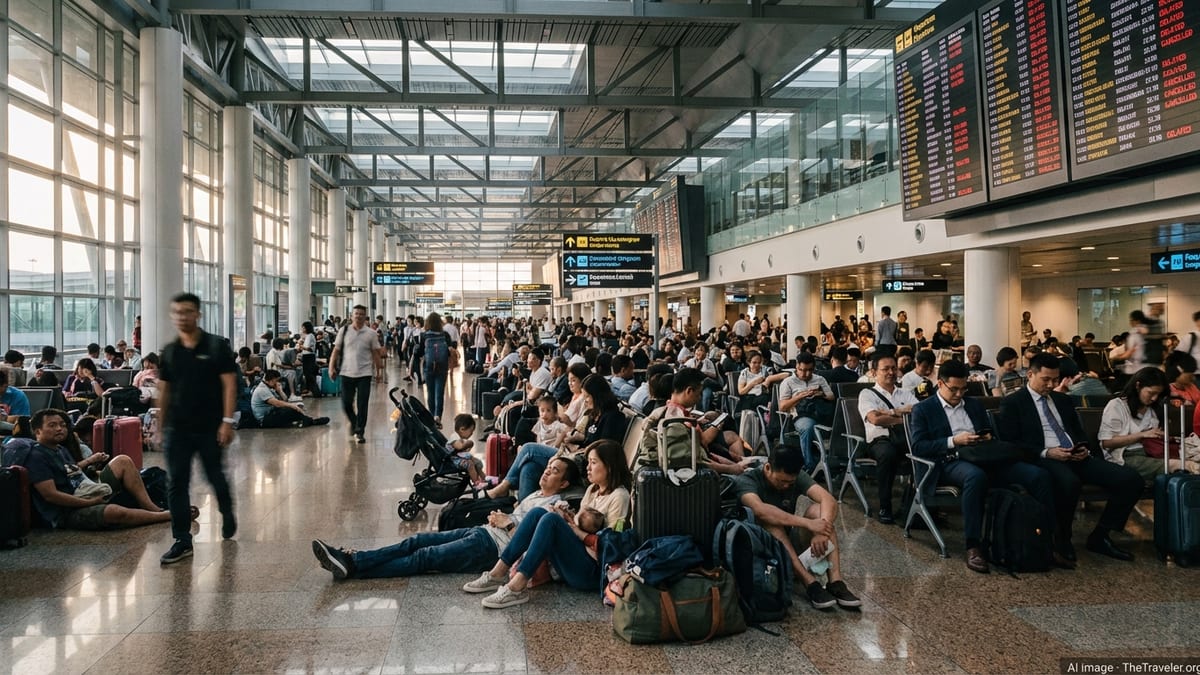
Thousands of travellers across China are facing severe disruption today as major hubs including Beijing, Chengdu, Chongqing, Shanghai, Shenzhen, Hangzhou and Wuhan report 5,278 delayed flights and 429 cancellations, snarling operations at carriers such as Air China, China Eastern, China Southern, Shenzhen Airlines and XiamenAir.
Get the latest news straight to your inbox!
Wave of Disruption Hits China’s Busiest Aviation Hubs
Flight-tracking dashboards and aggregated industry data for April 9, 2026 indicate that the sharp spike in delays and cancellations is concentrated at China’s largest metropolitan airports, including the dual-airport systems in Beijing and Shanghai as well as rapidly growing hubs in Chengdu, Chongqing, Shenzhen, Hangzhou and Wuhan. These cities form the backbone of the country’s domestic and regional air network, meaning disruption in one location quickly ripples nationwide.
Publicly available information shows that more than 5,200 services are operating behind schedule today, with delay figures far outstripping cancellations. While 429 flights have been removed from schedules, the overwhelming pattern points to prolonged ground holds, extended taxi times and airborne holding, leaving aircraft and crews out of position for subsequent rotations.
The impact is especially visible at high-frequency trunk routes such as Beijing–Shanghai, Shanghai–Chengdu and Beijing–Shenzhen, where carriers normally operate dense banks of departures across the day. Even modest knock-on delays on these corridors can rapidly compound, creating long queues at check-in, security and boarding gates as passengers attempt to rebook and protect onward connections.
Major second-tier hubs including Wuhan and Hangzhou are also experiencing significant disruption, according to flight status boards and tracking data, reducing their ability to absorb diverted or retimed services from the core coastal gateways. As a result, travellers on connecting itineraries through central China are encountering extended layovers and last-minute gate changes.
Big Three Carriers and Key Partners Under Pressure
China’s largest airlines are bearing the brunt of today’s operational strain. Data compiled from aviation analytics platforms points to Air China, China Eastern and China Southern accounting for a substantial share of the delayed and cancelled services across multiple hubs, reflecting their dominant market presence at Beijing, Shanghai, Guangzhou and other major cities.
Shenzhen Airlines and XiamenAir, both important players on domestic and short-haul regional routes, are also heavily affected. These carriers operate dense point-to-point networks linking coastal hubs with interior cities such as Chongqing, Chengdu and Wuhan, meaning schedule disruptions can quickly cascade through secondary and tertiary airports.
Published coverage in Chinese and international travel media over recent days has highlighted repeated episodes of elevated delay levels for the country’s big three carriers, particularly during peak morning and evening departure waves. Today’s figures appear to extend that pattern, with many flights experiencing departure holds well beyond standard turnaround windows.
Partnership arrangements among the carriers, including extensive code sharing and feeder services into long haul flights, add another layer of complexity. When a domestic leg operated by a partner airline runs late or is cancelled, passengers connecting to an international sector on a different brand can face missed departures and uncertain rebooking options, especially on routes that do not operate daily.
Operational and Weather Factors Behind the Delays
While a detailed causal breakdown is not yet available, recent trends in China’s air travel system provide context for today’s disruption. Earlier this week, weather systems affecting both northern and southern China contributed to delay clusters at several hubs, according to travel-industry reporting that cited significant numbers of late departures and a smaller but notable volume of cancellations.
Industry analysis has also pointed to persistent structural pressures in China’s busiest terminal areas. Metroplex regions such as the Shanghai area, where multiple airports share constrained airspace and runway capacity, are particularly vulnerable when schedules are tightly banked. Any temporary reduction in arrival or departure slots can cause traffic to back up, forcing airlines to retime or cancel services to maintain safe separation.
Seasonal scheduling changes may be another contributing factor. Capacity adjustments recently filed by major Chinese airlines for April and May show fine-tuning of frequencies across domestic and regional routes, with some reductions on selected corridors. When these changes overlap with transient weather or airspace constraints, the result can be short-term mismatches between planned traffic and available capacity.
Several travel and aviation outlets across the Asia-Pacific region have also been tracking broader disruptions this week, with thousands of delays reported at multiple hubs. In that wider context, today’s figures for China suggest that the country’s dense domestic network is experiencing its own acute peak within a regional wave of operational challenges.
Passengers Face Long Queues, Missed Connections and Limited Alternatives
Across Chinese social platforms and traveller forums, reports indicate that passengers are contending with packed terminals, lengthy customer service queues and frequent changes to boarding times. With delays outnumbering cancellations by more than ten to one in today’s data, many travellers are remaining airside for extended periods, uncertain when their flights will finally depart.
For those with onward connections, the situation is particularly precarious. China’s major hubs serve as critical waypoints for long haul services to Europe, North America, the Middle East and the Pacific. When a domestic feeder flight from cities such as Chengdu, Chongqing or Wuhan arrives late into Beijing or Shanghai, onward passengers can miss narrow connection windows and find themselves rebooked a day or more later, especially on busy intercontinental routes that are already near capacity.
Publicly available guidance from travel industry commentators consistently urges passengers caught in such disruption to monitor airline mobile apps and official airport information screens for the latest departure times and gate assignments. Third-party booking platforms and email notifications can lag during fast-moving events, making real-time status tools essential for navigating changes.
In some cases, passengers are opting to switch to China’s high speed rail network for medium-distance journeys when flights face extended delays and seats are available on comparable train routes. However, same-day alternatives are not always feasible on popular city pairs, especially during periods of elevated demand or when disruption coincides with weekends and regional events.
What Today’s Chaos Signals for Spring Travel in China
The scale of today’s disruption, following several days of elevated delay statistics across the region, underscores the fragility of tightly scheduled air networks during the early spring period. Although April in China does not feature the mass migration associated with major holidays such as Lunar New Year or National Day, shorter public breaks and an uptick in leisure and business travel still place heavy demands on infrastructure.
Aviation data bulletins published over the past year show that the key Chinese hubs affected today rank among the country’s busiest for passenger throughput and aircraft movements. As travel demand continues to recover and grow, many analysts expect periods of strain to recur, particularly when capacity growth lags behind traffic or when weather and airspace restrictions converge.
For international visitors planning itineraries through China’s major cities in the coming weeks, today’s events serve as a reminder to build in buffer time between critical connections, consider overnight stops at gateway hubs and hold flexible arrangements for hotel and ground transport. Travel planners frequently recommend avoiding very tight same-terminal transfers, especially when itineraries involve separate tickets or mixed carriers.
While delay statistics can fluctuate from day to day, the combination of 5,278 late departures and 429 cancellations across multiple key hubs highlights how quickly a normal travel day can unravel for thousands of passengers. As airlines and airports work through the backlog, operational performance over the next several days will be closely watched as an indicator of how resilient China’s aviation system is heading into the rest of the spring travel season.