

More news on this day
China’s international travel rebound in the first quarter of 2026 is converging with a fresh wave of India–China air connectivity, as new nonstop flights between Shanghai and Kolkata promise faster links for business and leisure travelers across Asia.
Get the latest news straight to your inbox!
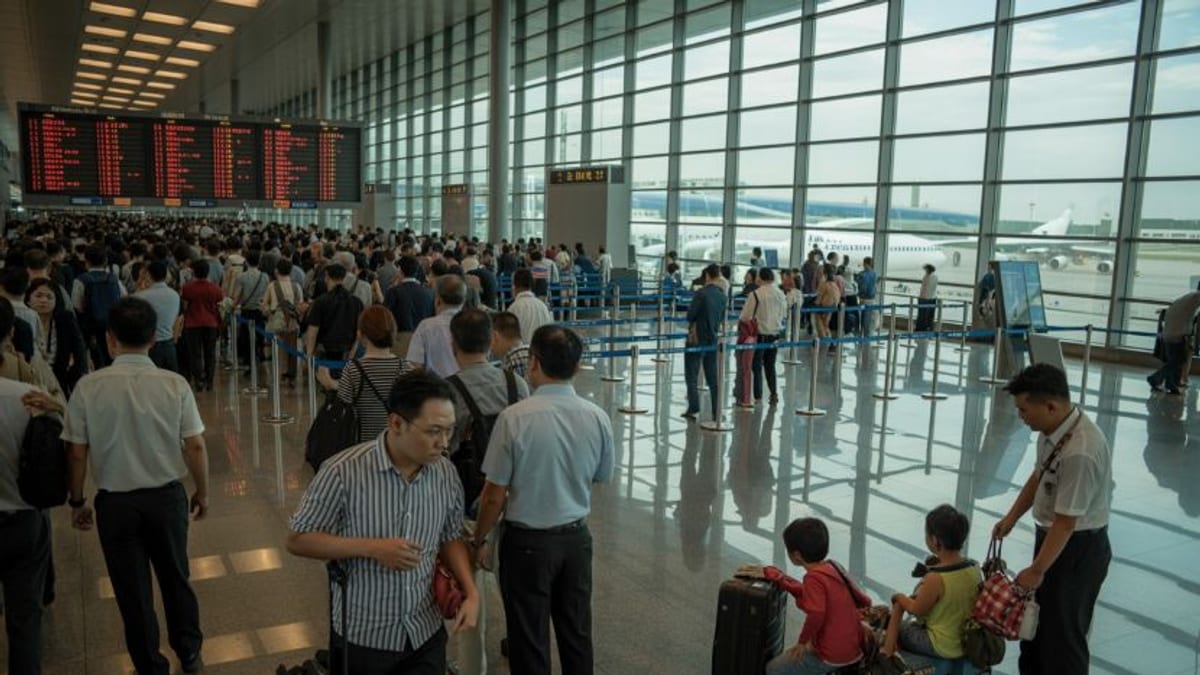
Q1 2026: China’s Cross-Border Travel Rebound Gains Pace
Recent statistics released in early April show that China recorded a strong rise in cross-border entries and exits in the first quarter of 2026, underscoring a broad recovery in international mobility. Government-linked data indicate that trips by foreign nationals are climbing rapidly, supported by streamlined visa procedures, expanded visa-free schemes and a renewed focus on tourism as a pillar of services-led growth.
Industry-focused coverage points to a double-digit year-on-year increase in international travel volumes involving major Chinese hubs such as Beijing, Shanghai and Guangzhou in Q1 2026. Aviation analysts describe the trend as a shift from “catch-up travel” to more sustained business, trade and conference-driven movements, with airlines gradually rebuilding long-haul and regional capacity on routes that had been thinned out during the pandemic years.
Market forecasts published this year suggest that Chinese outbound tourism is on track to move closer to pre-2019 levels in 2026, even if the pace varies by region. While some Northeast Asian destinations remain exposed to geopolitical headwinds, demand toward South and Southeast Asia has been comparatively resilient, helped by shorter flight times, competitive fares and diversified itineraries that combine trade, manufacturing and tourism.
Within this broader rebound, India is emerging as a key beneficiary. Analysts highlight growing interest from Chinese firms in India’s technology, digital services and consumer markets, as well as rising Indian corporate travel into China’s manufacturing and financial centers. Against this backdrop, new air links are becoming a critical enabler of deeper engagement.
New Kolkata–Shanghai Flights Reshape India–China Air Map
Within Asia, one of the most closely watched developments is IndiGo’s decision to launch direct Kolkata–Shanghai flights from March 29, 2026. Publicly available schedules show the service operating daily between Netaji Subhas Chandra Bose International Airport and Shanghai Pudong, using narrow-body aircraft on a sector of around four and a half hours.
Route announcements and booking data indicate that the new link significantly shortens journeys that previously required at least one stop via Southeast Asian hubs such as Bangkok or Singapore. Travel industry reports estimate potential time savings of up to six hours door-to-door, depending on connections, effectively turning Kolkata into one of the quickest Indian gateways to China’s financial capital.
The launch comes after the phased resumption of India–China flights beginning in late 2025, when direct services restarted between Kolkata and Guangzhou and between New Delhi and Shanghai after a five-year suspension. Together with Air India’s resumed Delhi–Shanghai operations from February 2026 and Chinese carriers’ gradual return to India, the new Kolkata–Shanghai pairing deepens a multi-node network that no longer depends solely on Delhi and Mumbai.
Capacity trackers show that, as of late March 2026, the Kolkata–Shanghai route is ramping up from limited frequencies to a daily pattern, adding a fresh east India spoke to a Shanghai-centered web of South and Southeast Asian connections. This expansion aligns closely with the broader Q1 2026 recovery in Chinese cross-border travel, providing additional lift to both markets.
Trade, Tech and Education Ties Stand to Benefit
Business travel specialists note that the Kolkata–Shanghai corridor sits at the intersection of several fast-growing sectors. Shanghai remains a central hub for finance, advanced manufacturing, automotive and technology services, while Kolkata and the surrounding region host clusters in information technology, business-process outsourcing, engineering services, tea exports and textiles.
With direct flights now available, small and medium-sized firms in eastern India are expected to find it easier to schedule short-notice trips for supplier negotiations, facility visits and trade fairs in China. Likewise, Chinese manufacturers and investors scouting opportunities in India’s eastern industrial belts gain faster access that avoids backtracking through Delhi or overseas hubs.
The route is also viewed as strategically important for education and research mobility. Universities and technical institutes across India have reported renewed interest in exchanges and joint programs with Chinese counterparts as border controls have eased. Shorter and more predictable travel between Shanghai and Kolkata can facilitate semester exchanges, research collaborations and conference attendance, particularly in engineering, data science and sustainability fields where both countries are investing heavily.
Travel sector analysts remark that the service may gradually build a mixed traffic profile, combining corporate travelers on weekdays with students, visiting families and leisure passengers over weekends and holiday peaks. This diversified demand base is considered vital for sustaining year-round load factors on a route that, until recently, did not exist in the direct-flight map.
Tourism and Cultural Flows Poised for Gradual Expansion
Beyond trade and education, tourism boards and market researchers see the new link as a catalyst for two-way leisure flows. Shanghai’s appeal as a gateway to eastern China’s heritage cities, water towns and shopping districts is well established, and more convenient access is expected to strengthen its position on multi-city itineraries that also include Beijing, Hangzhou or Suzhou.
On the Indian side, Kolkata offers proximity to Darjeeling, the tea-growing hills of north Bengal, the Sundarbans delta and Buddhist circuits across eastern India. Curated packages built around the new flights are starting to appear in travel media coverage, often targeting Chinese visitors looking for culture-rich, slower-paced alternatives to India’s traditional Golden Triangle.
Observers caution, however, that leisure flows will grow from a modest base. Despite the rapid rebound in China’s overall cross-border travel indicators in Q1 2026, some source markets and segments remain price-sensitive and attentive to safety, health and visa policy signals. The Kolkata–Shanghai route is therefore likely to build momentum steadily rather than in a single surge, even as it benefits from promotional campaigns and bundled tour offerings.
Still, with more predictable schedules and a reduction in travel friction, travel industry commentators expect India’s representation at Chinese travel fairs and roadshows to tilt increasingly toward eastern and northeastern circuits. Likewise, cultural institutions in both cities may find it easier to coordinate festivals, art exchanges and film events that piggyback on the revived air bridge.
Strategic Signal for Regional Aviation and Connectivity
The decision to anchor a new daily connection between Kolkata and Shanghai in early 2026 carries strategic weight beyond its immediate traffic numbers. Aviation analysts argue that the move underscores a broader shift in regional networks, where secondary cities with strong economic profiles are gaining more point-to-point links instead of routing everything through traditional megahubs.
For India, this aligns with a wider push to internationalize airports outside the main metropolitan gateways, distributing traffic and economic benefits more evenly across the country. For China, strengthening Shanghai’s role as a hub for South Asia complements the city’s existing dominance on trans-Pacific and intra-Asia routes, reinforcing its status as a multi-directional connector.
Forecasts released by tourism and aviation consultancies in early 2026 project that China’s outbound and inbound travel will continue to expand through the year, supported by visa facilitation, new routes and rising consumer confidence. Within that context, the Kolkata–Shanghai service is seen as both a product and a driver of the Q1 2026 travel surge, exemplifying how targeted connectivity can accelerate wider economic and people-to-people ties.
As airlines on both sides monitor performance and adjust capacity, network planners are already evaluating additional possibilities, including stronger links between eastern India and other coastal regions of China. The new Shanghai–Kolkata flights therefore look set to play a pivotal role in the next phase of Asia’s post-pandemic travel realignment, knitting together two historic cities at a moment when cross-border movement is once again on the rise.