


More news on this day
Severe weather systems sweeping across China are disrupting air travel at some of the country’s busiest hubs, with reports indicating at least 60 flights grounded and more than 180 services facing extensive delays at airports in Beijing, Shanghai, Xinjiang, Chengdu, Guangzhou and Hangzhou.
Get the latest news straight to your inbox!
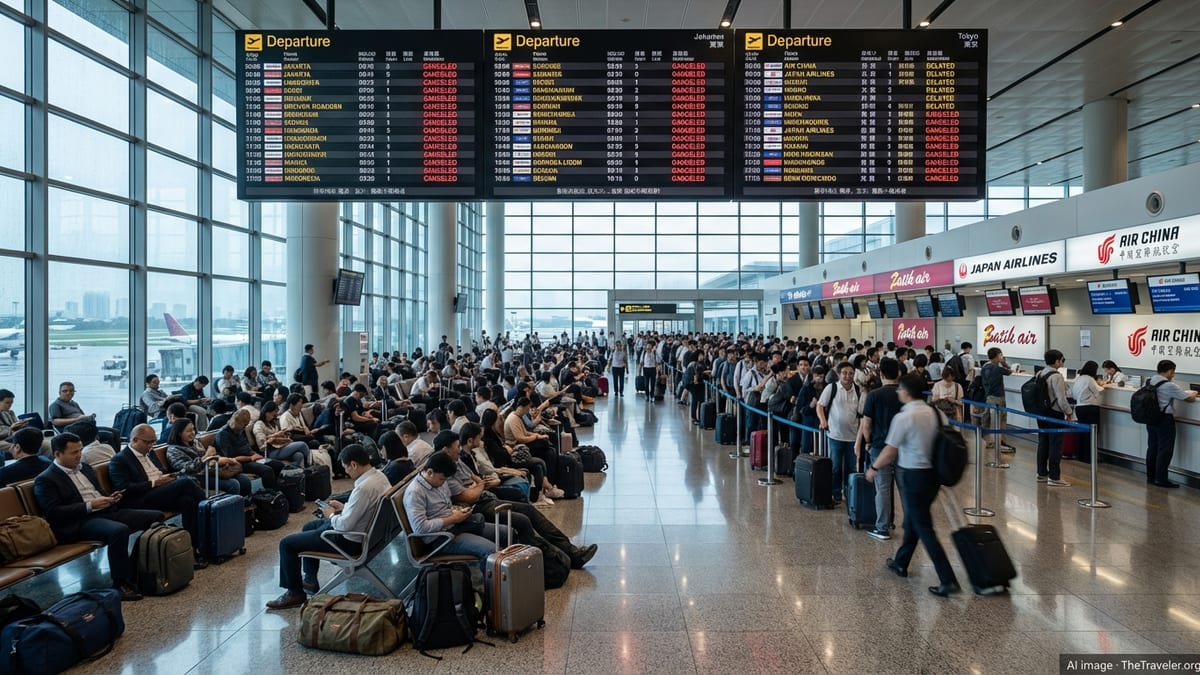
Storms, Snow and High Winds Disrupt China’s Air Network
Publicly available aviation data and Chinese meteorological reports point to a complex mix of weather hazards affecting different parts of the country, including spring storm cells over eastern and southern provinces, late-season snow and low visibility in the north and northwest, and periods of intense crosswinds around several inland hubs. This combination is straining punctuality along China’s dense domestic network and causing knock-on delays for selected international routes.
In northern China, strong winds and dust have periodically reduced visibility and complicated arrivals and departures at Beijing’s two major gateways, Capital International Airport and Daxing International Airport. To the west, parts of Xinjiang have experienced snow, blowing dust and turbulence in low airspace, conditions that can force temporary ground stops and extended spacing between flights. At the same time, a belt of rain and embedded thunderstorms stretching from the Yangtze River Delta through central and southern provinces is affecting operations at Shanghai, Hangzhou, Chengdu and Guangzhou.
Tracking services show multiple instances of flights operating substantially behind schedule on May 10 and May 11, 2026, with typical delays ranging from 45 minutes to several hours on some trunk routes. While airlines are attempting to maintain schedules where possible, the combination of weather-related air traffic control restrictions and aircraft rotation issues is limiting their flexibility.
Reports from airline notifications also highlight secondary complications such as crew duty-time limitations. When crews time out after earlier weather disruptions, subsequent departures may be further delayed or canceled even if conditions begin to improve, prolonging the disruption for travelers.
Key Airports and Routes Bearing the Brunt
Beijing remains one of the most affected nodes when adverse weather hits China’s network, due to its role as a primary transfer point. Links between Beijing and other major cities, including Shanghai, Guangzhou, Chengdu and several destinations in Xinjiang, are experiencing extended delays as air traffic managers slow the flow of arrivals and departures during periods of low visibility or high winds.
Shanghai Pudong and Hongqiao airports, together serving a large share of China’s coastal traffic, are coping with heavy rain and passing thunderstorms that slow ground handling and restrict runway capacity. These conditions are particularly disruptive on high-frequency shuttle routes such as Shanghai to Beijing and Shanghai to Guangzhou, where even modest initial delays can quickly cascade throughout the day.
In western China, Urumqi and other Xinjiang airports have been affected by snow, mixed precipitation and strong gusts, which can force runway inspections and de-icing procedures. Flights linking Xinjiang to eastern hubs, including services to Beijing, Shanghai and Chengdu, are therefore at elevated risk of cancellation or extended delay during the worst weather windows.
Further south, Guangzhou Baiyun and Chengdu’s twin airports, Tianfu and Shuangliu, are contending with heavy showers, low cloud and intermittent thunderstorms. These conditions typically lead to temporary suspensions of takeoffs and landings, increasing airborne holding times and prompting ground delays on popular domestic sectors connecting Guangzhou and Chengdu with Beijing, Shanghai and Hangzhou.
What Stranded Travelers Are Experiencing on the Ground
Passengers transiting these hubs are facing a mix of immediate cancellations, rolling delays and last-minute gate changes. In several cities, local media and social posts describe crowded departure halls, lengthy check-in and rebooking queues, and pressure on same-day hotel availability near airports as travelers seek overnight accommodation after missed connections.
At Beijing and Shanghai in particular, the high volume of both origin and connecting traffic means that a single burst of heavy weather can leave hundreds of passengers temporarily stranded when multiple rotations are disrupted at once. Travelers arriving from Xinjiang or western cities late in the day risk missing onward domestic or regional flights, especially where minimum connection times are already tight.
Guangzhou and Chengdu, both key hubs for flights into China’s southwest and south, are seeing similar ripple effects. Rain and storms that force a pause in operations during peak periods can generate a backlog that may take hours to clear, complicating onward travel for passengers heading to second-tier cities that have limited daily frequencies.
In Hangzhou, where operations are closely linked to conditions in the Shanghai and Yangtze River Delta airspace, delays at one airport can quickly affect the others. Travelers report extended waits onboard aircraft during ground holds, as well as postponed boarding while crews and aircraft are repositioned in response to the shifting weather picture.
Practical Steps for Managing Disruption in China
For travelers currently in China or due to fly over the next 24 to 48 hours, the most effective strategy is to monitor flight status through airline apps and airport information channels rather than relying solely on printed itineraries. As weather patterns shift rapidly, departure times and even operating airports can change at relatively short notice, particularly on domestic services with multiple daily frequencies.
Publicly available advisories from Chinese meteorological services indicate that rain, thunderstorms and periods of low visibility may persist across parts of East, Central and South China, while residual snow and strong winds remain possible in northern and northwestern regions. Travelers connecting through Beijing, Shanghai, Guangzhou, Chengdu, Hangzhou or Xinjiang hubs should therefore allow extra buffer time between flights and be prepared for schedule adjustments.
Experts in aviation logistics often recommend packing essentials such as medication, chargers and a change of clothes in carry-on luggage during unsettled weather periods, in case checked bags are delayed or overnight stays become necessary. Flexible booking options, including same-day standby and no-fee changes where offered, can also help travelers adapt more easily when cancellations occur.
Those with fixed onward commitments, such as international departures from another Chinese city, may wish to bring forward domestic positioning flights or explore high-speed rail alternatives on certain corridors. Routes such as Beijing to Shanghai, Shanghai to Hangzhou, and Guangzhou to nearby cities often have frequent rail services that can provide a backup if aviation disruptions intensify.
Outlook for the Next 24–48 Hours
Meteorological forecasts and aviation planning bulletins suggest that unsettled conditions are likely to persist in several regions of China through at least the next day, with additional waves of rain and thunderstorms expected in eastern and southern provinces and the potential for intermittent snow or blowing dust in parts of the northwest. While airlines and airports are working to restore normal operations as windows of calmer weather open, residual delays are likely even after the most severe conditions pass.
Travelers scheduled to pass through Beijing, Shanghai, Xinjiang, Chengdu, Guangzhou or Hangzhou should continue to check flight information frequently on May 11 and May 12, 2026, and consider proactively adjusting plans if their itineraries involve tight connections. Early-morning and late-evening services can be more vulnerable when aircraft and crews are out of position from the previous day.
Industry observers note that China’s aviation system is generally resilient and capable of recovering capacity once weather constraints ease. However, the current pattern of geographically widespread disturbances means that recovery may be uneven, with some hubs clearing backlogs faster than others. Patience and flexibility will therefore be important assets for anyone navigating China’s skies during this period of weather-related turmoil.