


More news on this day
A Turkish Airlines Airbus A330 arriving from Istanbul caught fire during landing at Kathmandu’s Tribhuvan International Airport on Monday morning, triggering an emergency evacuation of nearly 300 people and a temporary shutdown of Nepal’s busiest air gateway, according to multiple news reports.
Get the latest news straight to your inbox!
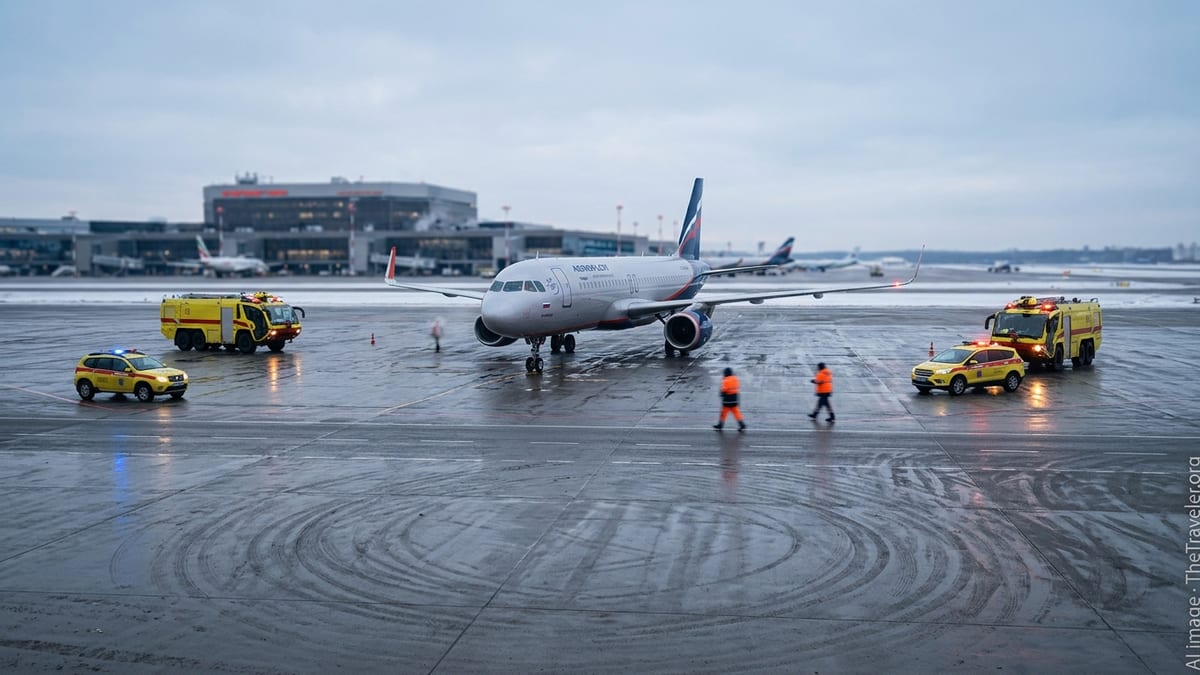
Tyre Fire Triggers Emergency Response at Tribhuvan International Airport
Published coverage indicates that Flight TK 726 was completing its journey from Istanbul to Kathmandu when a fire broke out in the aircraft’s right rear landing-gear area around 6:30 a.m. local time on May 11. Reports describe smoke and flames near the tyres shortly after touchdown on the single main runway at Tribhuvan International Airport.
Information from news outlets such as Reuters and the Associated Press states that the crew brought the Airbus A330 to a stop on the runway or adjacent taxiway as airport fire and rescue teams converged on the aircraft. Firefighters used foam to control and extinguish the blaze, which was described in several reports as a “minor” or localized fire confined to the landing gear.
Tribhuvan International Airport, located in a valley surrounded by hills and mountains, is known among pilots and aviation observers for its demanding operating environment. With only one runway and limited space for diversions on the ground, any aircraft incident can quickly disrupt traffic across Nepal’s main international gateway.
Initial accounts suggest that the aircraft’s fuselage and engines did not suffer significant visible damage, with the focus of attention concentrated on the affected landing-gear assembly. Detailed technical assessments by maintenance and safety specialists are expected to determine the full extent of any structural or systems damage.
All 288 Occupants Safely Evacuated
According to figures cited in multiple reports, the flight was carrying 277 passengers and 11 crew members, for a total of 288 people on board. Publicly available information indicates that all occupants were evacuated using the aircraft’s emergency slides after the fire was detected.
Several outlets report that there were no serious injuries among passengers or crew. Some coverage from regional media notes that a small number of passengers may have sustained minor injuries during the rapid evacuation, which is consistent with typical outcomes when large groups slide from an aircraft at speed in an emergency setting.
Aviation safety data frequently highlights that evacuations from widebody jets like the Airbus A330 can be completed within minutes when cabin crews follow established procedures and passengers comply with instructions. The Kathmandu incident appears to align with that pattern, with video and still images shared on social platforms showing passengers moving away from the aircraft and gathering on the apron while rescue vehicles remained positioned nearby.
Reports indicate that Turkish Airlines arranged onward support for travelers following the evacuation, though details on rebooking and accommodations were not immediately available in early coverage. Many passengers were reportedly international tourists or Nepali nationals returning from or transiting through Istanbul, a major regional hub.
Airport Closure Disrupts Flights Across the Region
Because Tribhuvan International Airport operates with a single runway, the incident had immediate operational consequences. News coverage notes that the airport was closed for roughly one to two hours while emergency services dealt with the fire, inspected the surface and arranged for the aircraft to be secured and later towed from its stopping position.
The temporary closure led to diversions and airborne holding for flights inbound to Kathmandu from regional hubs in India, the Middle East and East Asia. Some aircraft were instructed to circle while crews awaited updates on runway availability, while others reportedly diverted to alternate airports to refuel or disembark passengers.
Airlines serving Kathmandu typically build schedule buffers to account for weather, congestion and occasional disruptions, but an unexpected runway blockage can still trigger a cascade of delays. Publicly accessible flight-tracking data and media reports on Monday showed knock-on effects throughout the day as carriers rescheduled or consolidated services to and from Nepal.
Ground operations at Tribhuvan International Airport also faced challenges as arriving passengers from earlier flights were temporarily unable to depart and outgoing travelers encountered queues and revised departure times. Local coverage indicated that airport officials worked to restore normal operations once the Turkish Airlines aircraft was secured and the runway deemed safe for use.
Spotlight on Safety Record and Recent Incidents
The Kathmandu tyre fire comes against a broader backdrop of heightened scrutiny on aviation safety in Nepal and on operational reliability across international carriers. Nepal’s challenging terrain, variable weather and historically limited infrastructure have contributed to several high-profile accidents involving domestic operators over the past decade, particularly on short-haul routes to remote airstrips.
International carriers, by contrast, have generally maintained stronger safety records in Nepali airspace, though incidents do occur. In 2015, a different Turkish Airlines Airbus A330 skidded off the Tribhuvan runway in dense fog, closing the airport for several days and underscoring the operational sensitivity of Kathmandu’s single-runway configuration. That earlier aircraft was eventually recovered and converted into an on-site aviation-themed venue, frequently cited in local media as a symbol of tourism resilience.
Turkish Airlines itself has grown into one of the world’s largest network carriers in recent years, using Istanbul as a bridge between Europe, Asia and Africa. Industry databases show that the airline operates a substantial fleet of Airbus A330s on medium and long-haul routes, including services to South Asia. While the carrier has experienced serious accidents in its longer history, most recent incidents have involved contained technical issues or challenging weather scenarios rather than catastrophic failures.
Analysts often point out that tyre and landing-gear fires, while dramatic in appearance, do not necessarily indicate systemic flaws in an aircraft type or airline. Such events can stem from overheated brakes, hydraulic leaks or component failures that are usually traceable through post-incident inspections and addressed through maintenance or design adjustments.
Investigations and Operational Follow-Up
Following standard practice, aviation safety investigators in Nepal are expected to review flight data, cockpit voice recordings and technical information from the aircraft’s systems to determine the precise cause of the tyre fire on Flight TK 726. Public reporting suggests that early assessments will focus on the landing-gear assembly, braking system and any indications of overheating during approach and rollout.
Regulatory agencies typically coordinate closely with the airline, the aircraft manufacturer and, if applicable, the aviation authority of the operator’s home country. In an event involving an Airbus A330 run by a Turkish carrier on Nepali territory, that process generally includes liaison among Nepali regulators, Turkish civil aviation officials and Airbus technical teams, supported by the airline’s own engineering staff.
Depending on the findings, investigators may issue safety recommendations related to maintenance practices, crew procedures or airport emergency readiness. Even in cases where no structural damage is ultimately found, such events can lead to revised checklists, updated training or equipment upgrades for fire and rescue services at airports with similar infrastructure to Kathmandu’s.
For travelers planning journeys to or through Nepal, publicly available information at this stage suggests that the incident on Monday was contained effectively, with no loss of life and limited disruption beyond the immediate closure period. Airlines are expected to monitor any subsequent advisories while continuing to operate into Tribhuvan International Airport, a critical gateway for tourism and trade into the Himalayan nation.