


More news on this day
Hundreds of travelers across China’s busiest air corridors are facing major disruption as dense fog in the east and heavy storms in the south trigger widespread cancellations and delays at key hubs in Beijing, Shanghai, Guangzhou and Shenzhen, snarling links to Chengdu, Xi’an, Kunming and other cities.
Get the latest news straight to your inbox!
Weather Alerts Trigger Fresh Wave of Cancellations
New weather alerts issued on May 12 have intensified an already difficult week for air travel in China, with dense fog over the Bohai Sea, Yellow Sea and parts of the East China Sea combining with heavy rainfall across southern provinces. Publicly available meteorological bulletins describe visibility of less than one kilometer in sea and coastal areas that feed into major aviation corridors serving Beijing and Shanghai, while forecasters warn of persistent downpours and thunderstorms in Guangdong and neighboring regions.
The reduced visibility and unstable conditions are prompting tighter control of takeoffs and landings at large coastal and river-delta airports. Flight-tracking dashboards and disruption-monitoring services show that carriers are trimming schedules and slowing operations, leading to a jump in both cancellations and long delays across the domestic network.
Although totals are still being updated, early tallies from aviation data providers and passenger-rights platforms indicate that more than 140 flights have been cancelled or heavily disrupted across the main Chinese hubs since the latest round of fog and storm warnings came into effect. The impact is clustered around peak travel hours, exacerbating queues and compounding knock-on delays as aircraft and crews fall out of position.
Industry analysts note that the current weather problems arrive on top of an already stretched system following a busy spring holiday period and months of high demand. Congestion at airports and in crowded airspace around eastern and southern China has left little slack to absorb further shocks, making localized weather events more likely to cascade into nationwide disruption.
Major Hubs in Beijing, Shanghai, Guangzhou and Shenzhen Under Strain
China’s “big four” aviation gateways in Beijing, Shanghai, Guangzhou and Shenzhen are once again bearing the brunt of the turmoil, as the latest cancellations ripple through interconnected banks of domestic flights. Operations at Beijing Capital and Beijing Daxing are being affected by fog and reduced arrival rates from coastal airspace, while Shanghai Pudong and Shanghai Hongqiao are contending with both limited visibility and wider flow restrictions.
Further south, Guangzhou Baiyun and Shenzhen Bao’an are grappling with renewed bands of heavy rain and thunderstorm activity after local forecasters warned last week that Guangdong would see repeated episodes of intense rainfall this month. These conditions can force temporary suspensions of ground handling, slow boarding and deplaning operations, and increase spacing between aircraft in the departure and arrival sequences.
Schedule data and airline route maps highlight how central these four hubs are to the domestic network. They act as primary connection points between eastern coastal cities and inland centers such as Chengdu, Xi’an and Kunming, meaning that disruptions at a handful of large airports can quickly spread across the country. When multiple hubs are constrained on the same day, as is happening in the current weather pattern, airlines have fewer options to reroute passengers or reposition aircraft efficiently.
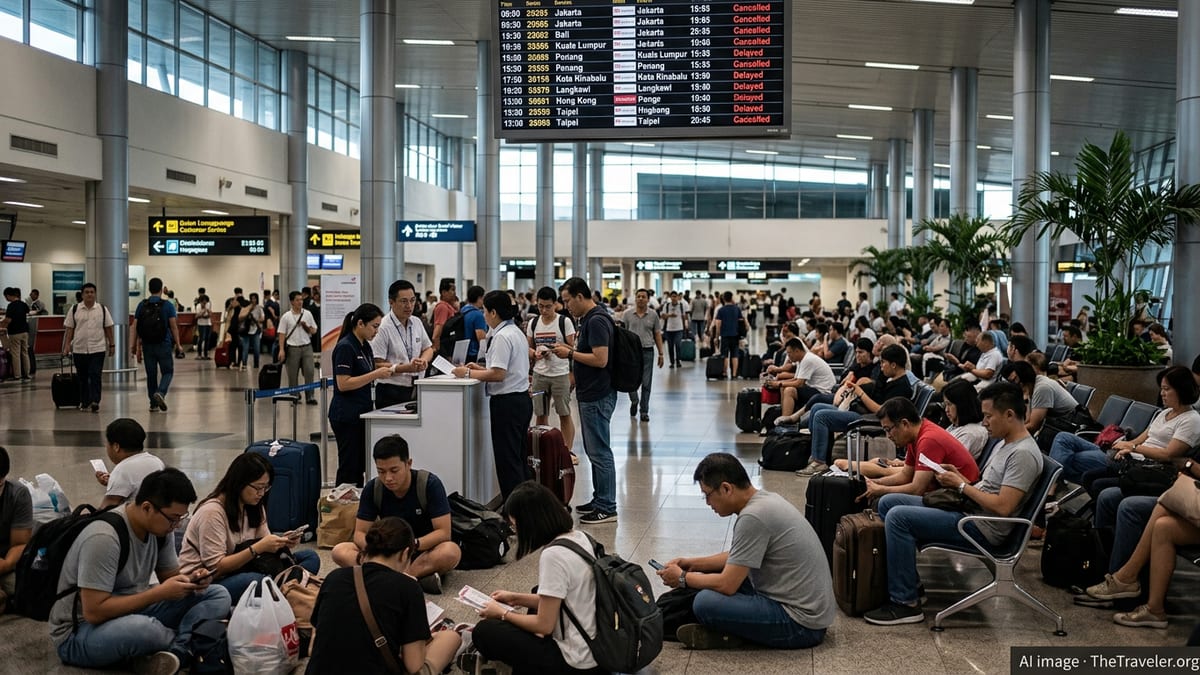
Travelers transiting through these hubs report long lines at rebooking counters and crowded departure halls as departure boards fill with delayed and cancelled services. With aircraft and crews scattered, even flights operating from smaller secondary airports may face last-minute schedule changes if they depend on equipment originating from one of the affected megahubs.
Big Three Carriers and Partners Cut and Consolidate Routes
China’s largest airlines, including Air China, China Eastern and China Southern, are at the center of the current disruption as they manage dense domestic schedules linking the main hubs with regional cities. Publicly available operations data and online timetables show these “Big Three” operate key trunk routes such as Beijing to Shanghai, Shanghai to Chengdu, Guangzhou to Xi’an and Shanghai to Kunming, with multiple daily frequencies.
In response to the compounding weather and congestion pressures, carriers are cancelling selected rotations, consolidating lightly booked services onto single aircraft, and swapping equipment to optimize capacity on the busiest city pairs. This approach can limit the overall number of flights lost, but it also means that passengers booked on off-peak or less popular departures are more likely to see their flights removed from the schedule or retimed at short notice.
Regional and partner airlines are also affected. Data from recent disruption events show that smaller carriers serving inland cities and secondary hubs often record some of the highest cancellation rates when bottlenecks hit the main coastal airports, as air traffic controllers prioritize long-haul arrivals and departures and key trunk routes. In practice, this can leave travelers on shorter domestic segments, such as feeder flights into Shanghai or Guangzhou, facing substantial delays while crews wait for available slots.
For the major airlines, the latest wave of cancellations comes after months of operational fine-tuning in response to rising fuel costs, shifting demand and earlier episodes of severe weather. Industry commentary notes that carriers have already been trimming marginal routes and tightening turnaround times, leaving limited flexibility when a new disruption hits several hubs simultaneously.
Routes to Chengdu, Xi’an, Kunming and Beyond Disrupted
Among the most heavily affected services are the dense web of flights connecting eastern seaboard hubs with western and southwestern cities such as Chengdu, Xi’an and Kunming. Route-planning platforms show that multiple daily frequencies typically operate between Shanghai and Chengdu, Beijing and Xi’an, Guangzhou and Kunming, and similar city pairs, with these flights acting as vital links for both business and leisure travelers.
When cancellations accumulate at origin or hub airports, these cross-country routes can quickly see gaps in service, lengthening total journey times for travelers who rely on same-day connections. Passengers attempting to move between smaller cities may find that missed or cancelled feeder flights in Beijing, Shanghai, Guangzhou or Shenzhen force overnight stays in hub airports or complete rerouting via alternative gateways.
Reports from passenger forums and travel advisory platforms in recent days describe travelers bound for inland destinations being rebooked through unconventional routings, sometimes involving additional hops through secondary airports. While this can keep itineraries technically intact, it increases travel times and increases the risk of further missed connections if weather or congestion worsens at any intermediate stop.
These disruptions also have knock-on effects for tourism and corporate travel planning. Popular destinations in Sichuan and Yunnan depend heavily on reliable air links from coastal cities, and recurring episodes of widespread cancellations may prompt travelers to pad schedules with extra buffer days or shift towards more flexible booking options that allow easier changes.
What Travelers Need to Know Now
For travelers currently in China or planning trips in the coming days, publicly available guidance from airlines, airports and travel-assistance services emphasizes close monitoring of flight status and building additional margin into itineraries. Same-day connections involving transfers at Beijing, Shanghai, Guangzhou or Shenzhen are particularly vulnerable when weather and flow restrictions converge on multiple hubs.
Passengers are encouraged by consumer-rights organizations and travel platforms to use official airline apps and airport information channels to check departure and arrival times frequently, as schedules can adjust several times in a single day. Many carriers are also using digital tools to push rebooking options, meal vouchers or hotel information when flights are cancelled or severely delayed, although availability can vary by route and ticket type.
Travel-planning specialists note that, while China’s domestic network is extensive, the system is currently operating with limited resilience. Travelers with critical appointments or onward international connections are advised to opt for earlier departures where possible, avoid tight layovers at the main hubs, and consider travel insurance or flexible fares that allow changes without excessive penalties when disruption strikes.
With the latest weather alerts indicating that fog over eastern sea areas and heavy rain across southern China could persist into the middle of the week, further cancellations and extended delays remain possible. Passengers already on the move or due to fly through Beijing, Shanghai, Guangzhou or Shenzhen in the near term may face continued uncertainty as airlines and airports work to rebalance schedules and clear backlogs across the network.