


More news on this day
Chinese tourist arrivals to Thailand fell about 13.6% year on year in October, according to preliminary government data, after a safety advisory from China’s embassy urged travellers to exercise greater caution over scams, kidnappings and fraudulent job offers linked to cross-border crime.
Get the latest news straight to your inbox!
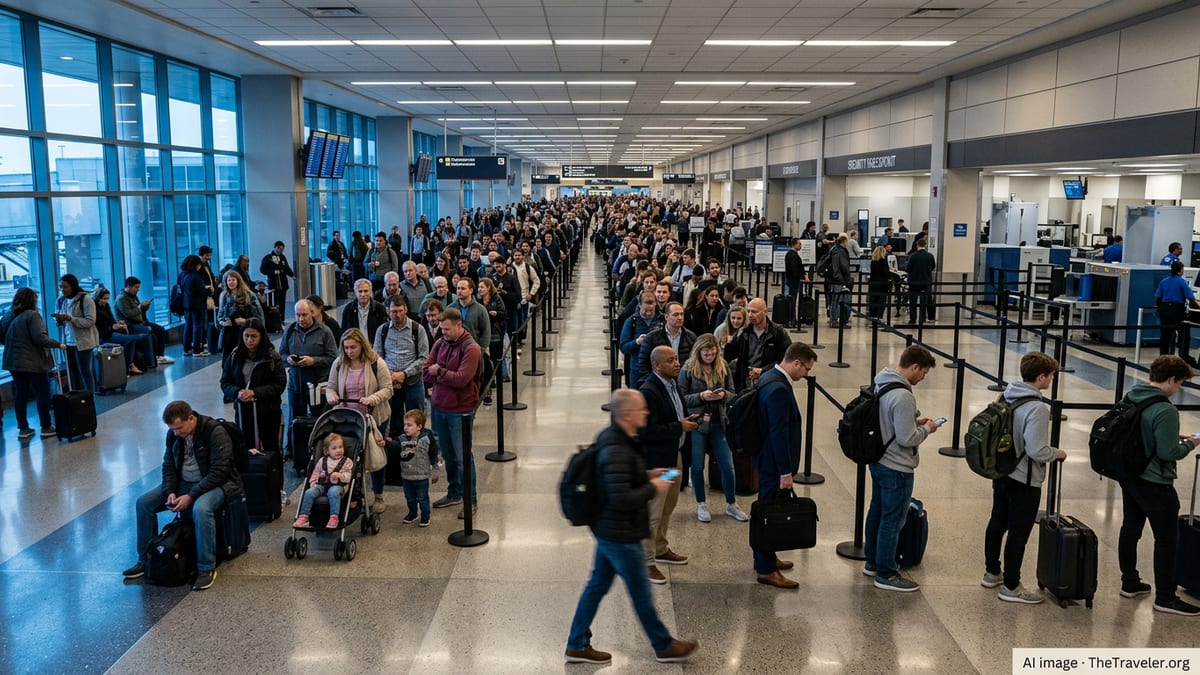
October slump hits Thailand’s largest tourism market
Preliminary figures from Thailand’s Ministry of Tourism and Sports indicate that 308,942 visitors arrived from China in October, down roughly 13.6% from the same month in 2025. China nonetheless remained Thailand’s single largest source of foreign tourists for the month, outpacing regional neighbours such as Malaysia and India.
The drop in Chinese arrivals came even as overall foreign visitor numbers to Thailand in the first ten months of 2026 reached about 25.5 million, leaving China’s cumulative total at around 4.24 million visitors so far this year. Publicly available data shows that this longer term figure is still about 12% higher than during the same period in 2025, underscoring how abrupt October’s reversal was compared with the gradual recovery seen earlier in the year.
Industry analysts note that October is normally supported by outbound travel linked to China’s National Day holiday at the start of the month. This year, however, the post-holiday slowdown in Chinese bookings to Thailand was sharper than expected, with the year’s first clear contraction in monthly arrivals from the mainland since February.
Local tourism operators report that the decline has been especially pronounced in the organised group segment, which is particularly sensitive to travel advisories and reputation issues. Trade associations tracking the market estimate that group package tours from China in October may have fallen by at least 40% compared with a year earlier, even as some independent travellers continued to visit.
Embassy safety warning highlights scams and cross-border crime
The slide in arrivals followed a safety advisory issued in mid October by the Embassy of China in Thailand. According to publicly available translations of the notice and subsequent media coverage, the advisory highlighted recent cases in which Chinese nationals had gone missing or been illegally detained after entering Thailand, including incidents where individuals were lured by fake job offers and pushed onward toward areas along the Thai Myanmar border.
The advisory urged Chinese travellers heading to Thailand to plan trips carefully, avoid unverified job recruitment channels and remain alert to personal safety risks. It specifically referenced fraud, kidnapping and human trafficking schemes that have used Thailand as a transit point for moving victims into compounds run by criminal networks in neighbouring countries.
Thai government communications released after the advisory acknowledged Beijing’s concerns and stressed that the scams referenced largely involved criminal groups targeting other Chinese nationals, rather than random attacks on ordinary holidaymakers. Official statements emphasised that Thai agencies were coordinating more closely with Chinese counterparts to crack down on trafficking routes, strengthen border checks and tighten enforcement against fraudulent recruitment operations.
Despite those assurances, the prominence of the embassy message on social media platforms in China appears to have dented confidence among some would be visitors and their families. Travel industry reporting indicates that many organised groups postponed or switched destinations in the weeks after the advisory, contributing to the October downturn.
Economic pressure on Thai tourism businesses
Chinese visitors are widely regarded as one of Thailand’s most valuable tourism segments because of their volume and spending power across accommodation, retail, dining and entertainment. Before the pandemic, Chinese arrivals ran into the millions per year and accounted for a substantial share of Thailand’s total international tourist receipts.
With foreign visitor spending from January through October 2026 estimated at around 1.24 trillion baht, tourism remains central to Thailand’s wider economy. A reduction in high volume markets such as China places additional pressure on hotels, restaurants, tour operators and transport providers that had been banking on a continued rebound in international demand over the coming high season.
Industry associations warn that the effect of the October decline is not limited to headline visitor numbers. Group tour cancellations and a weaker pipeline of advance bookings can disrupt employment for guides and coach drivers, depress occupancy rates in budget and mid range hotels that cater to tour groups, and reduce revenue for attractions popular with Chinese visitors in Bangkok, Pattaya, Phuket and Chiang Mai.
Tourism businesses are also facing higher operating costs, including energy, staffing and compliance with new safety protocols. As a result, even modest percentage swings in arrivals from a key market can have an outsized impact on profitability, particularly for small and medium sized firms that rely on volume rather than high margins.
Prospects for the winter season and Lunar New Year
Travel trade groups caution that the October setback could extend into the final months of 2026 if concerns over safety and scams are not more decisively addressed. The Association of Thai Travel Agents has publicly warned that arrivals from China in November and December could fall by around 20% year on year, based on current booking trends and feedback from partner agencies in Chinese cities.
Group tour demand is seen as particularly vulnerable ahead of the Lunar New Year holiday in early 2027, a period that normally delivers one of the strongest waves of Chinese travel to Southeast Asia. Some industry estimates suggest that organised group arrivals from China during that festival could drop by more than half if confidence does not recover, even if a portion of younger, independent travellers continues to visit Thailand on self planned itineraries.
At the same time, other markets have partly offset the softness from China. Ministry data cited in recent coverage shows that long haul arrivals from regions such as Europe and North America have grown in recent weeks as winter holidaymakers seek warm weather destinations. However, these segments are smaller in absolute terms than the potential Chinese market and are unlikely to fully compensate for a prolonged shortfall in visitors from the mainland.
Tourism analysts therefore expect Thailand’s overall visitor targets for 2026 to remain achievable but under pressure, with the composition of arrivals shifting more heavily toward a mix of regional Southeast Asian travellers and long haul tourists, rather than the pre pandemic pattern dominated by large Chinese tour groups.
Measures to restore confidence among Chinese travellers
In response to the changing outlook, Thai tourism officials have used public channels to outline measures intended to reassure both Chinese authorities and potential visitors. Information released through government agencies indicates that Thailand and China plan to establish a joint working group focused on tourist safety and the suppression of scam networks, including operations near border areas that have featured in Chinese media reports.
Domestic agencies such as the Tourist Police and Immigration Bureau have also been highlighted in official communications as part of an expanded safety framework, with discussions on more visible patrols in key tourist zones, tighter checks on tour operators and clearer complaint channels for foreign visitors.
On the marketing side, travel trade groups in Thailand are calling for new roadshows and promotional campaigns in major Chinese cities to underline what they describe as improvements in safety and service quality. These initiatives are aimed at travel agencies, online platforms and social media influencers that shape destination choices for Chinese consumers.
Observers note that the impact of October’s 13.6% decline will ultimately depend on how quickly such efforts translate into restored confidence. For now, the setback serves as a reminder of how closely Thailand’s tourism recovery is tied to perceptions of safety in one of its most important source markets, and how rapidly sentiment can shift in response to travel advisories and reports of cross border crime.