


More news on this day
American Airlines has quietly updated the rules and technology behind the hotel, meal and ground transport vouchers it offers stranded passengers during significant flight disruptions, introducing more automation but also signaling tighter controls and fewer choices in some cases.
Get the latest news straight to your inbox!
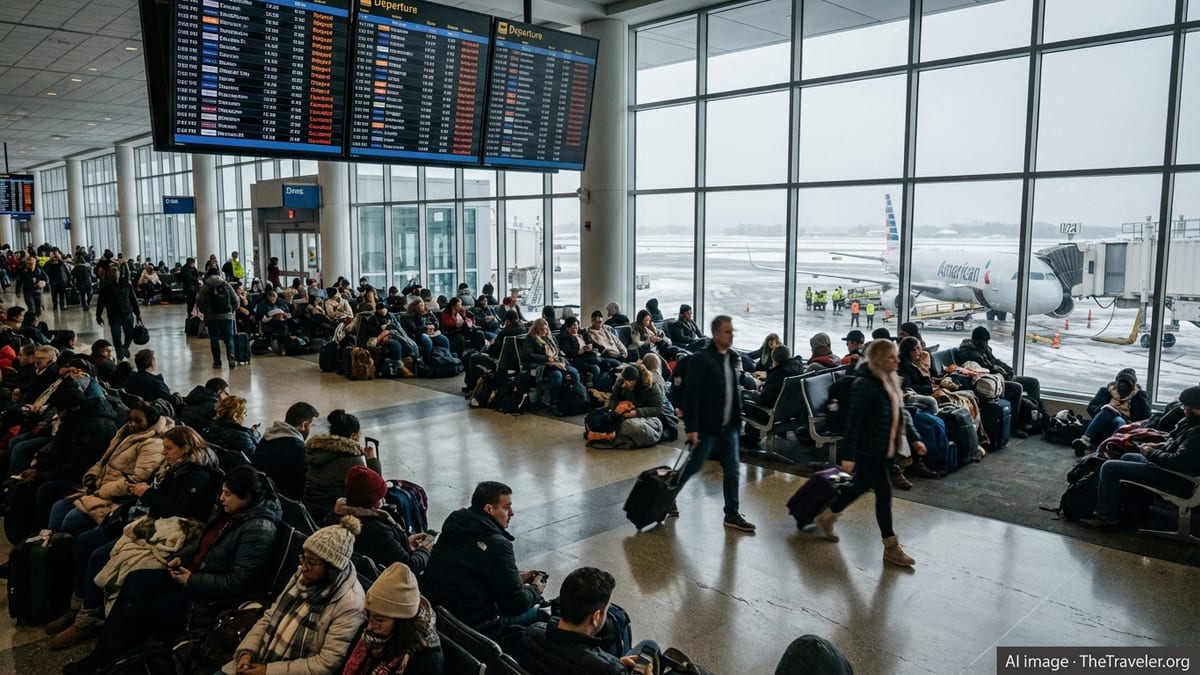
New Automation for Overnight Disruptions
Recent industry coverage indicates that American Airlines has rolled out a new system to automate hotel and meal support when passengers are stranded overnight because of disruptions the airline considers within its control. Reports describe an October 27 implementation date for automatic hotel offers and associated food credits on qualifying itineraries, reducing the need for travelers to stand in long airport lines to request assistance from gate or ticket counter staff.
Previously, passengers whose flights were canceled late in the evening or delayed until the following day often had to wait for an in-person agent to manually issue paper or electronic vouchers. Public commentary from frequent flyer analysts notes that this manual process could consume an hour or more at busy hubs, especially during mass disruptions triggered by crew shortages or cascading mechanical problems. By shifting part of the process into an automated back-end system that can push offers directly into reservations, American appears to be aiming to streamline the experience for both travelers and airport staff.
The airline’s published customer service plan states that when an overnight disruption is caused by American and occurs away from a passenger’s home city, assistance available on request includes an approved hotel, transportation between the airport and the hotel, and a credit toward food and beverages after a qualifying delay. The new automation does not expand those underlying commitments but changes how and when eligible passengers receive access to them.
Meal Vouchers Become “Food/Beverage Credits”
At the same time, American has rebranded the paper and electronic slips it issues during extended delays from “meal vouchers” to “food/beverage credits.” Coverage in aviation and consumer travel media notes that the standard amount remains relatively modest, such as 12 dollars per person in many domestic cases, even at airports where restaurant prices can significantly exceed that figure.
Commentary on the change suggests that the new wording is intended to lower expectations among travelers who previously assumed a “meal voucher” would fully cover a sit-down restaurant check. Reports highlight that the credits can typically be used at most participating airport food outlets but may not be sufficient to pay for a full meal at higher-priced venues, particularly during dinner hours or in international terminals.
Despite the rebranding, American continues to tell customers through its official customer service plan that passengers facing controllable delays of three hours or more are eligible for a meal or credit when they must wait at the airport. The United States Department of Transportation’s public dashboard for major carriers reflects that American, like its largest domestic competitors, has committed to providing some form of meal benefit during qualifying disruptions that are categorized as being within the airline’s control.
Fewer Hotel Options and Tighter Reimbursement Rules
Industry reports also draw attention to behind-the-scenes changes in how American selects partner hotels for stranded passengers. Travel blogs with access to internal guidance for employees describe a shift to a different “hotel feed” that may give agents fewer properties to choose from when they issue vouchers, particularly near congested hub airports where room availability can be tight during weather events or systemwide outages.
These reports indicate that American has warned employees that hotel options could narrow under the new system, and that some travelers may receive vouchers for properties farther from the airport than in the past. While the airline’s customer service plan continues to promise an “approved hotel” when an overnight disruption is within its control and the passenger is away from their home city, it does not guarantee a particular brand, distance, or minimum star rating.
Separate coverage of American’s handling of reimbursements highlights another important nuance. After a recent policy shift, reports indicate that the airline has become more restrictive about repaying customers who decide to purchase their own hotel room during an irregular operation instead of waiting for a voucher. Analysts reviewing the policy note that, in many cases, American now requires written authorization for reimbursement, and that the amount it is willing to cover can be capped around internal contract rates rather than the full market price, potentially leaving travelers to pay any difference out of pocket.
How the Rules Interact With Federal Protections
American’s evolving voucher practices sit alongside a changing regulatory landscape in the United States. The Department of Transportation has moved in recent years to make airline obligations more transparent, including a rule on automatic refunds that clarifies when passengers are entitled to their money back after cancellations or significant schedule changes. Federal guidance emphasizes that carriers cannot substitute vouchers or credits for a required refund unless the passenger affirmatively opts for the alternative.
Separate rulemaking and policy statements focus on what airlines provide beyond refunds, such as hotels, meals and ground transport when passengers are stranded. Department of Transportation materials and the agency’s customer service dashboard note that virtually all large U.S. carriers, including American, have voluntarily committed to cover a meal for passengers affected by controllable delays of three hours or more and to provide hotel accommodation and transport for controllable overnight disruptions. However, these commitments can contain limitations, such as restricting hotel coverage to travelers who are not at their home airport.
Analyses from consumer travel outlets point out that new federal rules taking effect in October 2026 will change how certain disruptions are categorized for regulatory reporting, potentially affecting how many events are deemed to be within a carrier’s control. While those changes are framed as technical adjustments to delay coding, advocates argue that they could indirectly influence when airlines feel obligated under their public pledges to offer vouchers or other assistance.
What Stranded Passengers Should Expect Now
For travelers, the practical effect of American’s quieter rule and process changes is a more automated but also more tightly framed set of benefits. Passengers on itineraries delayed overnight by maintenance or crew-related problems may increasingly see hotel and food offers appear without needing to queue at a service desk, especially when disruptions are detected far enough in advance for the system to trigger assistance.
At the same time, those who prefer to choose their own accommodation or who arrive at the counter after contracted inventory is exhausted may find it more difficult to obtain full reimbursement. Publicly available information indicates that passengers are often asked to secure written authorization before booking their own room, and that reimbursement, when offered, may be limited to what American would have paid its contracted hotel partners. That approach can leave a gap in high-cost markets or during citywide events when room rates surge.
Consumer advocates and frequent flyer commentators therefore advise travelers to pay careful attention to the reason listed for a delay or cancellation in their booking records, since American’s promise to provide hotel and meal credits applies only to disruptions it treats as controllable. Passengers are also encouraged in public guidance materials to keep receipts when they pay out of pocket and to be aware that federal rules entitle them to a refund when a flight is canceled or significantly changed and they choose not to travel, separate from any vouchers they may receive.