


More news on this day
Washington, D.C.’s oldest neighborhood is preparing for a thoroughly modern arrival as citizenM readies a fully tech-integrated, design-led hotel in Georgetown, a project positioned to reshape the historic district’s hospitality mix by 2026.
Get the latest news straight to your inbox!
Third citizenM for the capital, first under Marriott Bonvoy
Publicly available information indicates that citizenM Washington, D.C. Georgetown will open in June 2026 as the brand’s third property in the U.S. capital and its first new-build debut since joining the Marriott Bonvoy portfolio. The hotel follows existing citizenM locations in NoMa and near the Capitol, extending the chain’s footprint from emerging business districts to one of the city’s most established neighborhoods.
The Georgetown opening also marks a new phase in the integration between citizenM and Marriott. Coverage of the rollout shows that all citizenM guests can now earn and redeem Marriott Bonvoy points across the network, while members of citizenM’s own mycitizenM+ subscription program receive Marriott Bonvoy Gold Elite status as part of their benefits. Analysts suggest this dual-loyalty approach is designed to attract both tech-savvy independent travelers and frequent business guests tied to a major points ecosystem.
Industry reports frame the project as part of a broader strategy by Marriott and citizenM’s management company, Another Star, to focus on “affordable luxury” in prime urban markets. In Washington, that has translated into a trio of compact, high-design properties aligned with transit, cultural venues and, in the case of Georgetown, the city’s waterfront and university corridor.
Adaptive reuse on the waterfront reshapes a historic block
Documentation from local development agencies shows the Georgetown hotel is being created through the conversion of a former warehouse near the Chesapeake & Ohio Canal into a seven-story, roughly 228 to 230-key property. Market reviews describe the site as part of a constrained submarket where protected historic building stock has limited new hotel construction for years, leaving relatively few contemporary options close to the river.
The reuse of an existing structure instead of a ground-up tower allows the project to slot into the surrounding streetscape with a lower visual impact than many new-build hotels. Design briefs highlight a compact footprint that preserves the neighborhood’s human scale while introducing an active ground floor, with lobby, lounge and retail areas planned to spill light onto the sidewalk and canal-adjacent public realm.
Regional tourism data points to steady demand in Georgetown from university visitors, embassies, creative industries and leisure travelers drawn to the waterfront. The arrival of approximately 230 new rooms is expected to ease some pressure on peak-period rates, while also reinforcing the district’s reputation as a hub for lifestyle and boutique hotels rather than large convention properties.
Tech-integrated guest experience targeted at “mobile citizens”
citizenM has built its brand around compact rooms that rely heavily on technology, a model that is expected to carry through in Georgetown. Across the portfolio, standard rooms typically feature a single oversized bed, wall-to-wall windows and an integrated tablet or app that controls lighting, blinds, climate and entertainment. Reports on the new D.C. project indicate a similar concept, geared toward solo travelers and couples who prioritize design, connectivity and common spaces over in-room square footage.
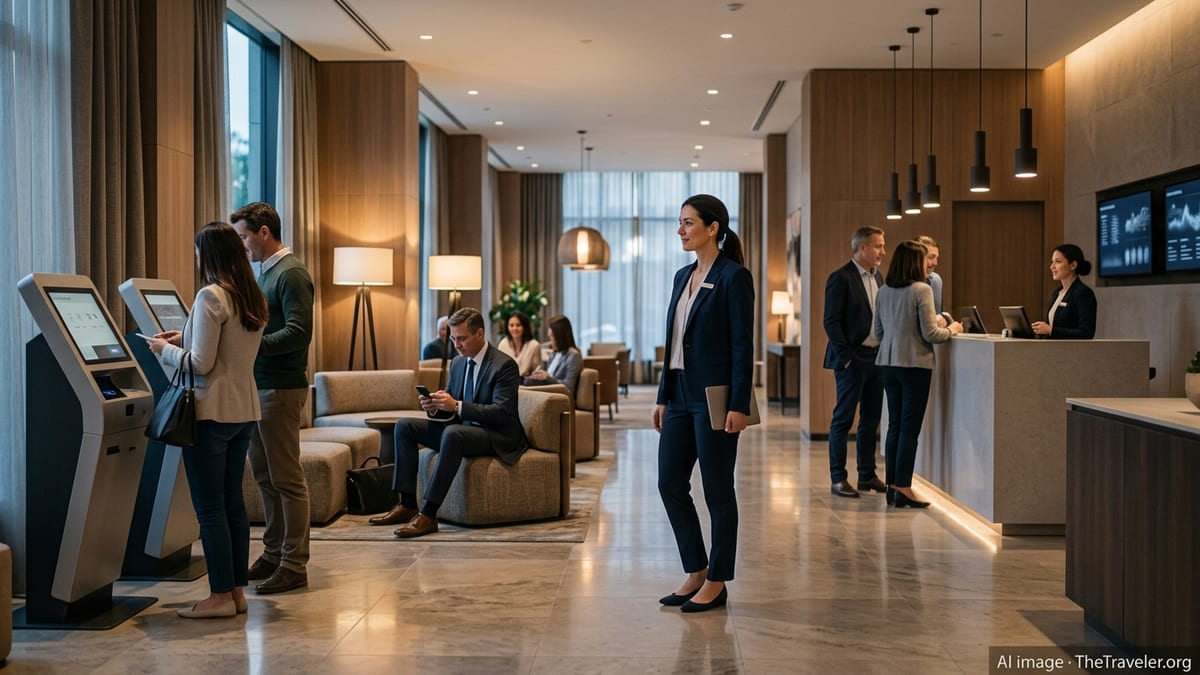
Observers say the Georgetown hotel will likely deploy citizenM’s latest contactless and mobile-first tools, including app-based check-in, digital room keys and quick kiosk arrivals in the lobby. These features are framed as both a convenience and a staffing-efficiency measure, enabling a smaller on-site team to focus on public-area service and food and beverage operations.
The technology layer extends beyond guest rooms. Industry coverage notes that citizenM properties typically offer strong Wi-Fi, plentiful charging points and flexible seating in their “living room” lobbies, which double as informal co-working zones by day and social spaces at night. In Georgetown, where the local economy blends start-ups, students and professional services, the brand is expected to lean into this hybrid-work positioning.
Design-led interiors and local art anchored in Georgetown’s character
The new hotel continues citizenM’s long-running collaboration with Dutch studio Concrete, according to development announcements. The design language seen in other locations, built around bold colors, curated art and residential-style furnishings, is set to be adapted for Georgetown with references to the neighborhood’s maritime, academic and industrial heritage.
Project summaries indicate that the lobby level will be organized around a central bar and lounge, framed by bookshelves, artwork and a mix of sofas, communal tables and smaller nooks. Rather than a traditional front desk, check-in kiosks are expected to line one side of the space, reinforcing the brand’s preference for blending arrival, work and social functions into a single “living room” concept.
Rooms are anticipated to use a restrained, graphic palette that contrasts with the brick and stone textures of the historic surroundings. Large-scale photography, digital art and lighting scenes controlled via tablet or app are expected to give guests a customizable environment, allowing them to shift from bright, work-oriented settings to more relaxed, cinema-style modes at night.
Green financing supports an energy-efficient urban hotel
Beyond design and technology, the Georgetown project has been highlighted as a significant example of sustainability-focused hotel financing in the district. DC Green Bank and Nuveen Green Capital announced earlier this year that they had closed approximately 42 million dollars in Commercial Property Assessed Clean Energy (C-PACE) funding to support the conversion of the warehouse into an energy-efficient citizenM hotel.
Details released by the financing partners indicate that the building will incorporate high-efficiency heating and cooling systems, upgraded insulation, modern water heaters and efficient lighting. Modeling suggests the measures could reduce electricity use by roughly 245,000 kilowatt hours and cut water consumption by more than 600,000 gallons annually, resulting in estimated utility savings in the tens of thousands of dollars each year.
Urban-planning commentators note that the combination of adaptive reuse and green financing aligns with broader district goals around decarbonizing older building stock along the waterfront. As Georgetown grapples with both preservation priorities and climate resilience concerns, the citizenM project is being watched as a potential template for how future hospitality developments might blend historic context with high-performance building systems.
For travelers, the net effect is likely to be less visible than the lobby art or in-room technology, but the sustainability upgrades form a core part of the hotel’s positioning as a contemporary, responsible choice in one of Washington’s most storied neighborhoods.