


More news on this day
Travelers heading to Israel this summer are being urged to brace for possible delays at Ben Gurion Airport, where a large contingent of United States military aircraft is occupying many of the facility’s parking stands just as peak vacation traffic builds.
Get the latest news straight to your inbox!
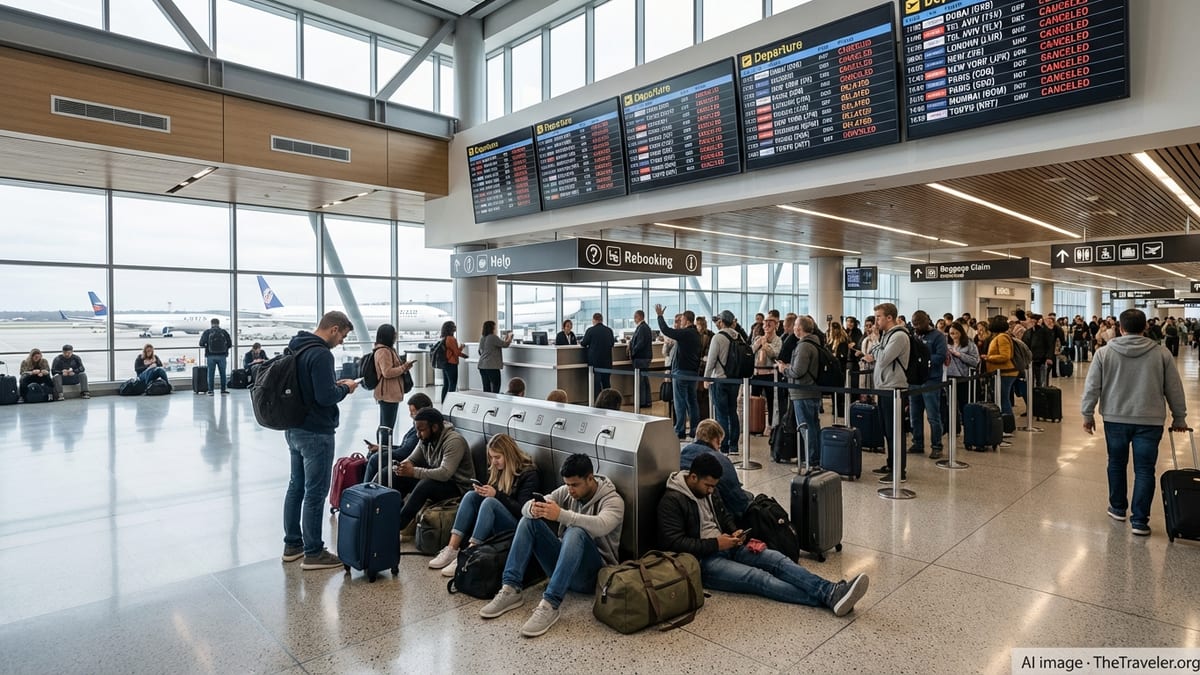
US Tankers Tighten Space at Israel’s Main Gateway
According to published coverage and online aviation forums, dozens of United States aerial refueling and support aircraft have been based at Ben Gurion Airport for months in connection with regional tensions and the recent conflict with Iran. The aircraft, including large KC-46A and KC-135 tankers, are reported to be using stands and taxi areas that would normally be available to commercial airlines.
Reports circulating in Israeli media and international defense commentary indicate that as many as 70 to 75 US military aircraft have at times been parked at Ben Gurion, taking up well over half of the airport’s roughly 100 parking positions. This footprint, which fluctuates depending on operational needs, has effectively turned parts of the civilian gateway into a forward operating hub for allied air forces.
Ben Gurion, located near Tel Aviv, is Israel’s primary international airport and a critical junction for both inbound tourism and outbound leisure travel. Airport data over the past year shows a swift rebound in passenger volumes following wartime disruptions, with recent summer and holiday months seeing peak days of around 88,000 passengers. With that civilian demand returning, the squeeze on airfield capacity created by the military presence is drawing closer scrutiny.
Publicly available traffic reports from the Israel Airports Authority show that international passenger and aircraft movements have climbed sharply compared with 2024, particularly in late summer and early autumn 2025. The result is a busier ramp and runway environment at the same time that part of the infrastructure is being devoted to non-commercial operations.
Airport Authority Warns of Potential Flight Reductions
Local reporting and translated commentary from Israeli outlets indicate that the Israel Airports Authority has cautioned airlines about possible operational constraints as the busiest months of the 2026 vacation season approach. With ramp space already tight, the authority has reportedly modeled a scenario in which around 10 commercial flights a day may have to be cut from the schedule if additional room is not freed.
Some coverage has cited internal estimates that tens of thousands of tickets could be at theoretical risk over the course of the summer if airlines and regulators are unable to reconcile peak leisure demand with restricted parking and turnaround options. Discussions highlighted in domestic media suggest that initial proposals to move a significant share of the US refueling fleet to Israeli military bases met resistance from Washington, prompting a partial compromise in which a core group of tankers would remain at Ben Gurion while others relocated.
Recent public comments by the Airports Authority leadership, relayed in Israeli economic and travel press, have stressed that there is no blanket plan to cancel flights and that the aim is to preserve the existing schedule as much as possible. At the same time, the authority has acknowledged that runway and apron congestion will be more acute than in previous summers, and that operational buffers for delays are shrinking.
For airlines, especially foreign carriers that rely on tight turnarounds at Ben Gurion, reduced flexibility on parking and pushback windows may force timetable adjustments at short notice. While some Israeli carriers have greater familiarity with the local operating environment and contingency procedures, they would also be exposed to bottlenecks if the ramp becomes saturated during peak waves of arrivals and departures.
What Travelers Can Expect During Peak Season
For passengers, the most visible impact of the US military presence is likely to be longer aircraft waits before takeoff or after landing, rather than mass cancellations. Aviation analysts note that when an airport’s stands and taxiways operate close to capacity, minor disruptions can cascade into wider delays as aircraft queue for a limited number of gates and pushback slots.
Ben Gurion already manages intensive security screening and a concentrated bank of overnight and early-morning flights that feed transatlantic and European connections. Travel commentary from recent months describes crowded check-in halls and pressure on baggage handling during busy periods, even without large-scale military activity. Layering airfield congestion on top of these factors may compound stress points for both staff and travelers.
Based on patterns seen at other capacity-constrained hubs, passengers flying at peak times are most likely to encounter schedule slippage. Early morning departures, late-night banked arrivals, and heavily used weekend slots are particularly vulnerable when air traffic control needs to meter departures to prevent gridlock on the ground. In such conditions, airlines often build in extra block time, which can make delays less visible on paper but still lengthen the overall journey.
Leisure travelers connecting from North America or Europe may also face tighter margins for onward flights if inbound services to Tel Aviv run late. Industry experience suggests that even modest average delays can translate into missed connections and disrupted itineraries over the course of a crowded season, especially when rebooking options are limited by high load factors.
Long-Term Capacity Questions Resurface
The strain created by the US tanker fleet has revived a long-running debate over Israel’s airport capacity and the country’s reliance on Ben Gurion as a single primary gateway. Aviation planning documents and expert commentary have for years highlighted the airport’s limited room for expansion and the challenges of accommodating sustained growth in passenger traffic.
In recent years, Israeli policymakers have examined options such as expanding terminal and runway capacity at Ben Gurion, converting or dual-using military airbases for civilian traffic, and developing new regional gateways. Nevatim Airbase in the Negev and Ramat David in the north have been mentioned in public discussions as potential mixed-use sites that could ease pressure on the main hub.
The current situation underscores how quickly Ben Gurion’s margins can be eroded by a major geopolitical event or military operation. Previous crises, including missile attacks and periods of intense regional conflict, have briefly shut the airport or prompted airlines to suspend service, sharply demonstrating the vulnerability of a single-hub system serving an entire country’s international demand.
With US military aircraft expected to maintain at least a partial presence at Ben Gurion for the foreseeable future, planners and tourism stakeholders are watching closely to see whether this summer’s operations can be managed without significant disruption. The outcome may influence future investment decisions and the pace at which additional capacity, whether civilian or dual-use, is brought online.
Advice for Travelers Planning Summer Trips
Travel industry reports and airline advisories recommend that passengers headed to Israel in the coming months build extra flexibility into their plans. For long-haul travelers, selecting itineraries with slightly longer connection windows and avoiding the most congested departure times can reduce the risk of missed onward flights if delays occur at Ben Gurion.
Passengers are also being encouraged by consumer groups and travel agents to monitor their bookings closely in the days leading up to departure, as airlines may proactively retime flights to smooth peak-hour pressure at the airport. In previous seasons of heightened congestion at other international hubs, carriers have sometimes swapped aircraft types, adjusted departure banks, or consolidated lightly booked services to preserve overall network stability.
For those starting their journey in Israel, arriving at the airport earlier than usual, particularly for overnight and early-morning departures, can help offset potential check-in or security queues that coincide with constrained ramp operations. While such precautions cannot eliminate the risk of delay, they can make it easier to absorb schedule changes that may arise from the unusual mix of civilian and military activity on the ground.
As the peak vacation season approaches, the balance between strategic military needs and the demands of a resurgent tourism market at Ben Gurion will remain under close observation. Travelers, airlines, and the wider tourism sector will be watching to see whether the airport can maintain smooth operations while sharing limited space with one of the largest forward-based US tanker contingents in recent years.