


More news on this day
A wave of operational disruptions at Cleveland Hopkins International Airport has triggered the cancellation of at least 13 flights operated by Frontier Airlines, United Airlines, and Delta Air Lines, creating ripple effects that stretched well beyond northeast Ohio and into already strained summer travel schedules across the United States.
Get the latest news straight to your inbox!
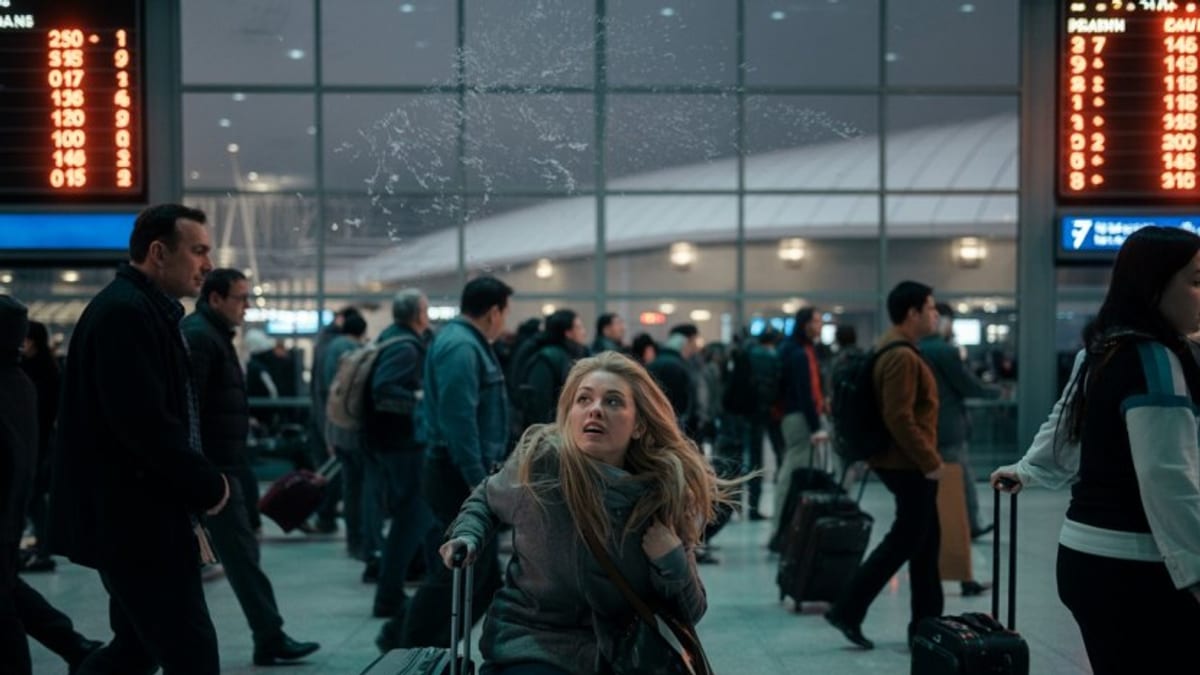
Operational Strains Converge at a Key Midwest Hub
Cleveland Hopkins International Airport serves as a critical mid-continent link for a mix of low-cost and legacy carriers, connecting major hubs such as Atlanta, Denver, Miami, and New York. Recent schedules show Frontier, United, and Delta all maintaining regular services into Cleveland, reflecting the airport’s role as both an origin-and-destination market and a connecting point for domestic travelers.
Published airport and airline data indicate that a series of cancellations and heavily delayed turnarounds involving these three carriers converged over a short window, effectively removing at least 13 scheduled flights from the board. Even when overall delay metrics at Cleveland remained moderate, scrubbed departures and arrivals on specific routes compounded staffing and aircraft-rotation pressures.
Because Cleveland’s daily schedule relies on tight timing between inbound and outbound services, gaps created by a cluster of cancellations at one carrier can affect the availability of crews and aircraft for others. That interdependence, according to publicly available flight-tracking records and airport planning documents, has amplified the impact of each individual cancellation.
While general delay figures around Cleveland have remained manageable, the spate of cancellations on selected Frontier, United, and Delta services has underscored how a localized disruption at a single field can still prompt a sharp, if temporary, shock across broader domestic networks.
Frontier Disruptions Underscore Ultra-Low-Cost Fragility
Frontier Airlines has established a sizable presence at Cleveland Hopkins in recent years, adding routes to major leisure and regional destinations and marketing the airport as a key gateway for its point-to-point network. Publicly available schedules and promotional materials highlight Frontier connections from Cleveland to cities including Atlanta, Miami, and Myrtle Beach, with many departures timed to feed peak leisure demand.
However, ultra-low-cost carriers such as Frontier typically operate with minimal spare aircraft and leaner crew reserves. Industry analyses and passenger accounts frequently note that when one aircraft falls out of rotation because of a technical issue, weather disruption, or crew-time limitation, the airline has fewer options to substitute equipment or reroute travelers the same day. Recent real-time tracking for several Frontier services into Cleveland shows tightly stacked operations, leaving little margin when a single flight fails to operate as planned.
When a series of Frontier departures and arrivals at Cleveland is canceled or significantly delayed, there is often no immediate backfill opportunity, particularly on less-frequent routes. That dynamic increases the likelihood that travelers will need to rebook on other carriers or postpone trips entirely, intensifying the pressure on United and Delta services out of the same airport and into the same regional markets.
In the most recent disruption cycle, the loss of multiple Frontier segments at Cleveland effectively removed capacity that would normally move hundreds of passengers in and out of the region, forcing many to seek last-minute alternatives and driving up loads and fares on competitors’ remaining flights.
United and Delta Feel the Knock-On Effect
United Airlines and Delta Air Lines both maintain steady schedules at Cleveland Hopkins, linking the city to their larger hub systems as well as to key business and leisure markets. Publicly available timetables show United connecting Cleveland to airports such as Newark and Denver, while Delta serves trunk routes including Atlanta and New York-area fields.
When Frontier cancellations at Cleveland began stacking up, United and Delta flights quickly absorbed additional demand from displaced passengers. Flight-tracking histories and schedule data suggest that even flights that operated on time were pressed closer to capacity, reducing the cushion typically used to reaccommodate travelers from earlier irregular operations.
As some United and Delta departures themselves were canceled at Cleveland, this further limited the ability to redistribute passengers within their respective networks. The result was a feedback loop, in which stranded travelers from one airline increasingly competed for a shrinking pool of available seats on others. This pattern is consistent with recent summer seasons, where peak-period operations leave little slack in aircraft and crew utilization.
The strain in Cleveland coincided with broader network challenges across the country, including congested hub operations and staffing constraints affecting ground handling and maintenance. In that context, each additional cancellation originating at Hopkins increased the likelihood that connecting passengers would miss subsequent flights at downline hubs, spreading the disruption into other regions.
Nationwide Repercussions for Peak-Season Travelers
Although the most visible impact of the Cleveland disruptions was felt locally, the knock-on effects extended to airports across the United States as misconnected travelers attempted to rethread their itineraries. Real-time booking and availability data from online travel platforms show that last-minute seats on alternative routes from Cleveland to major hubs tightened quickly, with some itineraries adding many hours and additional stops compared with original plans.
Travelers connecting through Cleveland onto transcontinental or Florida-bound services were particularly exposed, as cancellations on one leg often meant missing a final flight late in the day with limited backup options. Industry observers note that once evening banks are disrupted, recovery can take multiple schedule cycles, especially for carriers with dense hub operations.
The resulting pattern has been familiar to many summer travelers in recent years: rolling delays, rebooked connections through secondary hubs, overnight stays in unplanned cities, and elevated expenses for last-minute tickets on remaining flights. In some cases, the operational shock at Cleveland compounded ongoing weather or staffing disruptions at other busy airports, intensifying the overall sense of instability in the domestic system.
Because Frontier, United, and Delta all play distinct roles in the U.S. aviation landscape, their simultaneous challenges at one airport also offered a cross-section of how different business models respond under stress. Ultra-low-cost carriers with fewer redundancies, hub-and-spoke giants with complex connection banks, and hybrid operators seeking to balance cost against resilience each faced their own constraints as they attempted to recover from the Cleveland disruptions.
What Passengers Can Expect in the Days Ahead
As Frontier, United, and Delta work through residual schedule adjustments, publicly available operations dashboards suggest that Cleveland Hopkins has begun to stabilize, with most departures and arrivals operating within typical delay ranges. Even so, rebookings from the earlier cancellations are expected to keep some flights near or at capacity in the coming days, particularly on popular business and leisure routes.
Industry guidance for travelers caught in similar disruptions emphasizes early contact with airlines via apps or digital channels when flights are at risk, as well as monitoring alternate routings through nearby airports where capacity may be more flexible. At congested mid-continent nodes like Cleveland, passengers with tight connections or essential arrival times are often advised to consider earlier flight options where possible, building in additional buffer against cascading delays.
Consumer advocates point to the Cleveland episode as another reminder of how quickly irregular operations at a single airport can spill into the wider network. With airlines operating close to capacity during peak seasons, even a cluster of cancellations involving a dozen or so flights can translate into missed connections and extended travel times for travelers with no direct link to the originating disruption.
For now, data from flight-tracking services and airline schedule updates indicate that Cleveland Hopkins is moving back toward routine operations. Yet the recent wave of cancellations involving Frontier, United, and Delta has reinforced broader concerns among travelers and industry watchers about the fragility of the U.S. air travel system when multiple carriers encounter operational stress at the same time and place.