


More news on this day
A viral video circulating on social media shows a Dallas Area Rapid Transit light rail train colliding with a box truck near the Pearl/Arts District Station in downtown Dallas, sending the vehicle onto its side, scattering debris across the tracks and temporarily halting rail service through one of the city’s key transit corridors.
Get the latest news straight to your inbox!
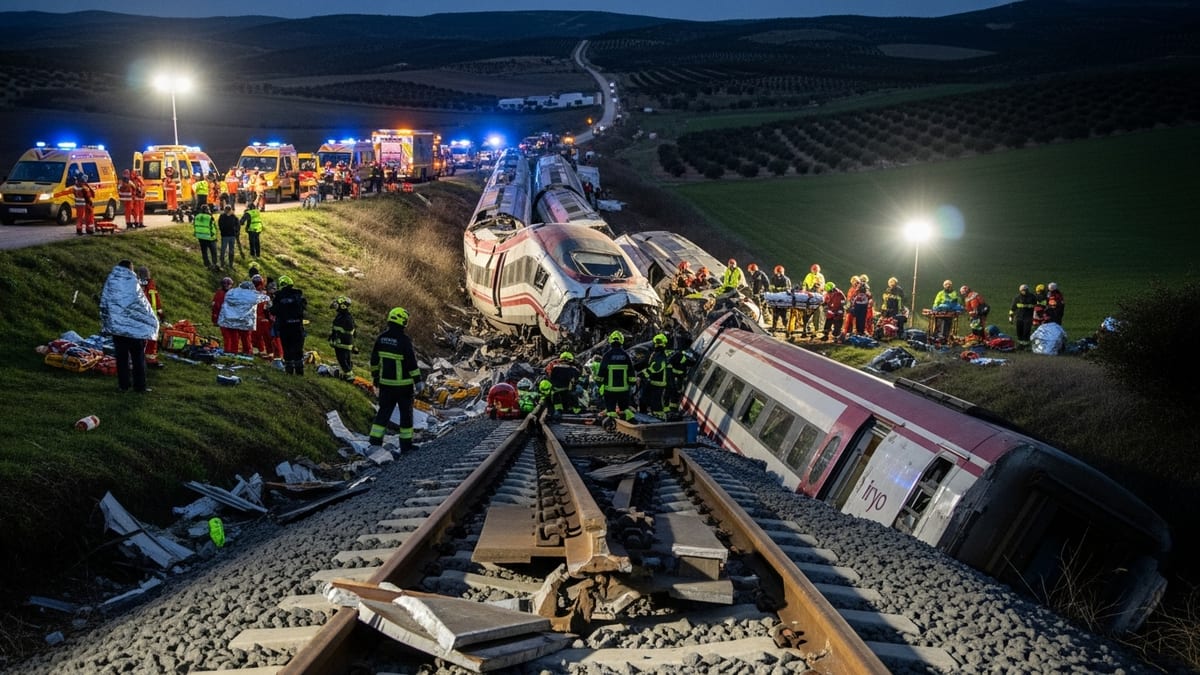
Collision near Pearl/Arts District station caught on camera
The incident occurred near the Pearl/Arts District Station on the eastern edge of downtown, where Dallas Area Rapid Transit’s light rail lines run in a trench beside busy surface streets and office towers. The video, recorded by a bystander from an elevated vantage point, shows a DART train traveling through the corridor as a box truck appears in its path at a grade crossing.
In the footage, the train strikes the truck along its side, pushing it several meters down the tracks before the vehicle flips onto its flank and comes to rest near the concrete retaining wall. Dust and debris rise from the impact area, while the train remains upright on the rails. Additional clips and still images shared online show the truck heavily damaged and rail traffic in the area at a standstill as emergency crews and maintenance personnel arrive.
Initial local coverage describes the collision as occurring around midday, a period when trains typically run at frequent intervals and streets in the surrounding Arts District and City Center neighborhoods are busy with office workers and visitors. Early reports indicate that the truck driver sustained injuries and that rail passengers experienced a forceful jolt but that the train did not derail. The precise number of injuries and their severity has varied across early accounts and is still being clarified.
Publicly available information suggests that the collision involved a single light rail consist and one truck, with no secondary pileup on the roadway. The location is served by multiple DART lines, so delays at this point in the network can ripple across the wider system.
Service disruptions and detours ripple through downtown network
Following the collision, images from the scene show DART trains stopped on either side of the affected segment, with operators unable to move past the overturned truck and damaged crossing. Passengers described via social media being asked to disembark at upstream stations and transfer to alternate routes, including buses and ride-hailing services, to complete their trips into or out of downtown.
According to published coverage, DART temporarily suspended rail operations through the immediate collision zone while responders assessed the condition of the tracks, power systems and trainset. In similar past incidents on the network, the agency has typically established single-tracking operations around a blocked section once debris is cleared and inspectors confirm that rails and overhead lines are safe for limited service. Early accounts from this event suggest that such workarounds were considered, though the presence of a large overturned vehicle made an immediate bypass difficult.
The Pearl/Arts District Station acts as a critical node for passengers transferring between downtown destinations, the Baylor University Medical Center area, and northern suburbs. Any blockage here can affect not only commuters heading to offices and schools but also travelers using light rail as a connector to intercity services and the region’s airports. Riders reported delays and crowded platforms as trains were held back, while motorists faced lane closures near the trench as tow trucks and heavy equipment moved into position.
Rail service on similar corridors is often restored in stages, beginning with limited operations at reduced speeds while damage inspections continue. Although full timelines were not immediately clear from early reports, the nature of the crash and the overturning of the truck suggest that cleanup, structural checks and possible signal repairs could extend well beyond the initial emergency response window.
Safety record and prior DART rail incidents under new scrutiny
The video has quickly renewed public discussion of rail safety in Dallas, particularly at points where road traffic and light rail lines intersect at grade. While DART’s light rail network has operated for decades and carries thousands of riders daily, collisions between trains and road vehicles have periodically occurred elsewhere along the system, including incidents in North Dallas and in residential areas where lines cross busy arterials.
Broader background information on the system notes that previous events have ranged from trains striking cars at crossings to more complex operational accidents, though serious injuries have been relatively infrequent when compared with overall passenger volumes. Even so, each new widely viewed clip tends to amplify concerns among residents and visitors who may be unfamiliar with the way trains interact with surface traffic in the city’s core.
Transit safety observers point out that modern light rail systems rely on a combination of engineering controls, operator training and public awareness. Crossing gates, warning lights and bells, track fencing and pavement markings are designed to keep motorists and pedestrians out of the path of moving trains. At the same time, operators are trained to monitor their surroundings and react to unexpected obstacles, while public education campaigns remind drivers to treat train tracks with the same caution as major highways.
The downtown Dallas rail corridor presents particular challenges because trains operate close to high-density streets, where turning vehicles, delivery trucks and ride-share pickups are common. The collision near Pearl/Arts District Station has prompted renewed calls in local commentary for examining whether current crossing protections, signage and traffic patterns are sufficient for the volume of activity in the area.
Questions over grade crossings, driver behavior and infrastructure
As investigators review video evidence and available data from the train, attention is likely to focus on the sequence of events leading up to the crash. Key questions include whether crossing signals and gates were functioning as intended, how fast the train and truck were traveling, and whether visibility conditions at street level played a role.
Similar incidents in other cities have sometimes been traced to motorists attempting to beat descending gates, misjudging the distance or speed of an oncoming train, or becoming confused by unfamiliar traffic layouts around transit corridors. In the Dallas case, early images suggest that the truck was in the active path of the train at the moment of impact, but they do not on their own clarify why the vehicle was in that position or how long it had been there.
Urban transportation planners often note that grade-separated rail alignments, such as tunnels or elevated structures, dramatically reduce the risk of train and vehicle collisions but are expensive to build and can be disruptive to construct in built-up areas. Downtown Dallas features a mix of partially sunken and at-grade segments, reflecting trade-offs between cost, urban design and safety made over decades of system expansion.
The latest collision has revived discussion about whether additional barriers, redesigned intersections or technology such as enhanced camera monitoring and automated enforcement could further reduce conflicts between trains and trucks in the busiest parts of the network. For residents, employees and visitors who rely on DART to move around the city, the central concern remains ensuring that high-frequency rail service coexists safely with intense street-level activity.
What travelers should know when using DART after the crash
For travelers planning to use DART in the days following the collision, publicly available updates advise allowing extra time when moving through downtown, particularly near the Pearl/Arts District Station. Even after tracks are cleared, rail operators may run trains at reduced speeds through the affected corridor while inspections continue, which can lengthen journey times compared with typical schedules.
Visitors staying in central Dallas hotels or attending events in the Arts District often rely on light rail to connect to regional rail and bus services. During periods of disruption, staff at major stations may direct passengers to temporary bus bridges or alternate lines that bypass blocked sections. Travelers connecting to intercity trains or flights may wish to build in additional buffers when planning departure times, especially during peak commuting hours.
Transit safety agencies and advocacy groups consistently emphasize basic guidance for staying safe around light rail. Motorists are urged to obey all crossing gates and signals, avoid stopping on tracks at congested intersections, and remember that trains require significantly more distance to stop than road vehicles. Pedestrians and cyclists are encouraged to cross only at designated points, stay clear of the trackway when warning lights activate and avoid distractions such as mobile phones or headphones near train movements.
While the video of the DART collision has understandably drawn intense attention, rail travel in Dallas continues to represent an important and widely used option for navigating the region. As investigators work to clarify the causes of the crash and agencies review any recommended changes, riders and drivers alike play a role in reducing risks at the shared boundaries between trains and city streets.