


More news on this day
Persistent rain is hampering efforts to contain and remove hazardous chemicals released after a freight train derailed near the United States border, complicating an already challenging cleanup and heightening concern over potential cross-border environmental impacts.
Get the latest news straight to your inbox!
Derailment Near Border Triggers Hazardous Spill
According to published coverage from regional news outlets and government briefings, a freight train hauling mixed cargo, including tank cars of industrial chemicals, derailed near a border community close to the United States. Several tank cars ruptured, resulting in a hazardous chemical spill that prompted emergency responses on both sides of the frontier.
Initial assessments described a chaotic scene of twisted railcars and visible contamination in ditches and low-lying ground near the tracks. Publicly available information indicates that at least one of the damaged tankers was carrying a corrosive liquid commonly used in manufacturing, requiring specialized handling and protective equipment for cleanup crews.
Cross-border transport of hazardous materials by rail is routine in the region, and the derailment has drawn renewed attention to the safety of trains passing through small towns and environmentally sensitive corridors that straddle the boundary between the two countries.
Rail traffic through the area has been temporarily suspended while investigators document the damage and environmental teams work to stabilize the site. Nearby roadways have faced intermittent closures as heavy machinery moves in and out, adding disruption for local residents and businesses.
Rain Complicates Containment and Soil Cleanup
Weather has quickly emerged as one of the most serious challenges. Reports indicate that sustained rainfall in the hours and days after the derailment has repeatedly washed across the wreck site, interfering with attempts to corral the chemicals into controlled zones and prevent wider spread.
Environmental response plans typically rely on booms, absorbent barriers and earthen berms to keep hazardous liquids from migrating. Publicly available emergency management updates note that intense or prolonged rain can weaken these defenses by saturating soils and pushing contaminated runoff toward drainage ditches, streams and culverts.
Specialized vacuum trucks and portable storage tanks have been deployed to remove pooled liquid, but rainfall has forced crews to repeat tasks as new runoff accumulates. In some low-lying sections near the tracks, muddy conditions have limited access for heavy equipment, slowing excavation of contaminated soil and delaying railbed repairs.
Incident documentation from prior rail spills in North America highlights that wet conditions tend to extend cleanup timelines, since saturated earth often must be excavated more deeply and tested repeatedly to ensure residual contamination does not leach into groundwater once the site is restored.
Waterways and Cross-Border Ecosystems Under Scrutiny
The derailment occurred in a corridor where creeks and drainage channels cross back and forth across the international boundary, feeding into larger river systems that serve communities in both countries. Hydrology maps and environmental assessments previously prepared for the region describe a network of wetlands, agricultural land and riparian habitat that is sensitive to chemical exposure.
According to publicly accessible environmental briefings, runoff pathways are a primary concern when hazardous liquids are spilled near waterways. Rain can accelerate movement of contaminants from the rail right-of-way into nearby streams, where chemicals may dilute but still pose risks to aquatic life, livestock and downstream drinking water intakes.
Regional monitoring programs are now focusing on surface water sampling at multiple points along cross-border rivers and tributaries. Historical experience from other major rail incidents, including highly publicized derailments in the Great Lakes and Appalachian regions, shows that chemical residues can be carried long distances during heavy rain events, sometimes requiring extended monitoring campaigns.
Local residents on both sides of the border are following updates on water quality and potential advisories. Public information channels emphasize that conditions can evolve as storms move through, leading to changes in recommended precautions for private wells, irrigation and recreational use of nearby lakes and rivers.
Travel Disruptions and Rail Corridor Concerns
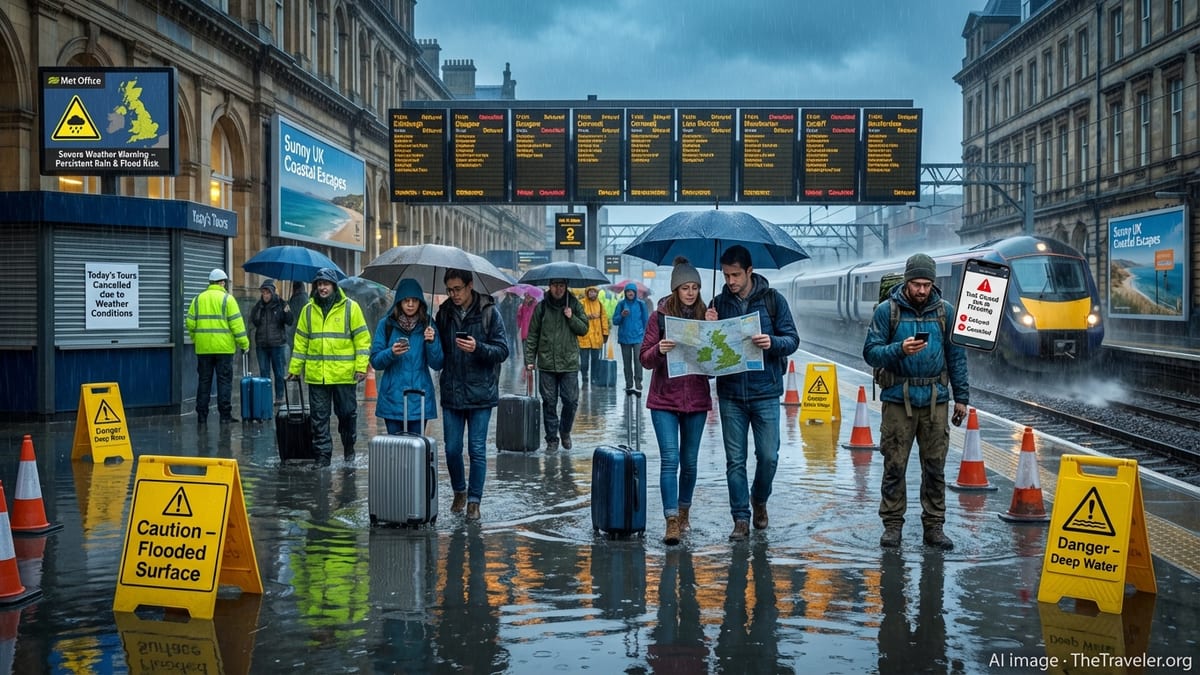
The derailment and subsequent cleanup have created substantial disruptions for travelers and freight movement in a corridor that serves as a key gateway between the United States and its neighbor. Rail schedules have been altered or suspended on affected lines, and some cross-border passenger services face delays or rerouting while crews continue remediation.
Published transportation bulletins show that detours for highway traffic near the site have lengthened travel times for commuters, trucking companies and cross-border tourism. Motorists are being directed to alternative crossings farther from the derailment, increasing congestion on regional roads and adding uncertainty for visitors unfamiliar with local detour routes.
Travel industry observers note that high-profile rail incidents tend to influence public perception of safety along certain corridors, especially when hazardous materials are involved. Border communities that promote rail-linked tourism, such as scenic train journeys or overnight services connecting major cities, may see short-term declines in bookings as travelers reassess plans.
Logistics providers are also reviewing routing options for hazardous cargoes, with some operators shifting shipments to different border crossings or schedules that avoid periods of forecast heavy rain. These adjustments can ripple through warehouse operations, port facilities and just-in-time supply chains that depend on predictable rail connections.
Ongoing Monitoring and Long-Term Recovery
Publicly available information from regulatory agencies and environmental programs suggests that the response has moved from the initial emergency phase toward a longer-term remediation strategy. This includes systematic excavation of contaminated soil, treatment or disposal of collected liquid waste and restoration of damaged track and surrounding land.
Plans typically call for extended monitoring of air, soil and water quality in the vicinity of a hazardous spill, particularly when rainfall has complicated the early stages of cleanup. Sampling results will help determine whether additional remediation is necessary and inform decisions on land use, such as when agricultural fields or recreation areas can be safely reopened.
Rail safety advocates and policymakers are likely to use the incident as another case study in the ongoing discussion over stricter standards for trains carrying hazardous materials near populated areas and international borders. Existing reports on rail safety reform debates in both countries reference concerns about infrastructure maintenance, tank car design and emergency planning for extreme weather.
For travelers and residents in the border region, the derailment serves as a reminder of how quickly transportation incidents involving hazardous cargoes can escalate into complex environmental challenges, particularly under adverse weather conditions. As rain continues to pass through the area, attention remains focused on whether containment systems hold and how fast the corridor can safely reopen to regular rail and road traffic.