


More news on this day
Early-season storms are beginning to dust Colorado’s high peaks, and transportation agencies are shifting into winter mode just as updated traction rules and renewed enforcement plans take effect for drivers crossing the state’s mountain passes.
Get the latest news straight to your inbox!
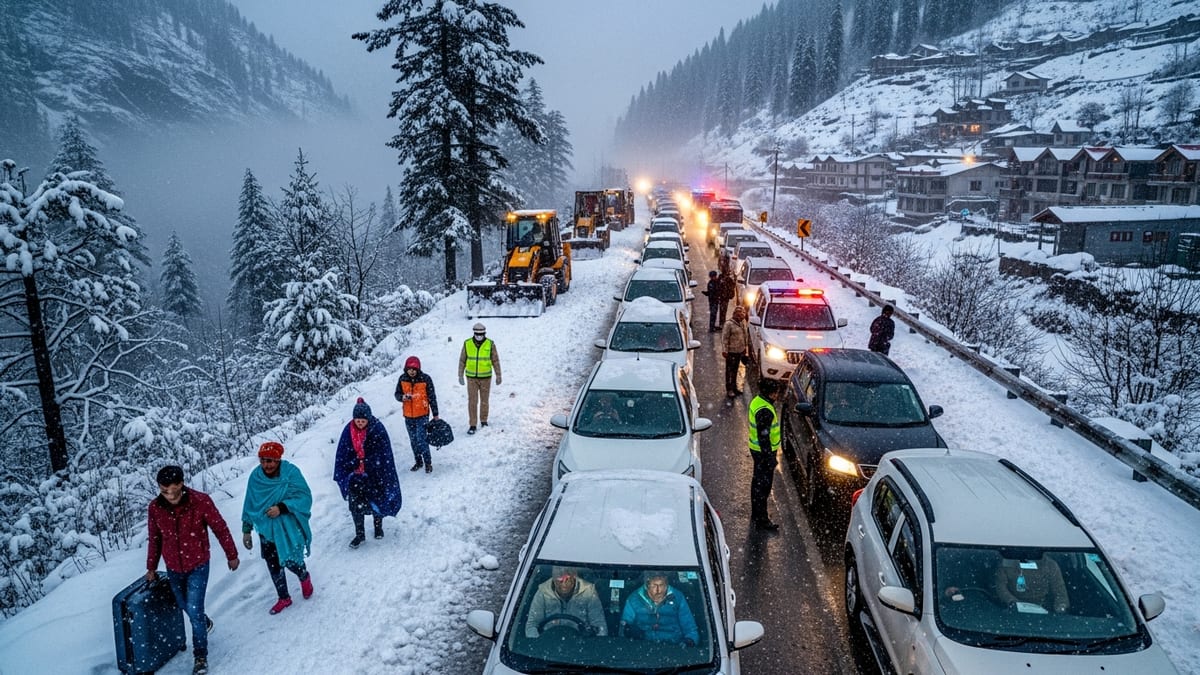
Snow Season Is Starting While Forecasts Highlight an Uncertain Winter
High-elevation webcams and recent outlooks show that Colorado’s snow season is edging closer, even as long-range forecasts point to a complicated winter picture for the Rocky Mountains. Early fall systems have already delivered light snow to terrain above treeline, signaling that higher passes along Interstate 70 and other mountain corridors could see slick conditions well before the main ski season.
Publicly available forecast guidance from the National Weather Service and related seasonal outlook products indicate that the southern Rockies, including much of Colorado, sit in an “equal chances” zone for above or below normal temperatures and precipitation for the 2026 to 2027 winter. That language reflects significant uncertainty rather than a guarantee of average snowfall, particularly when individual storm tracks can sharply influence mountain road conditions.
Separate discussion of a strong El Niño pattern by federal and academic researchers notes that similar events have sometimes brought periods of heavier snow to parts of the southern Rockies, even when statewide averages do not stand out. The combination of marginally warmer seasonal odds with episodes of intense moisture means drivers could see extended stretches of dry pavement punctuated by rapid, high-impact storms over the mountain passes.
Local forecasts from the National Weather Service office in Boulder and regional forecasters continue to stress that early and late season storms, especially in October and April, remain among the most disruptive for drivers because they can develop quickly, catch travelers with summer tires, and create chain law conditions on I-70 with little lead time.
Traction Law: What Changes for Drivers on I-70 This Season
Colorado’s traction and chain requirements have evolved over the past several years, and this season many of those changes are fully in effect for both local drivers and visitors heading toward ski resorts. Regulations contained in Colorado’s Code of Regulations governing the Passenger Vehicle Traction Law now apply to noncommercial vehicles under 16,001 pounds when conditions warrant on state highways, including the I-70 mountain corridor.
Recent guidance from the Colorado Department of Transportation emphasizes tire condition and type as the core of the updated Traction Law. To be compliant during a Passenger Vehicle Traction Law event, most passenger vehicles must either have all-wheel or four-wheel drive combined with adequate tread depth, or be equipped with winter, all-weather, or mud-and-snow rated tires that meet specified minimum tread standards. Drivers whose two-wheel-drive vehicles do not meet those thresholds are expected to carry chains or an approved alternative traction device so they can install them if road conditions deteriorate.
A separate Passenger Vehicle Chain Law remains a more severe step that can be activated during major storms, typically on steep or high-elevation segments such as those between Georgetown and the Eisenhower/Johnson Memorial Tunnels. When that level is declared, every vehicle on the affected stretch is required to use chains or an approved alternate traction device regardless of drive configuration, or delay travel until conditions improve and the restriction is lifted.
In addition to passenger requirements, Colorado’s long-standing commercial vehicle chain law requires larger trucks to carry sufficient chains or alternatives between September 1 and May 31 when operating on I-70 between Dotsero and Morrison and on other designated routes. Transportation department summaries and signage guidance released over the past two years underline that compliance for both freight and passenger traffic is central to keeping the corridor open when heavy snow arrives.
New Enforcement Emphasis and Penalties on the I-70 Mountain Corridor
As the 2026 to 2027 winter approaches, publicly available materials from the Colorado State Patrol and transportation planners highlight stepped-up enforcement along I-70, prompted by recurring multi-vehicle crashes and long closures during past storms. A recent announcement from the Colorado State Patrol describes weekly proactive chain checks at highway ports of entry, including Dumont, Loma, and Cortez, throughout the chain law season, giving troopers more opportunities to verify that both commercial trucks and smaller vehicles are properly equipped before they reach higher passes.
Summary documents on Colorado’s chain and traction regulations note that penalties for ignoring winter driving restrictions can be costly. For passenger vehicles, failing to comply with a traction or chain requirement typically brings a base fine that can exceed four hundred dollars. If a noncompliant vehicle becomes stuck and blocks a travel lane, the combined fine and surcharge can rise to roughly one thousand dollars, not including towing costs or potential liability associated with any crash or closure that results.
Policy materials prepared for state legislators and regional planning organizations in 2026 point to the economic impact of even short closures on the I-70 mountain corridor, where tourism, freight, and local travel all depend on a narrow stretch of highway. Analyses of congestion and weather-related incidents during winter storms were among the factors that prompted lawmakers to strengthen both the legal language around traction requirements and the funding for enforcement and traveler information tools.
The transportation department continues to rely on digital message boards, highway advisory radio, and its online traveler information platforms to announce when traction or chain laws are in effect. Drivers crossing the mountains are encouraged by publicly available guidance to check conditions before departure and to treat traction alerts as signals to adjust speed, increase following distance, or delay travel rather than as routine background notices.
How Colorado Drivers Can Prepare Before the First Major Storm
Public information from Colorado transportation and safety agencies stresses that vehicle preparation in October and early November remains one of the most effective ways to avoid trouble when the first heavy snow hits the high country. Winter driving FAQs from the Colorado Department of Transportation encourage motorists to verify that their tires carry appropriate winter or all-weather markings, measure tread depth against minimum requirements, and consider replacing worn tires before repeated freeze-thaw cycles create patchy ice on shaded curves and bridges.
Guidance also recommends that drivers carry traction devices that are compatible with their vehicle and tires if they plan to travel over I-70, US 550, US 285, or other mountain highways during the snow season. Many publicly available safety materials highlight that so-called alternative traction devices can in some cases meet chain requirements while being lighter and easier to install than traditional steel chains, though motorists are advised to confirm that any product they purchase is approved for use under Colorado’s chain law regulations.
Alongside tire and chain preparation, agencies advise assembling a basic winter kit that includes warm clothing, water, nonperishable food, a scraper and brush, and a small shovel, particularly for those driving to or from ski areas during active storms. Even short delays caused by minor crashes or stuck vehicles can become hazardous for occupants who are unprepared for dropping temperatures at elevations above 9,000 feet, where wind and blowing snow can quickly reduce visibility.
Travelers are further urged to budget extra time for trips during forecast snow events so they can drive more slowly without missing flights, lodging check-ins, or work shifts. Forecast and outlook products for the Denver and mountain zones note that heavy snow bursts, especially during upslope events, can temporarily drop visibility to near zero on passes, making patient, defensive driving as important as the right equipment.
Key Dates and Corridors to Watch as Mountain Snow Arrives
In Colorado, the practical start of winter driving season is defined less by the calendar and more by the combination of elevation and storm track. While snow can arrive on the highest peaks at any time from late September onward, the period from October through early December is when mountain roads such as I-70 over the Continental Divide, Berthoud Pass on US 40, and the approaches to Vail Pass tend to see their first extended stretches of packed snow and ice.
Chain carrying requirements for many commercial vehicles are already in effect on I-70 between Dotsero and Morrison from September 1 through May 31, according to state law. Passenger traction rules, while condition-dependent, can be activated at any point during that same window on designated highways if snow and ice begin to cover the roadway. State materials summarizing these policies underscore that the core I-70 mountain corridor from roughly Morrison to the Eisenhower Tunnel should be treated as a winter zone throughout the fall, winter, and spring months.
Looking ahead on the calendar, the National Weather Service’s planned release of a formal U.S. Winter Outlook for the 2026 to 2027 season in mid-October will provide additional context on likely temperature and precipitation patterns. However, climate and weather agencies caution that such seasonal products are not day-to-day forecasts and that individual storms can depart sharply from regional expectations, reinforcing the need for drivers to track short-term forecasts and road condition updates closely.
For travelers, the practical message is that mountain snow in Colorado often arrives before many Front Range residents have mounted winter tires or visitors have reviewed local traction laws. With new enforcement efforts, updated regulations, and a storm track shaped in part by El Niño, drivers who plan ahead in October are more likely to avoid fines, closures, and dangerous situations once sustained snow returns to the high country.