


More news on this day
Saudi Arabia has issued a new nationwide safety advisory and the United States mission in Riyadh has tightened its security guidance for Americans, after a series of missile and drone attacks on major airports left travelers facing heightened risks, sudden flight disruptions and stricter movement rules across the kingdom.
Get the latest news straight to your inbox!
New safety notices follow deadly strikes on airports
The latest warnings come in the wake of multiple attacks on King Khalid International Airport in Riyadh and a reported targeted strike on King Fahd International Airport in Dammam between October 8 and October 11, 2026. Regional media and international newswires describe damage to passenger facilities and aircraft, along with a growing death toll and dozens of injuries linked to missile and drone impacts on airport infrastructure.
Coverage from international outlets indicates that at least one recent attack struck the domestic terminal complex at King Khalid International Airport, killing a foreign national and injuring several others. Earlier incidents at Riyadh and other Saudi airports this month had already resulted in multiple deaths and wounded travelers and staff, underlining the vulnerability of civilian aviation hubs amid escalating hostilities involving Yemen’s Houthi movement.
Security reporting suggests that missile and drone launches against Saudi territory have become more frequent in recent weeks, with airports and associated fuel and logistics facilities cited as recurring targets. Analysts note that these strikes are occurring alongside broader regional tensions, contributing to what several governments now describe as an unpredictable security environment for civil aviation across the Gulf.
Saudi officials have stated publicly that investigations are underway into how recent barrages reached key facilities around the capital, but detailed findings on air defense performance have not yet been published. For travelers, the immediate impact is a combination of physical security risks in and around airports and the secondary disruption caused by sudden closures, diversions and lengthy screening procedures.
US travel advisory raised to ‘Reconsider travel’ level
Against this backdrop, the United States updated its country-level advice for Saudi Arabia on October 12, 2026, raising the State Department advisory to Level 3, which urges travelers to reconsider travel. Publicly available information cites risks from drone and missile targeting of American interests, armed conflict, terrorism, exit bans and the application of local laws, including those governing social media and public expression.
The advisory notes that US government employees in Saudi Arabia now require special authorization to use any airport in the country. This restriction reflects concerns about both direct attack risks and the potential for knock-on disruptions, such as abrupt airspace closures, changes to flight routings and extended delays during periods of elevated alert.
US government aviation guidance referenced in the advisory also points to an ongoing Federal Aviation Administration notice that warns operators about risks to civil aviation in the airspace covering Saudi Arabia and adjacent waters. While that notice predates the latest round of attacks, the recent incidents at Riyadh and Dammam are viewed as reinforcing the underlying concerns about overflight and airport operations in the region.
The combination of the Level 3 advisory, added limitations on official travel and repeated security alerts from the US mission signals a more cautious posture toward non-essential trips to the kingdom. Travelers planning routes through Saudi airports are being encouraged to review their itineraries carefully, maintain alternative routing options where possible and stay alert to changes announced on short notice.
US mission flags airport, border and movement risks
In a series of security alerts issued between October 7 and October 12, the US mission in Saudi Arabia has called attention to what it describes as heightened risks to airports and airspace nationwide. Public summaries of these alerts state that the mission is aware of additional attacks on King Khalid International Airport in Riyadh and a targeted attack on King Fahd International Airport in Dammam on October 11, and warn that further incidents are possible.
The alerts highlight the possibility of flight cancellations, diversions and airspace closures affecting departures and arrivals with little warning. Travelers are urged to monitor airline communications closely, confirm flight status directly with carriers and be prepared for extended time at airports or last-minute changes to routing, including diversions to other countries in the region if Saudi airspace is temporarily restricted.
Alongside aviation-specific concerns, the US mission reiterates long-standing guidance against travel near the border with Yemen, where cross-border fire and military operations have periodically affected civilian areas. The mission recommends that US citizens avoid non-essential overland journeys in the south and respond promptly to national alert messages issued by Saudi civil defense services.
Security notices also encourage American citizens to enroll in the State Department’s Smart Traveler Enrollment Program so they can receive targeted updates and be reachable in an emergency. Travelers already in the kingdom are advised to maintain a high level of situational awareness, vary routes where practical and have contingency plans for accommodation and onward travel if their flights are disrupted.
Saudi advisory stresses legal, behavioral and information controls
Saudi Arabia’s latest safety messaging, amplified through local media on October 13, emphasizes both physical safety and compliance with domestic laws that govern information sharing and photography in sensitive locations. According to reports referencing the Saudi Ministry of Interior, individuals have already faced detention for photographing impact sites at Riyadh’s airport, underscoring the authorities’ strict approach to the circulation of images from recent attacks.
Travelers are being reminded that filming or publishing images and details of missile or drone strikes, debris fields and security responses can carry legal consequences. The guidance builds on existing rules that prohibit photographing police, military and other security personnel, as well as certain government buildings and critical infrastructure. Visitors who are unaware of these regulations may find themselves at risk of questioning or arrest if they record or share restricted scenes on social media.
Saudi public advisories also stress basic protective measures in the event of aerial attacks, such as moving away from windows and glass doors, avoiding rooftops and open areas, and seeking shelter in interior rooms or reinforced structures. International travel advisories echo similar guidance, with several governments noting that debris from intercepted missiles and drones can pose a greater threat than the initial blast for those located outside secure terminal areas.
Information available from foreign ministries, including those of the United States, United Kingdom and Australia, highlights that restrictions now extend beyond Riyadh to other major hubs. One European government, for example, advises against all but essential travel to all airports in Saudi Arabia except Medina, following recent incidents. Travelers connecting through Jeddah, Dammam and other cities are being told to check advisories from both their home country and Saudi agencies before departure.
Practical implications for travelers planning Saudi routes
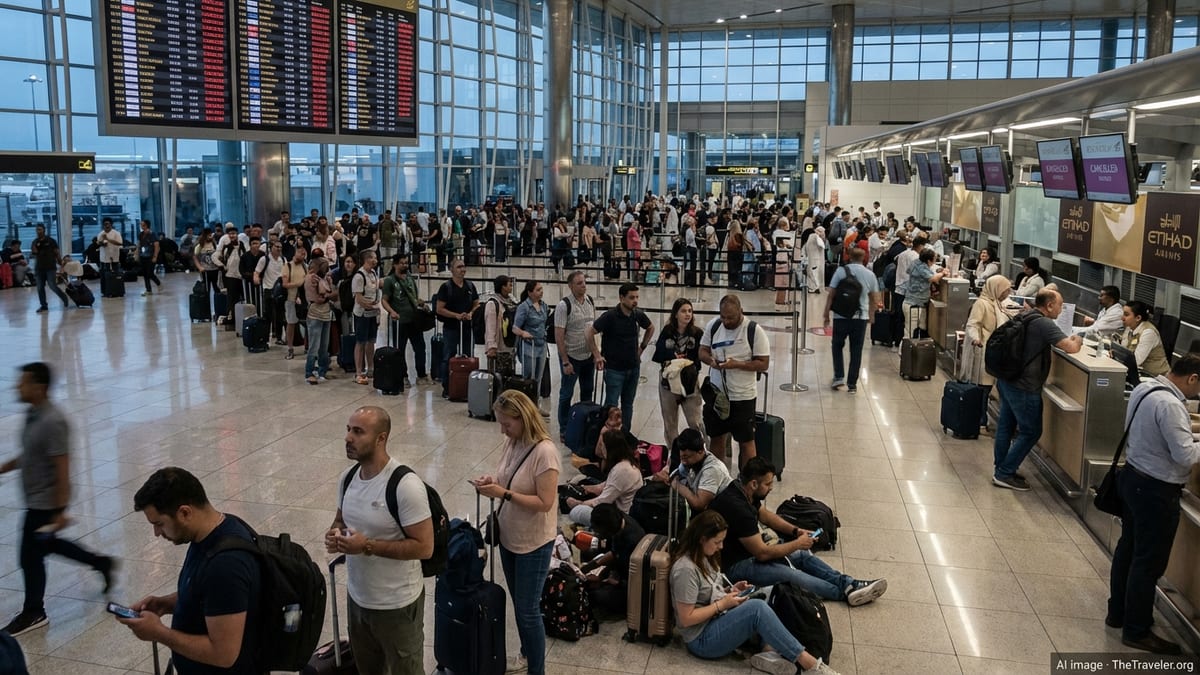
For airline passengers, the immediate concern is operational reliability at key Saudi gateways. Recent days have seen reports of delayed departures, diversions away from Riyadh and stepped-up screening measures at airports across the kingdom, occasionally resulting in long queues and missed connections. Carriers serving Saudi routes are reviewing schedules frequently, and some have adjusted timings or aircraft types in response to airspace management changes.
Travel industry observers note that hub connectivity through Riyadh, Jeddah and Dammam may remain volatile as security assessments evolve. Those with non-refundable tickets or tight same-day connections are particularly exposed to disruption. Where options exist, some travelers are re-routing itineraries through alternative Gulf hubs to reduce exposure to sudden closures, although these airports are not completely insulated from broader regional tensions.
Advisories from multiple governments stress the importance of comprehensive travel insurance that covers conflict-related disruption, including missed connections and forced itinerary changes outside the traveler’s control. Policies vary widely in how they treat war and terrorism risks, and travelers are being urged to verify coverage details before departure rather than assuming standard benefits will apply if an airport closes because of an attack.
For those who still choose to travel to or through Saudi Arabia, current guidance converges on a few core practices: review official travel advisories daily, maintain close contact with airlines, allow extra time at the airport, avoid photographing sensitive scenes and be prepared to change plans quickly. With both Saudi authorities and the US mission signaling that further attacks on airports remain a credible possibility, industry analysts expect elevated caution, tighter procedures and intermittent disruption to continue in the near term.