


More news on this day
The U.S. Department of State has updated its highest-level “Do Not Travel” advisories for two countries, underscoring ongoing conflict, terrorism risks, and limited consular support that continue to reshape how Americans plan international trips.
Get the latest news straight to your inbox!
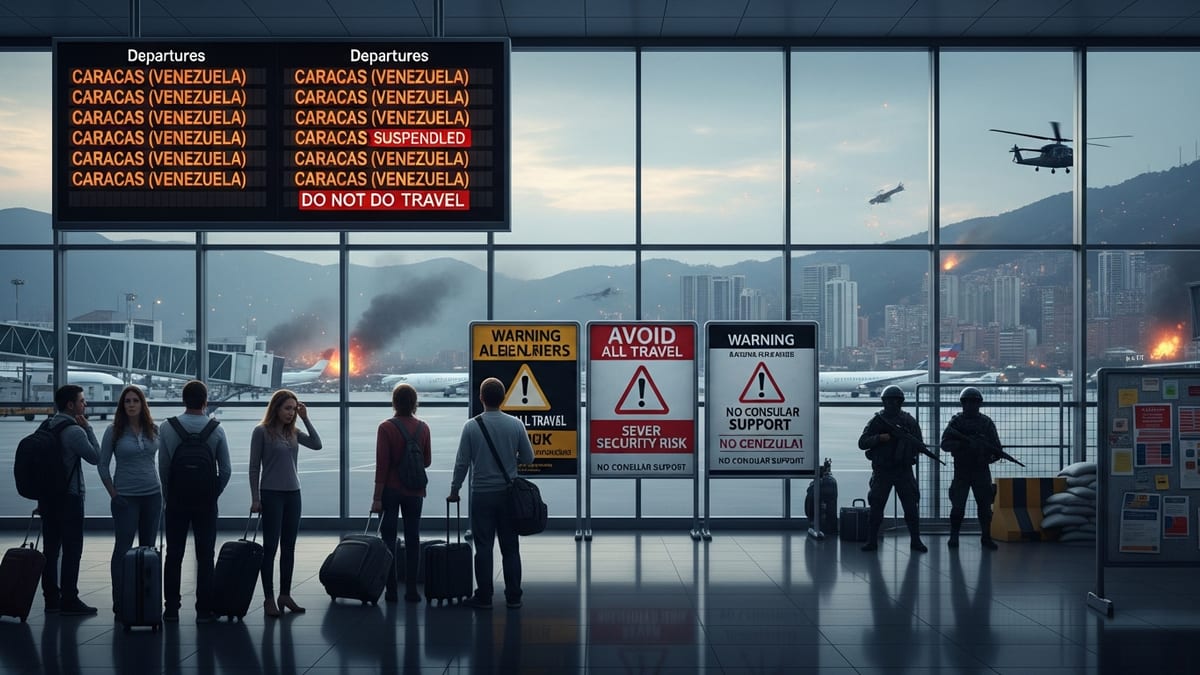
What the Latest Level 4 Updates Mean for Travelers
According to publicly available government information, the State Department reviews and reissues travel advisories whenever security or safety conditions change significantly. The system ranges from Level 1, advising normal precautions, to Level 4, the strongest warning that U.S. citizens should not travel to a destination and should leave as soon as it is safe if already there.
Recent updates have again placed two countries in the spotlight under Level 4 “Do Not Travel” guidance. The refreshed advisories highlight sustained risks that include armed conflict, terrorism, civil unrest, crime, kidnapping, and serious constraints on the ability of U.S. consular staff to assist citizens on the ground.
Travel-advisory tracking tools that monitor the State Department’s data feed show that these Level 4 notices are part of a broader pattern of frequent adjustments in 2026, as conflict zones shift and security landscapes evolve. The advisories are not static; each update reflects a snapshot of current conditions at the time of publication.
For travelers, a Level 4 designation has practical consequences beyond a strong warning. Travel-insurance policies may exclude coverage for trips to destinations under a “Do Not Travel” advisory, airlines may reduce or suspend service, and tour operators may cancel itineraries entirely when a country is moved into or reaffirmed at this highest risk category.
Yemen: Escalating Conflict and Severe Operational Limits
Yemen remains one of the most dangerous environments in the world for foreign visitors, and the latest State Department advisory continues to classify the entire country as Level 4, “Do Not Travel.” The most recent update, issued in October 2026, reiterates that U.S. government personnel are unable to provide routine or emergency services there due to security constraints and the absence of a fully functioning embassy presence.
Publicly available text of the advisory points to ongoing armed conflict, terrorism, civil unrest, health risks, and the presence of landmines and unexploded ordnance across parts of the country. In addition to attacks involving small arms, shelling, and improvised explosive devices, reports indicate that missiles and drones have been launched against both government and civilian targets, damaging infrastructure, ports, and airports.
Airspace and maritime restrictions further complicate any attempt to travel to or transit near Yemen. Federal aviation notices and special regulations limit U.S. civilian air operations in the Sana’a Flight Information Region because of the threat to aircraft. Separate maritime security advisories describe elevated piracy and conflict-related risks along Yemen’s coastline and key sea lanes in the Red Sea and Gulf of Aden.
For any U.S. citizens who may still be in Yemen, the advisory language stresses that evacuation options are extremely limited, commercial flights are rare or unavailable on many routes, and overland movement can be unpredictable and dangerous. Travelers are urged in publicly available guidance to leave when it is safe to do so, and to have a contingency plan that does not rely on U.S. government-organized evacuation.
Afghanistan: Persistent Threats After Years of Turmoil
Afghanistan also remains under a Level 4 “Do Not Travel” advisory, and the latest public version, issued in February 2026 and still in effect, underscores the enduring volatility of the security environment. The advisory cites armed conflict, crime, terrorism, kidnapping, wrongful detention risks, and significant limitations on the ability of the U.S. government to provide assistance as driving factors.
Since the shift in political control of the country in 2021, published analyses and government materials indicate that the security picture has remained unpredictable. Various armed groups are active in different regions, and attacks on local authorities, religious sites, public gatherings, and foreign-linked locations have been documented by international organizations and media outlets.
The advisory notes that U.S. citizens who attempt to travel to Afghanistan may face heightened risks of detention or targeting due to their nationality. Travel-advisory FAQs released by the State Department in earlier years explain that “wrongful detention” has become a specific risk factor that can trigger higher-level warnings when there is a pattern of arbitrary arrests or detentions for political leverage.
With no routine consular services available inside the country, the official guidance directs any U.S. nationals seeking assistance to contact designated email addresses or phone lines from outside Afghan territory. Overland exit routes can be constrained by intermittent border closures, changing visa rules in neighboring states, and local checkpoints that may not recognize foreign documentation.
How the United States Assigns ‘Do Not Travel’ Levels
The Level 4 advisories for Yemen and Afghanistan reflect a broader framework the State Department applies worldwide. Public documents explaining the system describe it as a composite of multiple risk indicators, including crime, terrorism, civil unrest, health issues, natural disasters, kidnapping or hostage taking, and the possibility of wrongful detention. Each country is assessed and assigned an overall level from 1 to 4, accompanied by short explanations and risk tags.
Government safety-information handouts state that Level 4 represents the highest advisory category, indicating a greater likelihood of life-threatening risks and a limited ability of U.S. authorities to assist if something goes wrong. The guidance emphasizes that conditions can change quickly and that a seemingly stable situation can deteriorate faster than commercial or government services can adjust.
Third-party trackers that archive changes to the State Department feed show that Level 4 designations are updated or reaffirmed as new incidents occur or as governments adjust their presence in a given country. For example, increases in targeted attacks, a surge in kidnapping cases, or a breakdown in basic services can all prompt a review of an existing advisory, even if the overall level remains at “Do Not Travel.”
The advisory system is designed around U.S. citizens, but travel professionals note that the same information is often used by airlines, insurers, and multinational companies as a baseline when they evaluate whether to continue operating in a destination. As a result, Level 4 countries tend to experience reduced international connectivity and fewer tourism services, even for travelers of other nationalities.
Planning International Travel Amid Changing Risk Levels
For Americans mapping out future trips, the renewed focus on Yemen and Afghanistan serves as a reminder to check travel advisories early and often. The State Department’s consular affairs materials recommend reviewing both the overall country level and the detailed security notes, as risk can vary sharply between regions within a single destination.
Security experts quoted in recent travel-industry coverage advise travelers to build a personal risk assessment that incorporates official advisories, local news reporting, and employer or school guidance. That includes identifying nearby hospitals, understanding how to contact the nearest U.S. embassy or consulate, and maintaining copies of key documents in both digital and printed formats before departure.
Travelers are also encouraged by publicly available guidance to enroll in notification systems that deliver security alerts by email or text message for specific destinations. These alerts can include information about protests, natural disasters, transportation disruptions, or health emergencies that emerge after a trip has already begun.
Ultimately, the latest “Do Not Travel” advisories highlight how fragile access can be in conflict-affected countries. Even if commercial tickets are available, the combination of airspace restrictions, ground fighting, and limited consular support means that many travel providers treat Yemen and Afghanistan as effectively off-limits for leisure or nonessential trips, steering U.S. travelers toward safer alternatives while these Level 4 warnings remain in force.