


La Croisette in Cannes is one of Europe’s most famous seaside promenades, a sweep of Belle Époque hotels, designer boutiques and private beaches curving around the Bay of Cannes. It looks effortless in photos, but visiting can be surprisingly tricky in real life. Between eye-watering beach prices, festival closures, cruise ship crowds and tourist-trap menus, it is easy to walk away thinking Cannes is only about money and movie stars. With a bit of planning, you can enjoy the glamour without the classic visitor mistakes that leave many people frustrated and overcharged.
Get the latest updates straight to your inbox!
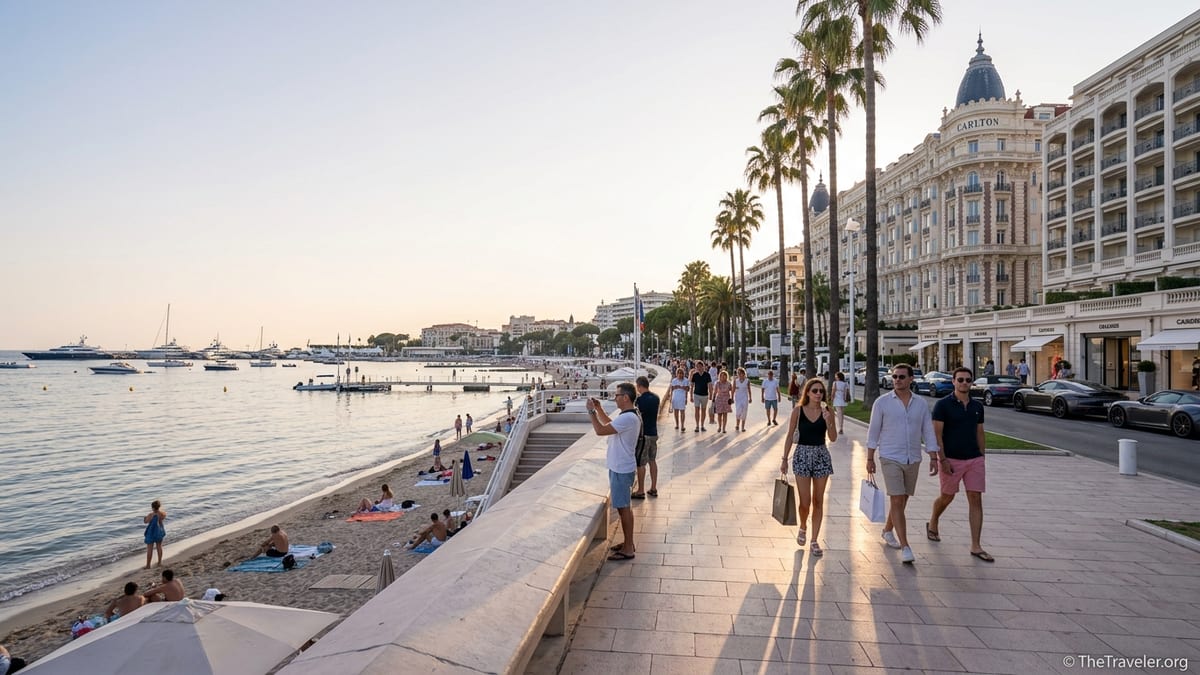
Thinking La Croisette Is All There Is to Cannes
Many first-time visitors spend their entire day on La Croisette and leave believing Cannes is pretty but shallow. They walk from the Palais des Festivals past the Carlton and the Martinez, maybe dip their feet in the water, browse a few luxury stores and then head back to their ship or hotel. They never see the older, more lived-in parts of the city where daily life takes place. As a result, Cannes can seem like a glossy film set rather than a real town.
In reality, La Croisette is only one face of Cannes. Just behind the seafront, a five to ten minute walk inland, the streets change character. Rue d’Antibes is packed with mid-range brands and French pharmacies where locals actually shop. A little further west, Rue Meynadier narrows into a more traditional shopping street with bakeries, cheese shops and affordable snack counters. Climb up to Le Suquet, the old quarter above the Vieux Port, and you find steep cobbled lanes, a church square with wide views over the bay and small bistros that feel a world away from the Croisette’s champagne bars.
If you only have an afternoon, split your time: stroll La Croisette for the seafront atmosphere, then cut inland around the Palais des Festivals and explore the streets behind. Cruise passengers, in particular, often have four to six hours ashore and assume they must choose between the Croisette or the old town. In practice, it is entirely possible to walk up to Le Suquet, take photos over the harbor and still have time for a promenade along the water.
Thinking of Cannes as a one-street destination is one of the fastest routes to disappointment. The magic comes from letting La Croisette be your glamorous front door, then deliberately stepping behind the façade to find bakeries, local markets and viewpoints that do not appear on the festival red carpet broadcasts.
Underestimating Costs on the Beachfront
Sticker shock is probably the most common La Croisette complaint. Visitors step onto the sand assuming they are heading for a typical Mediterranean beach, then see the day rates at the private clubs that line most of the seafront. A pair of sunbeds and an umbrella in high season at a well-known beach club opposite the Hotel Barrière Le Majestic or the Carlton can easily cost from several dozen euros per person for a front-row spot, on top of food and drinks. Order a club sandwich, a salad and two glasses of rosé and your casual beach lunch can quietly creep towards a three-figure bill for two.
The mistake is assuming those clubs are the only way to enjoy the bay. Between the private concessions there are stretches of public beach where the sand and the sea are exactly the same. On Plage Macé, near the Palais des Festivals, or further along towards Port Canto where public stretches widen, you can lay your own towel for free and swim with essentially the same view of the Esterel hills across the water. Bringing a simple picnic from a supermarket or grabbing takeaway quiches and fruit from a bakery inland keeps costs predictable and often results in a more relaxed day than jostling for waiter attention on the crowded private decks.
Another money trap is not asking for prices in advance. Menus at upscale beach restaurants are usually displayed at the entrance, but drinks menus sometimes only arrive once you are seated. It is worth checking basic items before committing to a lounger. A coffee can cost only a little more than in town, but cocktails and chilled bottles of wine on ice climb quickly. If a staff member offers you a “front row” bed or a so-called VIP zone without quoting a figure, ask directly what the daily rate is and whether any part of that amount is credited towards food and drink. On busy August days, people have been surprised to find that they paid a premium just for the location without any consumptions included.
Visitors who plan ahead tend to mix experiences. They might splurge on a single afternoon at a stylish club, perhaps tied to a special occasion, and then spend other days on the public sand with a baguette, olives and a bottle of sparkling water from a nearby Monoprix. That small shift in mindset often turns Cannes from “eye-wateringly expensive” to “selectively indulgent.”
Ignoring Timing, Crowds and Closures
The calendar matters enormously on La Croisette, but many visitors treat Cannes as if every week is the same. In May, the Cannes Film Festival and the following Lions advertising festival take over the central section near the Palais des Festivals and the big hotels. Security barriers, sponsor pavilions and temporary terraces appear along the promenade. Red carpet events draw enormous crowds outdoors long before the evening premieres. It is an exciting time to be there, but not ideal if your dream is an empty boardwalk and easy restaurant reservations.
During major festivals and some large conventions, traffic along La Croisette tightens and certain lanes or parking spots may be blocked. Visitors who drive into town without checking event dates often find themselves stuck in long queues at the roundabouts near the Martinez or circling for parking near the Palais. Local advice is usually to avoid driving directly on La Croisette during those days, instead leaving your car in one of the multi-storey garages in the center and walking the last stretch. The large parking facilities near the station and at Pantiero, by the old port, are popular bases precisely because you can avoid edging down the waterfront in a line of taxis and delivery vans.
Even on quiet weeks, many travelers underestimate how the daily rhythm affects what is open. Shops inland from La Croisette may close for a long midday break or open later in the morning outside peak season. Traditional markets, like Marché Forville near Le Suquet, operate on specific days and may host antiques stalls on Mondays instead of fresh produce. Restaurants that were buzzing on a Saturday night can feel half-empty on a Tuesday. Taking ten minutes to check market days, local holidays in May and November, and the dates of big trade shows at the Palais helps you avoid wandering a half-shuttered back street and declaring Cannes “dead.”
On the flip side, some visitors arrive with only a short afternoon from a cruise ship and attempt to cram in too much. They try to walk the full length of La Croisette to the Pointe Croisette, climb to Le Suquet, have a long sit-down lunch, and shop on Rue d’Antibes before the last tender. The result is a rushed march rather than a seaside stroll. For short visits, it is better to choose one or two priorities, such as a promenade and a coffee with a sea view or a quick detour up to the old town, instead of counting how many famous hotel facades you can photograph.
Getting Trapped in Tourist-Only Restaurants and Shops
Along La Croisette, the front-row cafes and souvenir stands are designed for passing visitors. Some are very good, with careful service and well-executed dishes, but others rely on a constant stream of people who will never return. The mistake many travelers make is sitting down at the first place with an open terrace and English menu, regardless of what is on the plate. They end up paying premium prices for average pizza or overcooked pasta that could have come from any resort town in the world.
A more thoughtful approach is to separate the view from the meal. If you want the full Riviera feeling of watching yachts and sports cars drift past, have a single drink or a coffee on the seafront, then move a block or two inland when you are actually hungry. Around Rue d’Antibes and the smaller streets that cross it, you will find bistros and brasseries that cater to local office workers as much as tourists. Menus here are more likely to feature daily specials chalked on a board, like grilled local fish, stuffed Provençal vegetables or a plat du jour that includes both a main course and dessert for a fair fixed price.
Another common misstep is assuming that every luxury boutique on La Croisette will offer a unique French bargain. International brands like Chanel or Louis Vuitton keep relatively consistent pricing across France. Unless you are specifically seeking a Cannes boutique experience, you may find a wider choice or calmer atmosphere in Paris or at home. On the other hand, visitors sometimes overlook mid-range French brands and pharmacies one street back where they can pick up quality sun creams, cosmetics and clothing at more realistic prices. Walking even five minutes away from the water gives you a better mix of recognisable international names and local chains.
For souvenirs, aim for items that reflect the region: olive oil from the hinterland, soaps from Provence, or a jar of tapenade. These are more likely to be found in dedicated food shops inland or at markets than on La Croisette itself, where logo-heavy beach bags and generic trinkets dominate. By spending significant sums on mass-produced T-shirts that could have been bought in any coastal resort, many visitors leave with souvenirs that feel oddly disconnected from what makes the Côte d’Azur special.
Mishandling Transport, Parking and Walking Distances
The geography of La Croisette looks simple on a map: a curved line along the bay from the Palais des Festivals to the Pointe Croisette and Port Canto. On the ground, distances feel different. Walking the full arc and back can easily run to an hour or more at a leisurely pace, not counting pauses for photos or drinks. Yet many visitors underestimate how long it takes and plan tight schedules between lunch at one end and reservations or tender departure at the other. In the heat of a Riviera afternoon, that last-minute dash along the pavement can turn an elegant day into a sweaty scramble.
Public transport is more useful than many people realise. Local buses run along the seafront and inland, and there are tourist-oriented open-top routes that loop around La Croisette and up into the hills. For cruise passengers or day-trippers, these can be a way to get an overview without walking in the midday sun. However, it is important not to rely on them as if they were a metro. Services can be less frequent at certain times of day, and traffic along the waterfront slows them down during events or rush hour. Check the schedule on your phone before leaving a comfortable cafe to stand at a stop with no shade.
Driving presents its own challenges. The narrow lanes near luxury hotels and the Palais can clog with taxis, delivery vans and visitors circling for a street space. The city has several multi-storey car parks that serve the center, and some offer limited free hours or day caps, but spaces closest to La Croisette fill quickly in high season and during festivals. A wiser strategy is to aim for large garages a short walk away from the water, such as those near the railway station or the old port area, and avoid crawling along the promenade itself. Local residents routinely suggest leaving the car and exploring on foot, particularly in May and July when everything is busier than it looks from a distance.
Footwear is another underestimated detail. Photos of Cannes show heels and loafers, but the reality of walking from the tender port to the Palais, then along La Croisette and up to Le Suquet, is far more forgiving in flat sandals or trainers. Visitors who dress purely for the red carpet fantasy often end up cutting their plan short because of sore feet, missing out on the viewpoints and quieter corners that require a few extra staircases or slopes.
Misreading Beach Culture and Local Etiquette
La Croisette’s beaches operate on a slightly different rhythm than many visitors expect. On the private sections, it is usual to be shown to a specific lounger and asked whether you prefer front row by the water or further back. Towels are typically provided as part of the daily fee, so bringing your own is not necessary unless you are heading for the public sand. Ordering food from your sunbed is standard, but it is polite, rather than pushy, to signal to staff when you are ready instead of clicking fingers or calling across rows of loungers. Service can feel slower in mid-afternoon simply because everyone orders at once.
On public beaches, a few misunderstandings are common. Some travelers from countries with different beach rules are unsure whether topless sunbathing is accepted; in practice it is tolerated, particularly among locals, but far less common than it once was and not obligatory. Others worry about leaving bags unattended while they swim. As in any busy resort, it is safer to keep valuables minimal and in waterproof pouches or to have someone remain with your belongings rather than trusting the crowd. Lifeguard presence varies by season, and swimming zones are usually marked by buoys, so it is wise to stay within them and be aware of pedal boats or small craft moving close to shore.
Away from the sand, basic French courtesies go a long way. Staff along La Croisette are used to international visitors, but greeting with a simple “bonjour” before launching into a question is appreciated. Many tourists skip this and open with “Do you speak English,” which can set a slightly transactional tone. Tipping in restaurants is not as rigid as in some countries. A service charge is generally included in menu prices, but leaving a small extra amount, perhaps rounding up or adding a few euros for good service, is customary rather than mandatory. At beach clubs, rounding the bill or leaving around five to ten percent is common when you have had attentive service throughout the day.
Dress codes are more relaxed on the promenade than La Croisette’s glamorous image suggests, but there are limits. Walking shirtless from the beach into the lobby of a grand hotel or a smart restaurant is frowned upon, and some places will simply refuse service. A light cover-up, sundress or polo shirt is usually enough to bridge the gap from sand to street. In the evening, especially in and around the five-star hotels, guests tend to make more of an effort, with collared shirts, dresses and smart sandals being the norm rather than beachwear.
Overlooking Easy Day Trips and Nearby Nature
One side effect of La Croisette’s fame is that many visitors never step beyond it. They spend three or four days walking the same stretch between the Palais and the Carlton, perhaps wandering inland a few blocks, then leave with the impression that the Riviera is mostly boutiques and yachts. In reality, some of the area’s most memorable experiences lie only a short boat ride or train journey away from the promenade.
From the old port near the western end of La Croisette, regular boats sail to the Lérins Islands, visible across the bay. Sainte-Marguerite, the larger of the two, offers pine forests, quiet coves and the historic fort where the so-called Man in the Iron Mask was once held. Saint-Honorat, owned by a community of monks, is smaller and more tranquil, with vineyards and chapels along its paths. Spending half a day on one of these islands provides a complete contrast to the crowds and polished pavements of the Croisette, yet many tourists never consider it because they assume Cannes is purely an urban beach destination.
Inland, trains and buses link Cannes with other coastal towns and hill villages. Even a short hop to Antibes, with its old ramparts and Picasso museum, or further along to Nice, offers different moods and architecture. However, visitors often try to string too many day trips together while also “doing” La Croisette properly, which leaves them exhausted. A more rewarding plan is to dedicate one full day to Cannes itself, including the promenade, the old town and the market, and another day to a single excursion, whether an island, a nearby coastal town or a hilltop village. This way, La Croisette becomes part of a wider Riviera story rather than the sole focus of your stay.
By treating La Croisette as a central thread rather than the entire tapestry, travelers find more balance between glamour and authenticity. They can sip a drink opposite the Carlton at sunset, then remember that the next morning is for pine-scented walks on Sainte-Marguerite or for coffee in a quiet square in Le Suquet instead of another loop past the same watch boutiques.
The Takeaway
La Croisette is famous for a reason. The curve of the bay, the line of historic hotels and the soft evening light over the water give Cannes a seductive charm that photos only partly capture. Yet many visitors sabotage their own experience by staying only on the surface, overspending on the first beach club they see, misjudging festival crowds or assuming every seafront restaurant deserves their time and money. The promenade can feel aloof or overwhelming if you arrive unprepared.
A more rewarding visit comes from a few simple choices. Set a realistic budget for at most one indulgent beach day and balance it with time on the public sand. Check event dates and market schedules so you know when the city will be crowded or quiet. Use La Croisette for what it does best: views, atmosphere and the occasional glamorous drink, while heading a few streets inland for everyday meals, groceries and authentic shopping. Make peace with the idea that you cannot see everything in a single afternoon, and choose experiences that match your pace rather than your social media feed.
Most importantly, remember that Cannes is more than its showpiece boulevard. Combining a walk along the Croisette with an hour in Le Suquet, a browse at Marché Forville or a boat trip to the Lérins Islands turns a postcard destination into a real place. Do that, and you are far less likely to fall into the common traps that leave others complaining that Cannes “only looks good from the outside.” Instead, you can leave with sandy feet, a few well-chosen photos and a sense that you understood the city on your own terms.
FAQ
Q1. Is it possible to enjoy La Croisette on a budget?
Yes. Use the public beaches instead of private clubs, picnic with food from supermarkets or bakeries inland, and limit seafront spending to a single coffee or drink with a view.
Q2. Are all the beaches on La Croisette private?
No. Large sections are occupied by private beach clubs, but there are free public stretches, such as near the Palais des Festivals and towards Port Canto, where you can lay your towel without paying.
Q3. When is La Croisette most crowded?
The promenade is busiest in May during the Cannes Film Festival and major conventions, and again in July and August when French and European summer holidays bring peak visitor numbers.
Q4. Where is the best place to park near La Croisette?
It is usually easier to park in one of the multi-storey car parks near the station or old port and walk to the seafront, rather than trying to find a space directly on or beside La Croisette.
Q5. Do I need a reservation for beach clubs on La Croisette?
In high season and on sunny weekends, reservations are strongly recommended, especially for front-row loungers or lunch at popular clubs attached to major hotels.
Q6. Is tipping expected at restaurants and beach clubs?
A service charge is typically included in menu prices, but leaving a small extra amount or rounding up the bill for good service is appreciated, particularly at sit-down restaurants and beach clubs.
Q7. Can I walk from the cruise tender dock to La Croisette?
Yes. The tender pier by the old port is a short walk from the Palais des Festivals, and from there you can step directly onto La Croisette without needing a taxi or shuttle.
Q8. What should I wear on La Croisette?
Daytime dress is relaxed, with shorts, sundresses and sandals common, but you should cover up away from the beach. In the evening, smart casual clothing is the norm near luxury hotels and restaurants.
Q9. Are there more affordable places to shop near La Croisette?
Yes. Rue d’Antibes and nearby streets one block inland offer a mix of mid-range fashion, French pharmacies and smaller boutiques that are often better value than the luxury houses on the seafront.
Q10. Is Cannes worth visiting if I am not interested in luxury shopping?
Definitely. You can enjoy the promenade, public beaches, the old town of Le Suquet, local markets and nearby islands or coastal towns without buying anything more than simple meals and transport.