


More news on this day
A landmark rail journey branded the Connecting Europe Express is set to traverse 26 European countries in just 36 days, showcasing how rail infrastructure is knitting the continent together while underlining the environmental case for shifting more travel from air and road to tracks.
Get the latest news straight to your inbox!
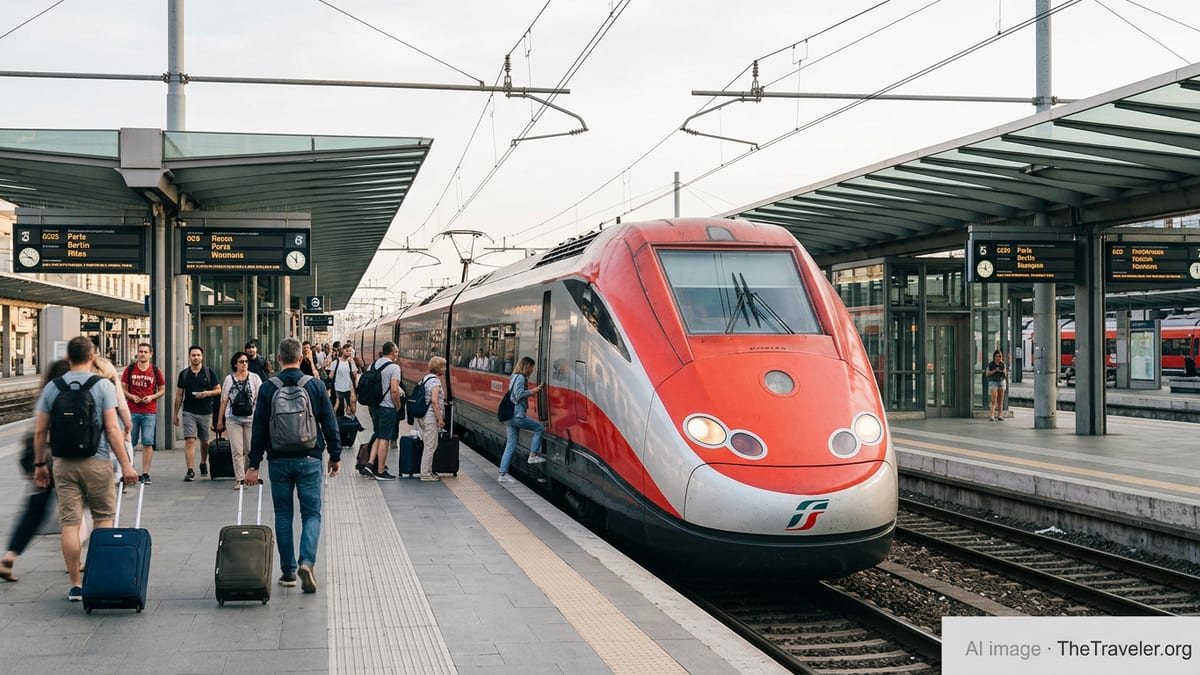
A Flagship Journey for the European Year of Rail
The Connecting Europe Express was conceived as a centerpiece of the European Year of Rail, an initiative designed to spotlight rail’s contribution to climate goals and cross-border mobility. According to publicly available information from European transport bodies, the special train will run for 36 days, stopping in dozens of cities along a route that stretches from the Atlantic coast to the edge of the Black Sea and beyond.
The project’s timing aligns with wider European Union strategies that seek to cut greenhouse gas emissions from transport and reduce dependency on short-haul flights. Rail is being presented as a central pillar of this shift, with the long-distance demonstration journey framed as a tangible example of what an integrated network can deliver for both passengers and freight.
Reports indicate that the train’s itinerary connects key political and economic hubs with smaller regional centers, highlighting how investment in cross-border lines, modern signaling and upgraded stations can reshape travel patterns. The journey is expected to pass through more than 100 cities and towns, underscoring the scale of Europe’s existing rail footprint and the potential to better exploit it.
European institutions and rail associations are also using the tour to draw attention to the Connecting Europe Facility and wider Trans-European Transport Network policies, which channel funding into rail corridors and interoperability projects. The Express thus doubles as a rolling showcase for completed upgrades and a spotlight on the gaps that still hold back seamless travel.
From Lisbon to Paris via 20,000 Kilometres of Track
Published route details show the train beginning its journey in Lisbon and concluding in Paris after covering roughly 20,000 kilometres of track. Along the way, it is scheduled to cross 33 borders and visit every corner of the continent, from Iberia and the Mediterranean basin to Central and Eastern Europe and the Baltic region.
Each travel day is mapped out with a series of intermediate stops where public-facing events, technical workshops and policy discussions are planned. These activities are intended to explore topics such as sustainable tourism, modal shift from road to rail, and the resilience of rail systems in the face of climate change and rising demand.
The route has been designed to illustrate how the continent’s main corridors interlock, linking ports, industrial centers and capitals. It also passes through non‑EU neighbors, reflecting the reality that Europe’s rail network extends beyond the borders of the Union and depends on cooperation with adjacent states.
For the traveling public, the itinerary offers a snapshot of how diverse European rail travel can be within a single overarching journey. Passengers will experience high-speed lines, classic mainline routes and secondary stretches that still play a vital role for regional connectivity.
Three Trains, Multiple Gauges and Persistent Technical Hurdles
While the Connecting Europe Express is being promoted as a celebration of integration, its operational design also highlights lingering fragmentation. Because Europe does not use a single track gauge, the journey will in practice rely on three separate trainsets adapted to different sections of the route.
Publicly available technical notes explain that one consist will operate on the Iberian gauge, a second on the standard gauge predominant in much of continental Europe, and a third on the wider gauge used in parts of Eastern and Northern Europe. Transfers between these trains at border points will underline how varying technical standards still complicate smooth cross-border services.
Beyond track gauge, differences in electrification systems, platform heights, safety approvals and signaling protocols continue to challenge operators. The Express has required close coordination among dozens of national rail companies and infrastructure managers to secure paths, certifications and compatibility for rolling stock.
European rail advocates argue that these complexities strengthen the case for accelerating work on harmonized standards and digital signaling. The Express, by visibly navigating these obstacles in real time, is being framed as both a symbol of what has been achieved and a reminder of how far there is to go before passengers can enjoy genuinely frictionless rail travel across the continent.
Climate Goals, Tourism Potential and Passenger Experience
The 26‑country tour is also intended to reinforce the role of rail in Europe’s climate strategy. Rail transport typically produces significantly lower emissions per passenger-kilometre than flying or driving, and the European Year of Rail places this advantage at the center of the policy conversation.
According to analysis circulated by EU bodies and industry groups, achieving climate neutrality targets by mid-century will require a substantial modal shift from private cars and short‑haul flights to trains and other low‑carbon options. The Connecting Europe Express is therefore positioned as a moving ambassador for this transition, illustrating how long-distance rail can already link many of the destinations currently served by planes.
The itinerary also draws attention to rail’s role in sustainable tourism. By stopping in both marquee capitals and smaller destinations, the Express points toward itineraries that encourage visitors to explore beyond traditional hotspots while keeping their carbon footprint in check. National tourism and rail operators are expected to use the journey as an opportunity to highlight scenic routes, night train options and passes that make multi-country rail trips more accessible.
Passenger experience is another recurring theme. Discussions around the tour focus on issues such as ticketing simplicity, cross-border timetables and on-board comfort. Advocates see improvements in these areas as key to persuading more travelers to choose rail for medium‑ and long‑distance journeys within Europe.
A Rolling Snapshot of Europe’s Rail Future
Beyond its symbolic value, the Connecting Europe Express functions as an informal stress test of Europe’s current rail capabilities. Coordinating schedules, fitting the train into busy corridors and managing border transitions provide a real-world laboratory for ideas that are usually discussed in policy documents and planning meetings.
Observers note that the project aligns with a broader resurgence of interest in long-distance and overnight rail across Europe, including new and revived night train routes linking major cities. The Express is likely to feed that momentum by keeping rail in the public eye and stimulating debate about future investments.
As the 36‑day journey progresses, daily updates and coverage are expected to chart delays, logistical challenges and highlights in equal measure, offering an unvarnished look at how Europe’s patchwork of rail systems performs under pressure. For policymakers and operators, those lessons may prove as valuable as the positive publicity generated along the way.
By the time the train rolls into Paris at the end of its tour, the Connecting Europe Express will have demonstrated both the practical reach of Europe’s railways and the political ambition behind plans to expand and modernize them. For travelers watching from station platforms and afar, it offers a preview of a future in which cross‑continent rail journeys could become not a special event, but an everyday option.