


More news on this day
Construction of the Verona–Padua high-speed and high-capacity rail line is moving into a decisive phase, marking a major step in the upgrade of northern Italy’s Milan–Venice corridor and the broader European transport network.
Get the latest news straight to your inbox!
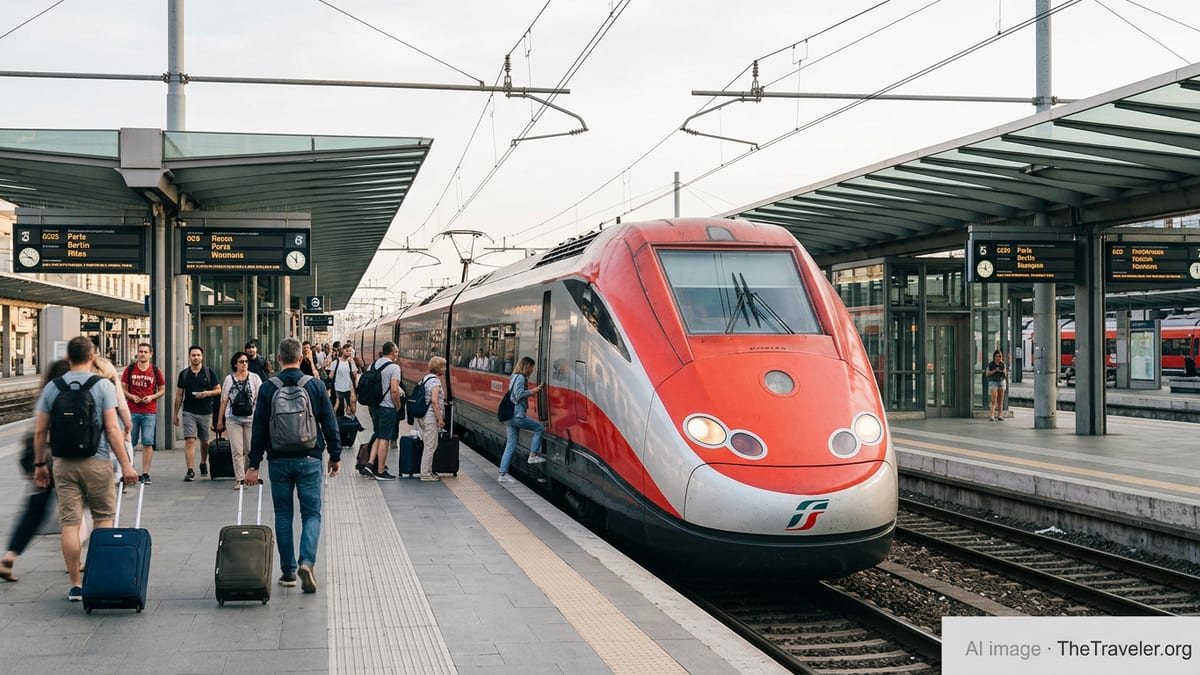
Key section of Milan–Venice high-speed axis takes shape
The Verona–Padua high-speed segment forms the central portion of the new Brescia–Verona–Padua line, a strategic project designed to increase capacity and cut journey times between some of northern Italy’s busiest cities. Publicly available information from project promoters describes the route as part of the Milan–Venice high-speed and high-capacity corridor, one of the main east–west rail spines in the country.
The line is conceived as a four-track corridor, with new high-speed tracks running largely alongside the existing conventional railway. This configuration is intended to separate fast intercity and high-speed services from regional and freight traffic, easing bottlenecks that have long affected the Verona–Vicenza–Padua section.
Project documentation indicates that the overall Verona–Padua link has been divided into several functional lots, including the Verona–Vicenza section, the complex rail crossing through Vicenza, and the Vicenza–Padua stretch. This phasing approach allows work to start on less technically constrained areas while detailed designs advance for the more urban and environmentally sensitive segments.
Reports on Italy’s national recovery and resilience planning highlight the Verona–Padua scheme among the rail investments backed by European and national funds, framing it as a contributor to emissions reduction by shifting more passengers and freight from road and short-haul air services to rail.
Civil works and tracklaying progress on initial lots
Recent project updates from the construction consortium and rail infrastructure managers indicate that civil works and tracklaying on the first Verona–Padua construction lot have reached advanced stages. Press material from engineering group Webuild describes the first section between Verona and Vicenza as substantially completed in terms of major earthworks, structures and rail installations.
The first lot includes viaducts, underpasses, tunnels and new track formations designed to accommodate high-speed operation while threading through one of Italy’s most densely developed plains. Publicly released summaries of the works point to hundreds of thousands of tonnes of ballast and well over one hundred thousand sleepers already laid, underscoring the scale of the infrastructure now in place.
Construction responsibilities are concentrated in the Iricav Due consortium, led by Webuild with participation from Hitachi Rail and other partners. The group holds the role of general contractor for the Verona–Padua high-speed and high-capacity line and has reported a progressive handover of completed structures to the national infrastructure manager for subsequent systems installation and testing.
Alongside the mainline works, associated road modifications, hydraulic protections and noise mitigation barriers are being rolled out in municipalities along the route. These ancillary interventions are required to integrate the railway into the existing territory and to comply with environmental and urban planning prescriptions tied to the project approvals.
Timelines, milestones and funding commitments
Planning documents and project histories show that preparatory phases for the Verona–Padua high-speed line began several years ago, with the first major contract packages assigned to Iricav Due prior to Italy’s most recent infrastructure planning cycles. Subsequent revisions linked to the National Recovery and Resilience Plan brought the scheme under the European Union’s post-pandemic investment framework, accelerating some milestones.
According to publicly accessible project timelines, the first functional lot between Verona and the approaches to Vicenza is scheduled for completion in the second half of 2026, with activation of high-speed services on this section expected shortly afterward, subject to testing and certification. Later stages, particularly the complex crossing of Vicenza and the extension toward Padua, are slated to follow, with full corridor completion currently targeted for the latter part of the decade.
Financial data compiled in Italy’s open recovery plan monitoring tools attribute several billion euros of investment to the broader Brescia–Verona–Padua high-speed and high-capacity programme, of which Verona–Padua is a significant share. The mix of national budget resources and European funding reflects the line’s role within the trans-European transport network connecting the Iberian Peninsula, northern Italy and Central and Eastern Europe.
Recent Italian railway business planning material also situates Verona–Padua alongside other high-speed projects such as Naples–Bari and upgrades on the Brenner corridor, underlining a strategy aimed at completing a continuous grid of fast intercity services from Sicily to the Alps and toward neighbouring countries.
Impact on regional mobility and European corridors
The Verona–Padua high-speed line is expected to change travel patterns across the Veneto region and beyond. By allowing faster services between Milan, Verona, Vicenza, Padua and Venice, the new infrastructure is projected to reduce journey times and free space on legacy tracks for local and freight services.
Analyses published by rail planners indicate that, once the new high-speed tracks are operational, the capacity released on the conventional line can support more frequent regional trains and improved connections for intermediate towns that sit between the main hubs. This is considered critical in a corridor that combines heavy commuter flows with long-distance tourism and business travel.
The line also forms part of wider European freight and passenger axes that include the Brenner Base Tunnel route to Austria and Germany and links toward the Adriatic and Balkan corridors. Enhanced capacity around Verona and Padua is seen as a prerequisite for taking full advantage of these cross-border investments, particularly for intermodal freight services seeking to avoid congested Alpine roads.
For passengers, travel demand forecasts referenced in technical studies suggest that the Verona–Padua high-speed section will help consolidate Italy’s high-speed rail network as a competitor to domestic flights on short and medium routes. The Milan–Venice corridor is already among the country’s busiest air and road markets, and operators are expected to adjust services as new rail timings become available.
Next phases and local territory works
As construction advances, attention is turning to the more intricate elements of the Verona–Padua project, including the railway’s passage through Vicenza and integration with existing stations and urban areas. Publicly available route maps show a combination of surface, trench and viaduct solutions, with several sections designed to reduce at-grade crossings and limit disruption in built-up zones.
Environmental documentation points to land reclamation, reforestation and noise protection schemes accompanying the rail works, particularly in agricultural and residential districts near the new alignment. These measures are intended to offset the impact of new infrastructure and address concerns raised during the planning and consultation phases.
National rail infrastructure notices have also flagged temporary timetable changes and capacity constraints around hubs such as Verona Porta Nuova and Padua as works proceed. These short-term disruptions are being introduced to allow construction and upgrading activities that will ultimately connect the new high-speed tracks into existing stations and junctions.
With construction of the Verona–Padua high-speed line fully under way and key civil engineering milestones already achieved on the initial lots, the project is emerging as one of the defining rail investments in northern Italy this decade, reshaping how people and goods move between the country’s industrial heartlands and its Adriatic gateways.